Mental Stress Assessment and Clinical Application of Wearable Devices as Evaluable Outcomes in Robotic Prostatectomy
Taku Naiki, Yoshihisa Mimura, Yosuke Sugiyama, Toshiki Etani, Akihiro Nakane, Takashi Nagai, Yoshihiko Tasaki, Nobuhikio Shimizu, Masakazu Gonda, Maria Aoki, Toshiharu Morikawa, Shoichiro Iwatsuki, Shuzo Hamamoto, Yukihiro Umemoto, Takahiro Yasui

TL;DR
This study shows that wearable devices can measure a surgeon's mental stress during robotic prostatectomy, helping track their learning progress and performance improvements.
Contribution
The study introduces wearable devices as a novel method to assess mental stress and learning curves in robotic prostatectomy.
Findings
Inexperienced surgeons showed reduced console time and heart rate as case numbers increased.
Experienced surgeons had better heart rate variability, indicating lower mental stress.
CUSUM analysis revealed similar learning curves for console time and blood loss between surgeons.
Abstract
Because of the rapid uptake of robot-assisted radical prostatectomy (RARP), educational programs or established methods based on the skill level and mental stress of surgeons have yet to be established. This study aimed to measure physiologic stress as heart rate (HR) changes and heart rate variations (HRVs) in surgeons wearing a device during RARP. We collected device data for 30 consecutive cases from surgeon A, relatively inexperienced in RARP, and surgeon B, experienced in over 200 cases. As a wearable device, we used Fitbit Charge 2 (Fitbit Inc., San Francisco, CA, USA). Surgical outcomes included estimated blood loss volume and robotic console time; HR changes and HRVs in each surgeon were measured. The standard deviation of NN intervals (SDNN) for HRV was calculated and cumulative sum (CUSUM) control charts used to quantitatively evaluate surgeons’ learning curves. For surgeon…
Genes, proteins, chemicals, diseases, species, mutations and cell lines named across the full text — each resolved to its canonical identifier and authoritative record.
Click any figure to enlarge with its caption.
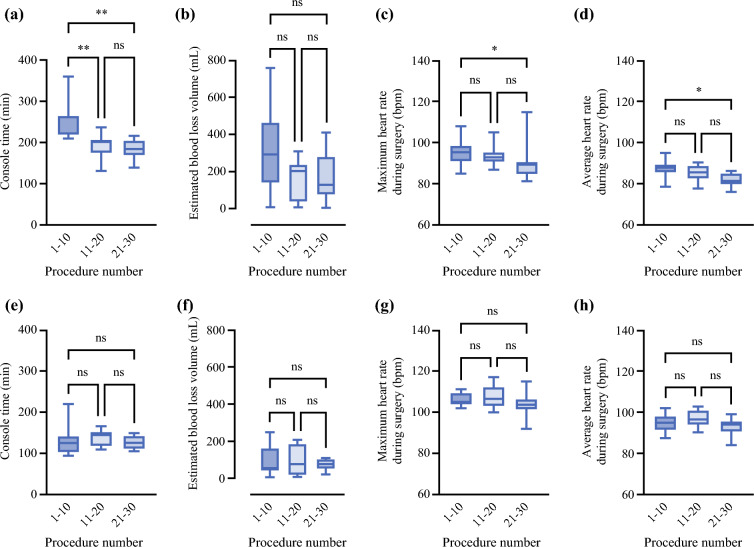 Figure 1
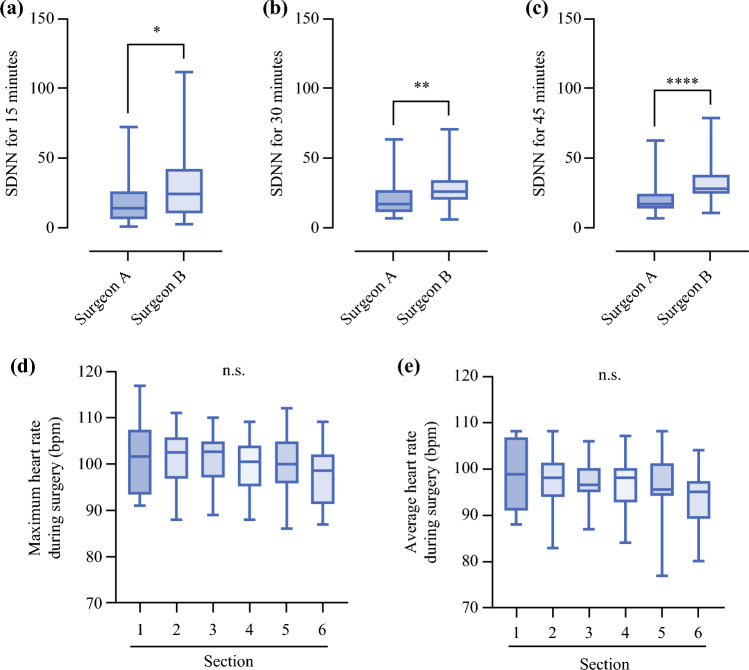 Figure 2
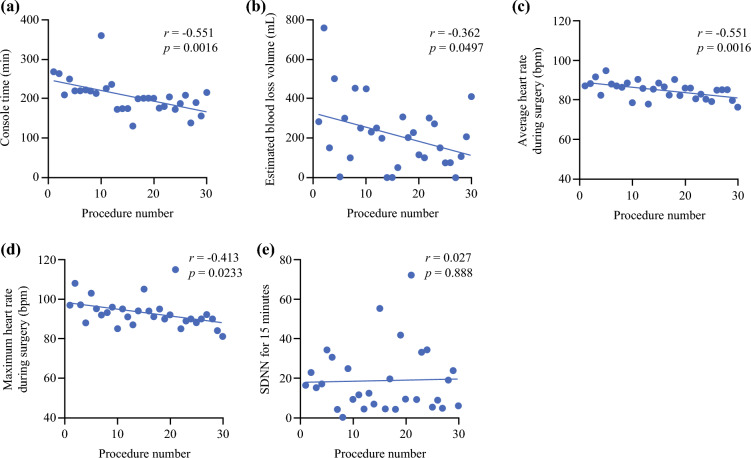 Figure 3
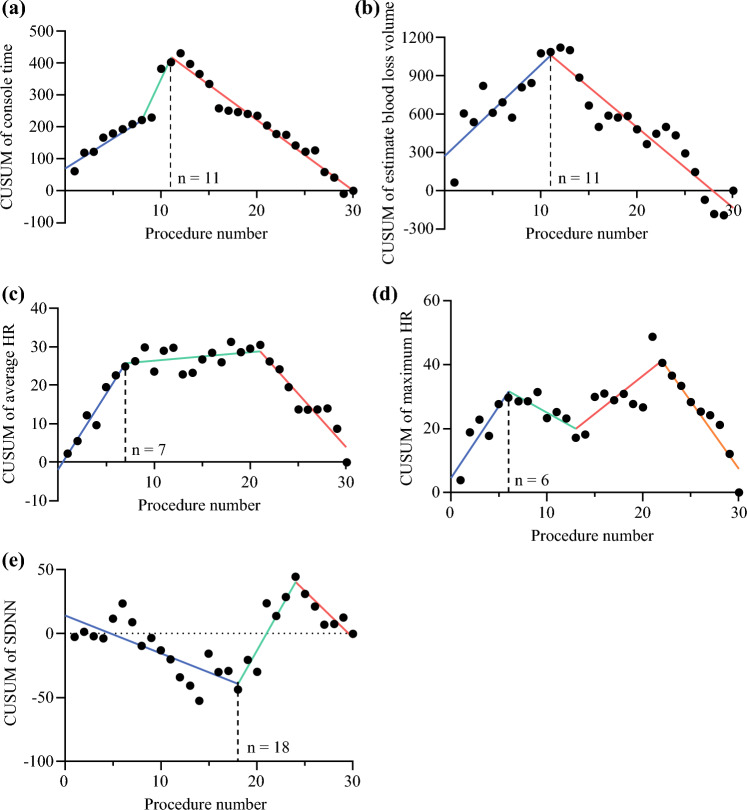 Figure 4
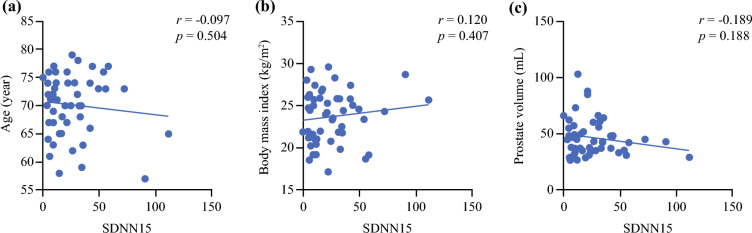 Figure 5
Peer Reviews
No public reviews on file for this paper yet. If you reviewed it on a platform where reviews are public (OpenReview, ICLR, NeurIPS, ICML), you can paste yours below so the community can read it here.
Videos
No videos yet. Explain this paper in a talk, walkthrough, or lecture? Add one.
Taxonomy
TopicsSurgical Simulation and Training · Music Therapy and Health · Healthcare professionals’ stress and burnout