Integrating genomic prediction into crop DUS testing: new approaches in support of reference collection management and distinctness assessment
Adrian M. I. Roberts, Konrad Neugebauer, Esther Oluwada Ewaoluwagbemiga, Dan Milbourne, Stephen Byrne, James Cockram, Camila M. Zanella, Margaret Wallace, Marlene Niedermayer, Lorella Andreani, Márton Pécs, Wim W. P. van der Kooij, Karl Schmid

TL;DR
This paper introduces new genomic methods to improve crop variety testing for distinctness, using genetic markers and predictions to reduce costs and improve accuracy.
Contribution
A novel approach using genomic prediction to support DUS testing and refine distinctness decisions is proposed.
Findings
Genomic prediction can effectively predict variety differences in specific traits for DUS testing.
The proposed method shows promising results in perennial ryegrass and wheat.
Integrating genetic data with trial results can enhance distinctness decisions for cross-pollinated crops.
Abstract
A new approach is proposed for the use of the genetic markers to manage DUS trials, targeted at individual phenotypic characteristics using genomic prediction, as well for supporting Distinctness decisions. High-performing crop varieties underpin food security. Due to the cost of developing varieties, systems have been established to provide breeders with legal protection for their varieties. In many countries, such protection is afforded by the International Union for the Protection of New Varieties of Plants (UPOV) system. New varieties must be phenotypically Distinct from existing varieties using a set of crop-specific characteristics, as well as Uniform and Stable (DUS). For many crops, DUS assessment is costly as candidates must be compared to many existing varieties in field trials, based on numerous DUS characteristics. The use of genetic markers has long been considered as a…
Genes, proteins, chemicals, diseases, species, mutations and cell lines named across the full text — each resolved to its canonical identifier and authoritative record.
Click any figure to enlarge with its caption.
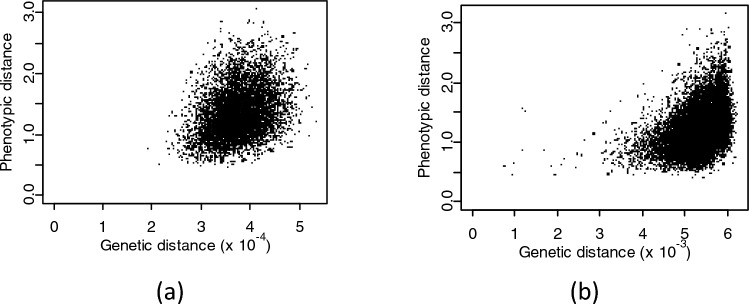 Figure 1
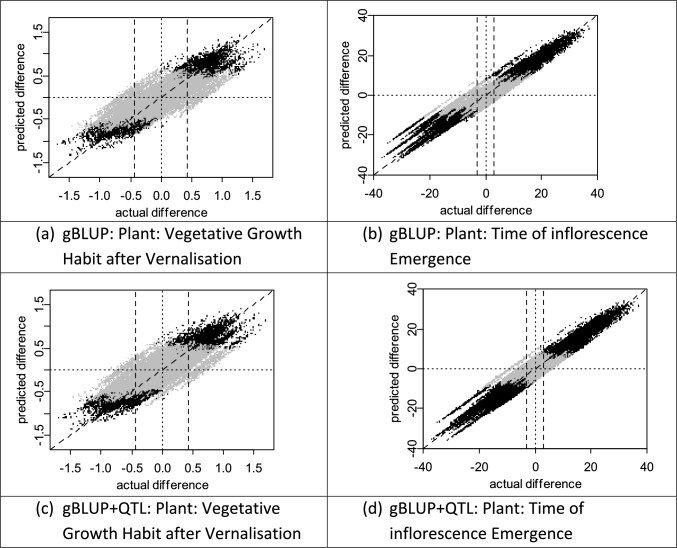 Figure 2
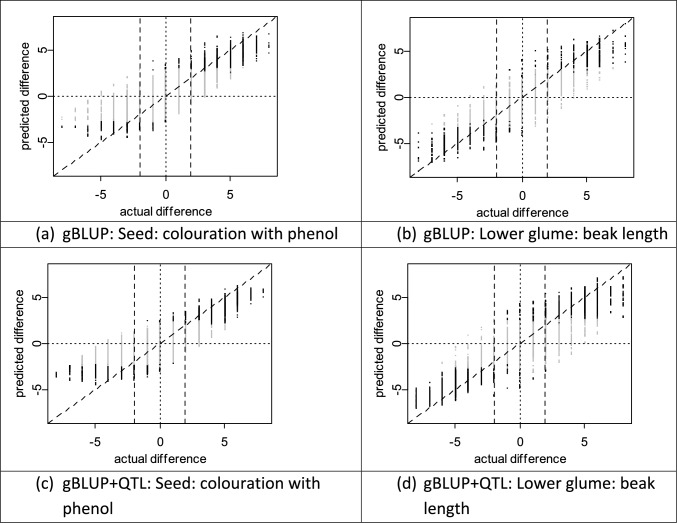 Figure 3
Peer Reviews
No public reviews on file for this paper yet. If you reviewed it on a platform where reviews are public (OpenReview, ICLR, NeurIPS, ICML), you can paste yours below so the community can read it here.
Videos
No videos yet. Explain this paper in a talk, walkthrough, or lecture? Add one.
Taxonomy
TopicsGenetic diversity and population structure · Genetically Modified Organisms Research · Wheat and Barley Genetics and Pathology