Outcomes After Resection for Multiple Intrahepatic Cholangiocarcinoma—A National Population-Based Study
Hannes Jansson, Helena Taflin, Bergthor Björnsson, Jozef Urdzik, Oskar Hemmingsson, Jenny Lundmark Rystedt, Stefan Gilg, Per Sandström, Ernesto Sparrelid

TL;DR
Surgical resection for multiple intrahepatic cholangiocarcinoma tumors may improve survival if limited to two or three lesions and specific patient criteria are met.
Contribution
This study provides population-based evidence on the outcomes of resecting multiple intrahepatic cholangiocarcinoma tumors.
Findings
Resection of two or three lesions in multiple iCCA was associated with a median survival of 27.1 months.
Resection for four or more lesions did not improve survival compared to unresectable disease.
Resection was linked to better performance status, smaller tumors, and negative lymph nodes.
Abstract
Tumor multiplicity is a negative prognostic factor in intrahepatic cholangiocarcinoma (iCCA) and the role of surgical resection in multiple iCCA remains unclear. Data were extracted from the Swedish quality registry for cancers of the liver and biliary tract, for all patients undergoing surgery for iCCA (2010–2021). Validation was performed with all Swedish hepatobiliary referral centers, including a comparison cohort of patients with liver-only multiple iCCA and nonsurgical therapy. The primary endpoint was overall survival (OS). Out of 338 patients operated for iCCA, 284 had resectable tumors and 54 (16.0%) unresectable disease at exploration. In the resection and exploration groups, 46 (16.2%) and 11 patients (20.4%), respectively, had multiple lesions. A majority of patients with resection for multiple iCCA had two or three lesions (63.0%), with median OS 27.1 months (95% CI…
Genes, proteins, chemicals, diseases, species, mutations and cell lines named across the full text — each resolved to its canonical identifier and authoritative record.
Click any figure to enlarge with its caption.
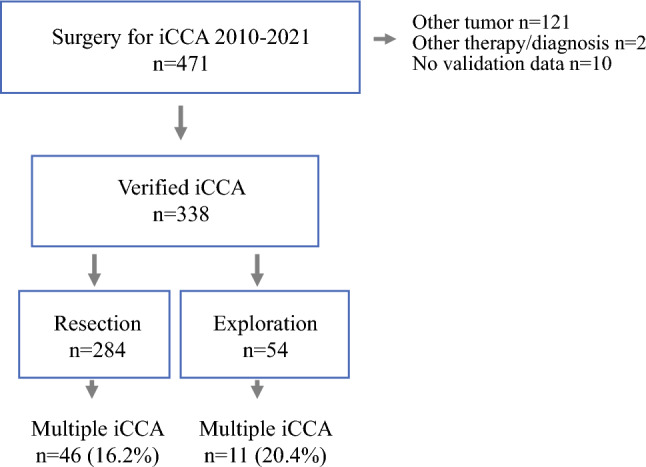 Figure 1
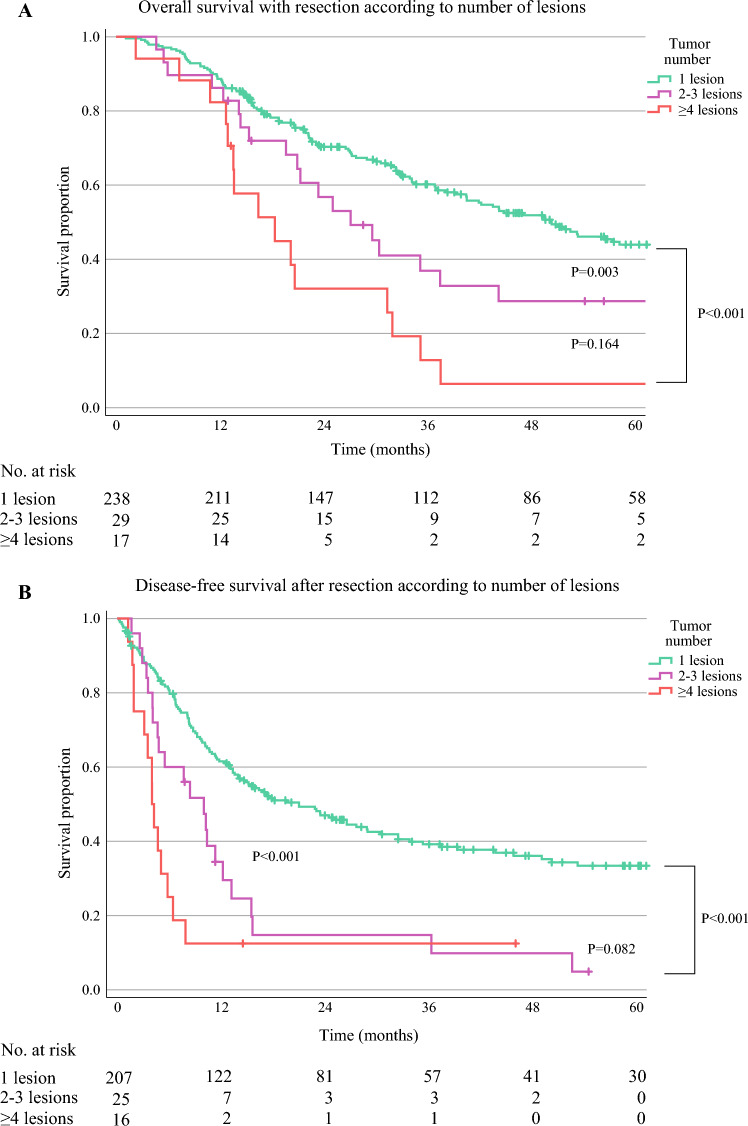 Figure 2
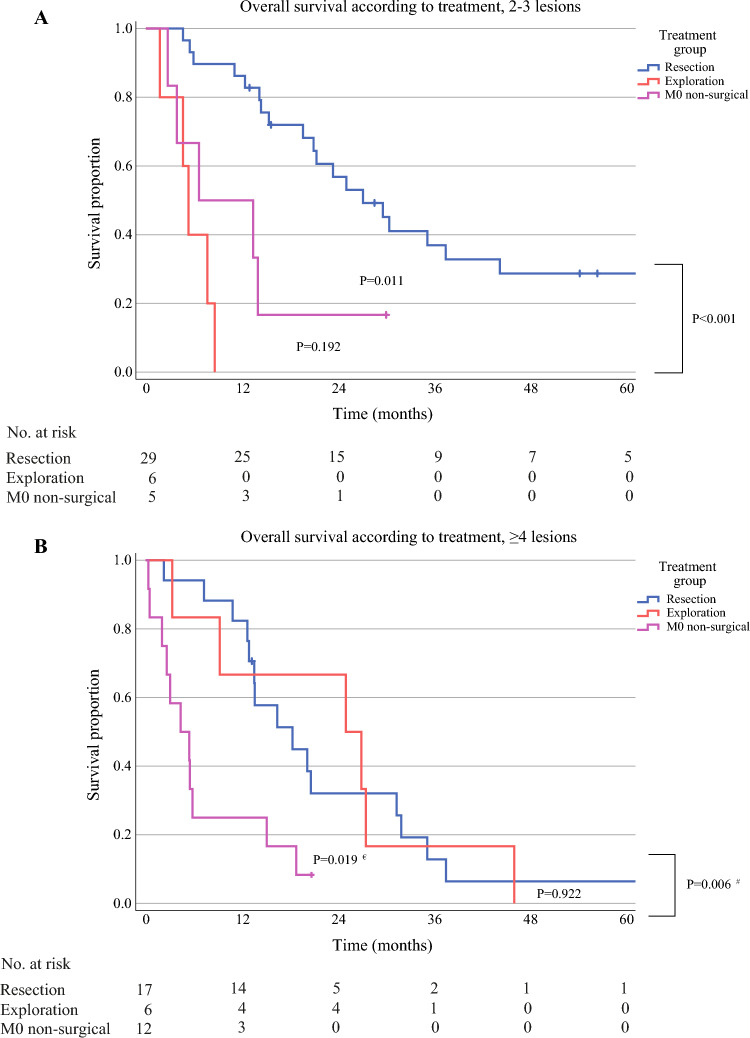 Figure 3
Peer Reviews
No public reviews on file for this paper yet. If you reviewed it on a platform where reviews are public (OpenReview, ICLR, NeurIPS, ICML), you can paste yours below so the community can read it here.
Videos
No videos yet. Explain this paper in a talk, walkthrough, or lecture? Add one.
Taxonomy
TopicsCholangiocarcinoma and Gallbladder Cancer Studies · Gallbladder and Bile Duct Disorders · Pancreatic and Hepatic Oncology Research