Prostatic artery embolization with glue for benign prostatic hyperplasia in elderly patients: three-year results
Antonio Vizzuso, Maria Vittoria Bazzocchi, Mara Bacchiani, Giorgia Musacchia, Antonio Spina, Eugenia Fragalà, Giovanna Venturi, Enrico Petrella, Roberta Gunelli, Emanuela Giampalma, Matteo Renzulli

TL;DR
This study shows that prostatic artery embolization using glue is a safe and effective treatment for elderly patients with enlarged prostates, offering long-term symptom improvement.
Contribution
The study provides three-year results demonstrating the long-term efficacy and safety of glue-based PAE for BPH in elderly patients.
Findings
92.5% of symptomatic patients experienced significant improvement in urinary symptoms and quality of life after three years.
73.5% of patients with indwelling catheters regained spontaneous voiding within 29 days on average.
All complications were minor and did not require surgical intervention.
Abstract
To evaluate the clinical efficacy and safety of prostatic artery embolization (PAE) using glue (n-butyl cyanoacrylate, NBCA) in patients with benign prostatic hyperplasia (BPH) presenting with lower urinary tract symptoms (LUTS) due to obstruction or chronic urinary retention managed with an indwelling catheter (IUC). A total of 101 patients (median age 79 years) were included, of whom 67 had LUTS and 34 had an IUC. All were treated with PAE with glue between 2021 and 2024. Clinical success was defined as either a ≥ 25% reduction in the International Prostate Symptom Score (IPSS) and a ≥ 3-point improvement in the quality of life (QoL) score or stable catheter removal. Technical success was achieved in 100% of cases, with bilateral embolization in 93% of patients. Among symptomatic patients, clinical success was observed in 92.5%, with a reduction in IPSS from 25.3 ± 8.1 to 15.3 ± 7.8…
Genes, proteins, chemicals, diseases, species, mutations and cell lines named across the full text — each resolved to its canonical identifier and authoritative record.
Click any figure to enlarge with its caption.
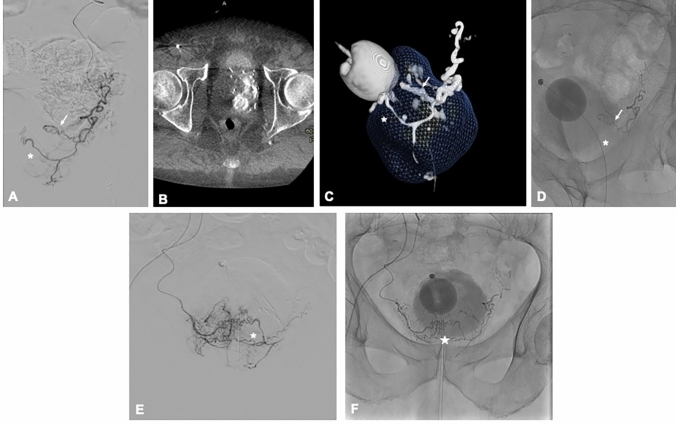 Figure 1
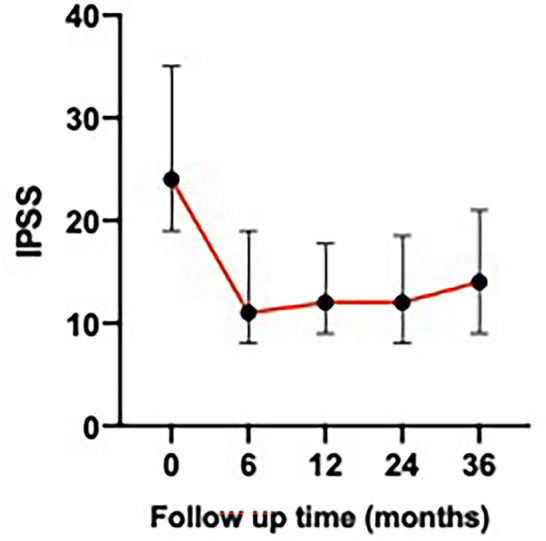 Figure 2
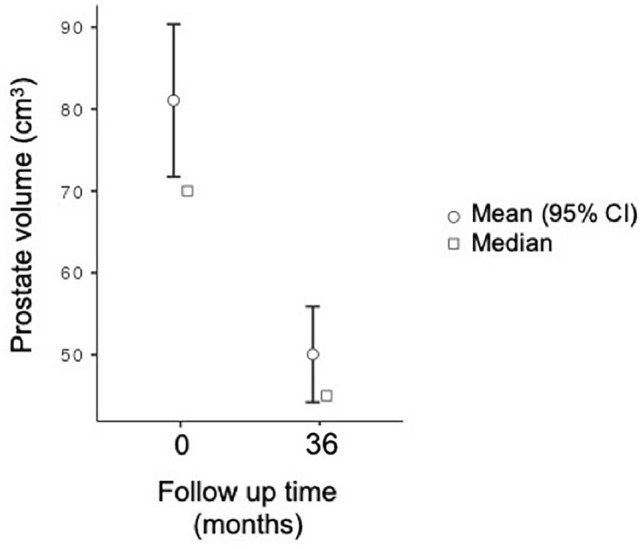 Figure 3
Peer Reviews
No public reviews on file for this paper yet. If you reviewed it on a platform where reviews are public (OpenReview, ICLR, NeurIPS, ICML), you can paste yours below so the community can read it here.
Videos
No videos yet. Explain this paper in a talk, walkthrough, or lecture? Add one.
Taxonomy
TopicsUrinary Bladder and Prostate Research · Urological Disorders and Treatments · Ureteral procedures and complications