Detection of human antibody responses to tick-borne Neoehrlichia mikurensis
Rima Alsalihi, Kerstin Andersson, Alaitz Aranburu, Christine Lingblom, Linda Wass, Catharina Lewerin, Marie Edvinsson, Andreas Mårtensson, Kenneth Nilsson, Elisabet Skoog, Anna-Carin Lundell, Beatrice Bergström, Anna Grankvist, Christine Wennerås

TL;DR
Researchers developed a new blood test to detect antibodies against a tick-borne bacteria, N. mikurensis, and found that children have high antibody levels, possibly explaining why they don't get sick.
Contribution
The first serological ELISA test for human antibody responses to Neoehrlichia mikurensis is developed and validated.
Findings
Immunocompetent adults with neoehrlichiosis had higher IgM and IgG antibody levels compared to immunosuppressed patients.
Children had high IgM antibody levels to N. mikurensis despite no evidence of infection or tick exposure.
Cord blood lacked these IgM antibodies, suggesting the children's response is not due to natural IgM.
Abstract
Tick-borne Neoehrlichia mikurensis is the cause of neoehrlichiosis, an infectious disease that features fever and vascular events. Compromised B-cell immunity is a risk factor for severe neoehrlichiosis, indicating the importance of antibodies in host defense. The development of serological assays has been hampered by the difficulty of culturing these intracellular bacteria. Here we present the first serological test for N. mikurensis, an ELISA for human IgM and IgG antibody responses to a P44/Msp2 protein of N. mikurensis. Serum or plasma from immunocompetent (n = 44) and immunosuppressed (n = 60) Swedish adults infected with N. mikurensis, with and without symptoms, were analyzed and compared with blood samples from non-infected immunocompetent individuals (n = 17). Sera from non-infected children (n = 23) and plasma from cord blood (n = 10) were also analyzed. Immunocompetent…
Genes, proteins, chemicals, diseases, species, mutations and cell lines named across the full text — each resolved to its canonical identifier and authoritative record.
Click any figure to enlarge with its caption.
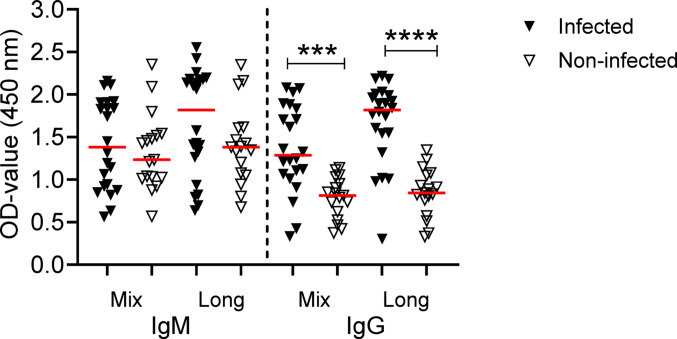 Figure 1
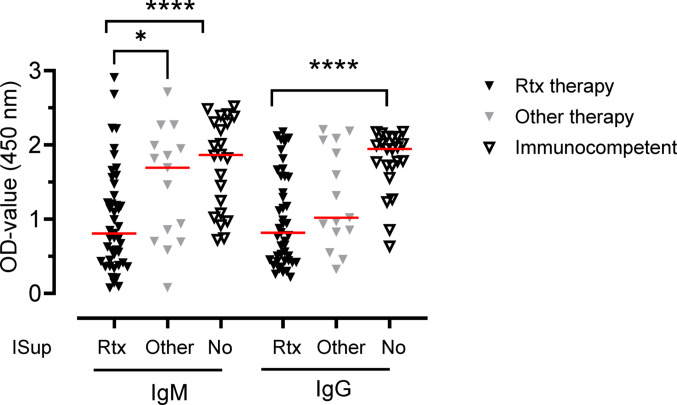 Figure 2
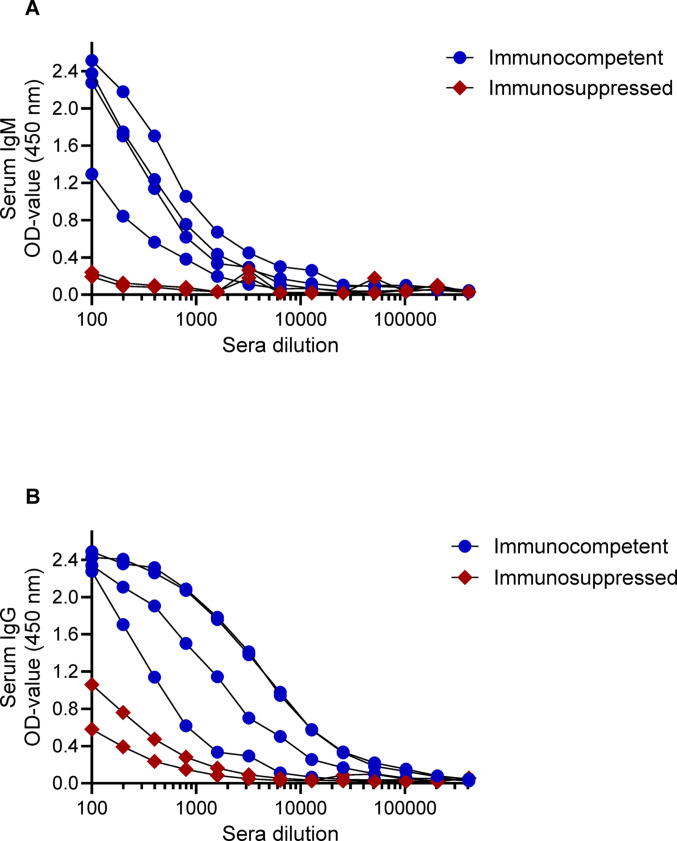 Figure 3
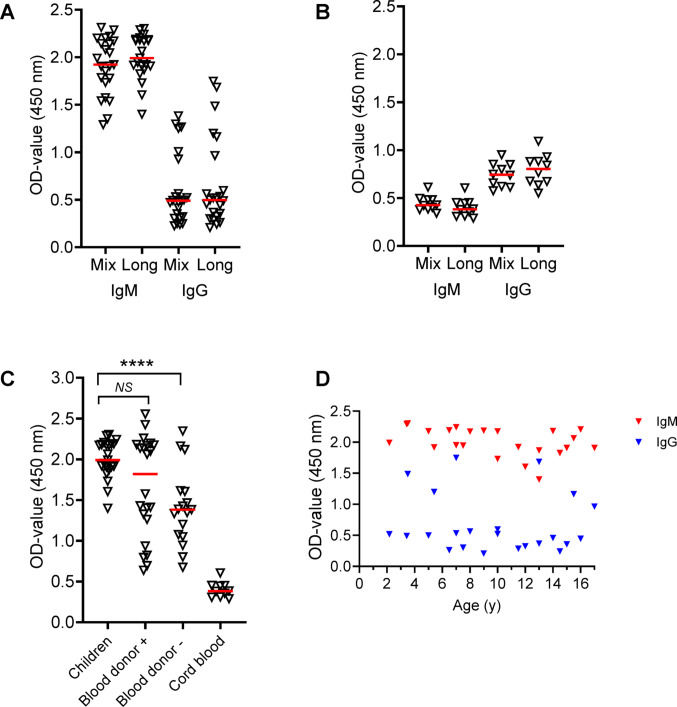 Figure 4
Peer Reviews
No public reviews on file for this paper yet. If you reviewed it on a platform where reviews are public (OpenReview, ICLR, NeurIPS, ICML), you can paste yours below so the community can read it here.
Videos
No videos yet. Explain this paper in a talk, walkthrough, or lecture? Add one.
Taxonomy
TopicsVector-borne infectious diseases · Parasites and Host Interactions · Amoebic Infections and Treatments