Phytostabilization potential and tolerance mechanisms of native species from the Pampa biome in vineyard soil with high levels of Cu, Zn and Mn
Letícia Morsch, Anderson Cesar Ramos Marques, Edicarla Trentin, Talita Andreolli, Filipe Nunes de Oliveira, Matheus Martins Ferreira, Jean Michel Moura-Bueno, Douglas Luiz Grando, Adriele Tassinari, Paola Daiane Welter, Luciane Almeri Tabaldi, Jucinei José Comin, Arcângelo Loss

TL;DR
This study explores how native plants from the Pampa biome tolerate and stabilize high levels of copper, zinc, and manganese in vineyard soils.
Contribution
The study identifies specific tolerance mechanisms and suitable species for phytostabilization in metal-contaminated vineyard soils.
Findings
Cell walls and vacuoles help detoxify metals in native species.
P. notatum and P. plicatulum are best suited for phytostabilization of Cu, Zn, and Mn.
Metal exposure reduced photosynthetic pigments and caused oxidative stress in plants.
Abstract
Fungicides applied to grapevines can increase the levels of copper (Cu), zinc (Zn), and manganese (Mn) in soils and cause phytotoxicity to plants. However, plants native to the Pampa biome might have the potential to phytostabilize these metals. The study aimed to (a) verify whether higher levels of Cu, Zn, and Mn in the soil increase the concentrations of these elements in different organs of the native species; (b) determine which variable is most directly associated with biomass variation in the evaluated species; and (c) identify the tolerance mechanisms used by these species to tolerate high levels of Cu, Zn, and Mn in the soil, as well as their phytostabilization potential. To this end, three native species, Axonopus compressus, Paspalum notatum, and Paspalum plicatulum, were grown in vineyard soil and native field soil. The cell wall and vacuole played an important role in…
Genes, proteins, chemicals, diseases, species, mutations and cell lines named across the full text — each resolved to its canonical identifier and authoritative record.
Click any figure to enlarge with its caption.
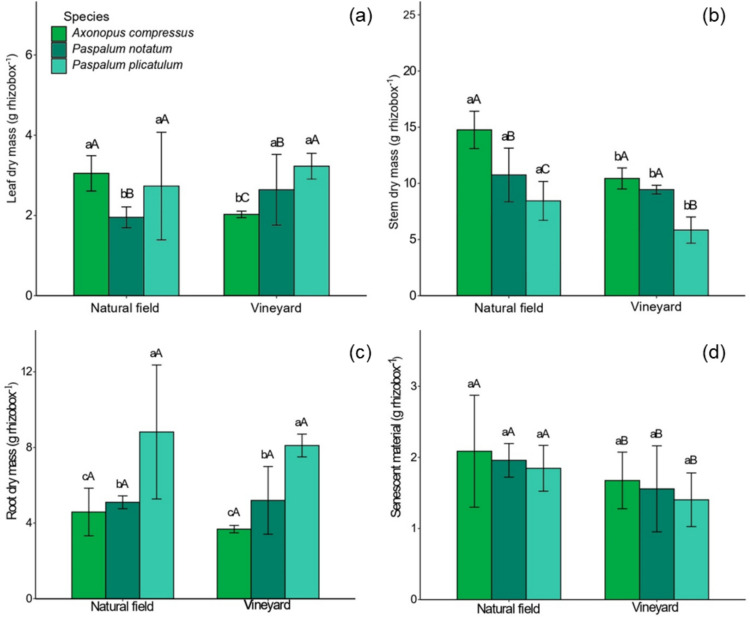 Figure 1
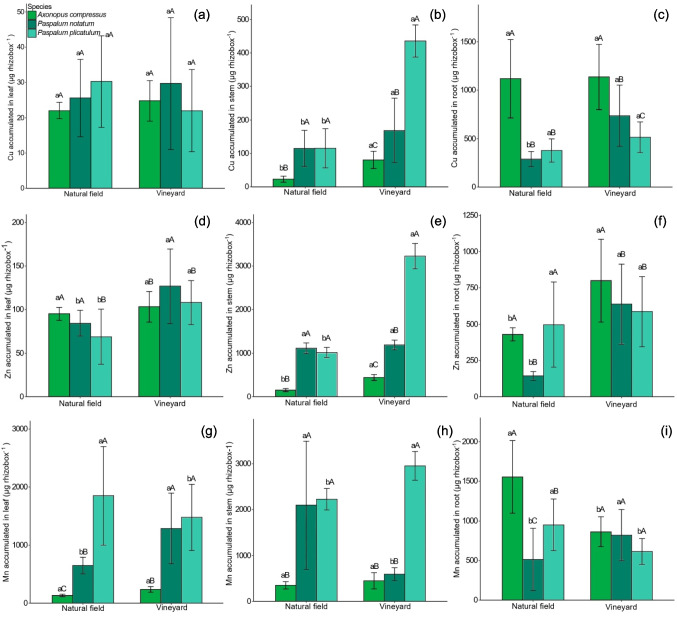 Figure 2
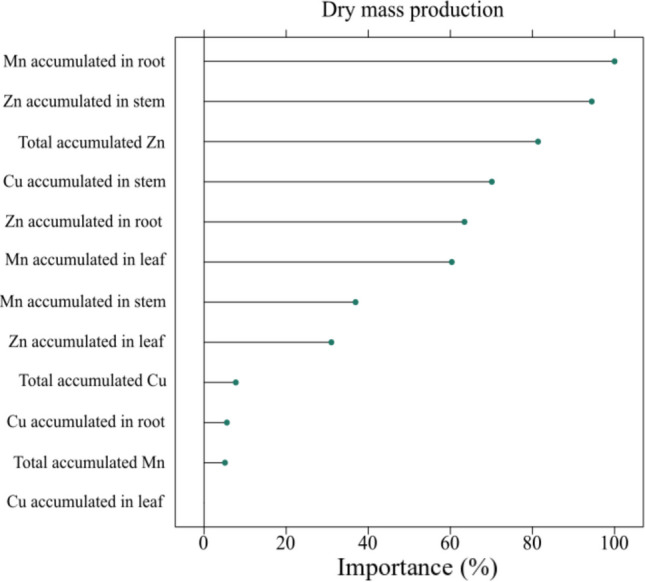 Figure 3
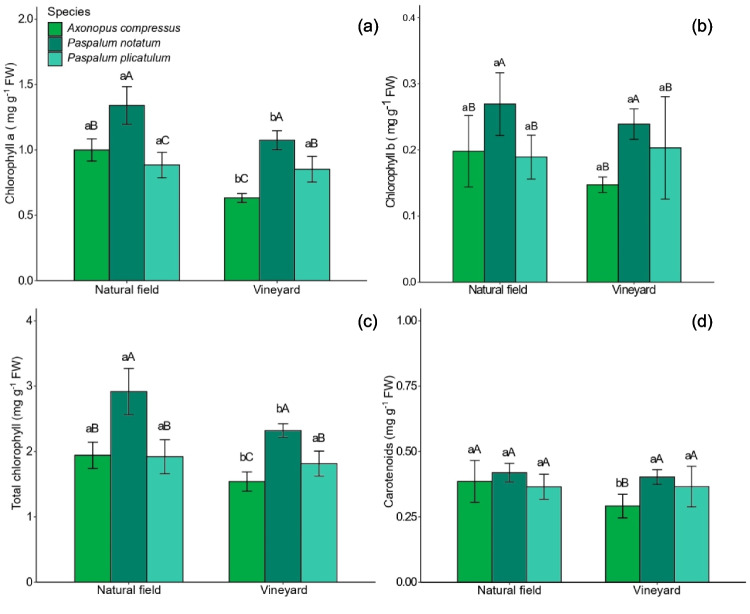 Figure 4
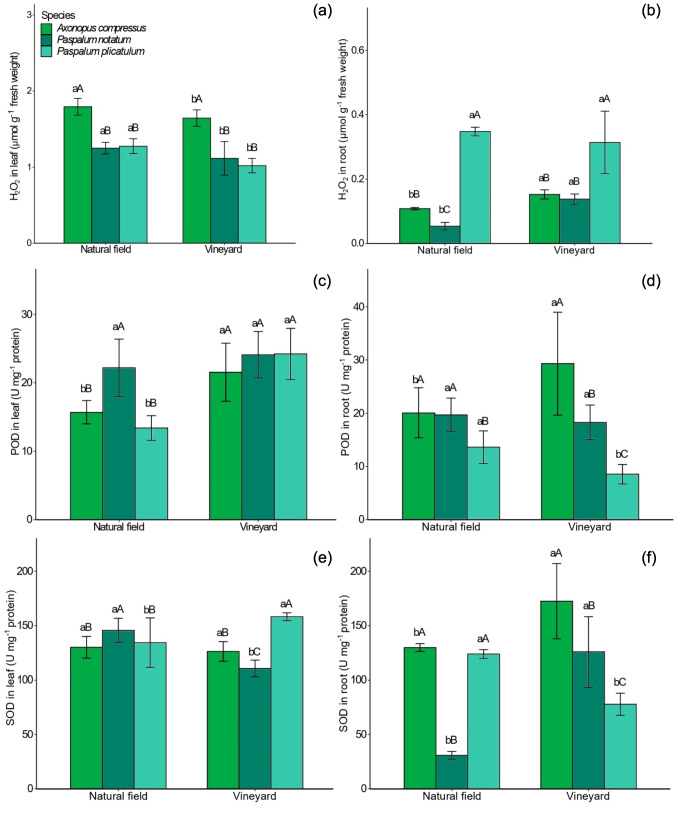 Figure 5
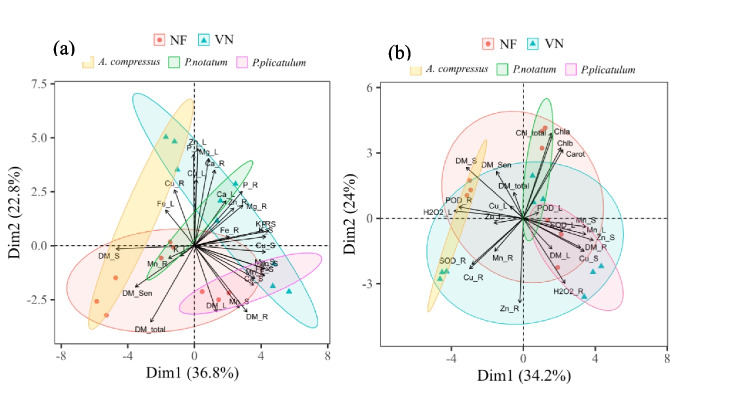 Figure 6
Peer Reviews
No public reviews on file for this paper yet. If you reviewed it on a platform where reviews are public (OpenReview, ICLR, NeurIPS, ICML), you can paste yours below so the community can read it here.
Videos
No videos yet. Explain this paper in a talk, walkthrough, or lecture? Add one.
Taxonomy
TopicsPlant Stress Responses and Tolerance · Environmental Toxicology and Ecotoxicology · Pesticide and Herbicide Environmental Studies