A putative Mycobacterium tuberculosis glyoxalase Rv0801 promotes bacterial fitness by alleviating methylglyoxal stress and blunts NRF2-mediated antioxidant defenses
Haiqi Chen, Qi’ao Zhang, Wei Wu, Xinyi He, Abulimiti Abudukadier, Yun Qi, Qun Sun, Peibo Li, Jianping Xie

TL;DR
This study shows how a bacterial enzyme in tuberculosis helps the bacteria survive by reducing toxic stress and weakening the host's defenses.
Contribution
The study identifies Rv0801 as a key glyoxalase in M. tuberculosis that suppresses host antioxidant and immune responses.
Findings
Rv0801 provides MG tolerance in a mycothiol-dependent manner, essential for bacterial fitness under MG stress.
Rv0801 suppresses the host KEAP1-NRF2 antioxidant pathway and dampens immunoprotective responses in macrophages.
The enzyme's dual-pathway interference compromises macrophage-mediated bacterial clearance.
Abstract
Methylglyoxal (MG), a toxic metabolic byproduct, functions as a potent antibacterial weapon deployed by macrophages. The glyoxalase system represents the primary microbial defense against MG, yet its role in Mycobacterium tuberculosis pathogenesis remains incompletely defined. To define the function of the putative M. tuberculosis glyoxalase Rv0801 and its homolog MSMEG_5827, we used genetic engineering in Mycobacterium smegmatis MC2-155, coupled with growth and macrophage infection assays. Host mechanisms were dissected via transcriptomic and biochemical analysis of the KEAP1-NRF2 antioxidant pathway and pro-inflammatory responses. We demonstrate that Rv0801, conferring robust MG tolerance in a mycothiol (MSH)-dependent manner, is essential for bacterial fitness under MG stress. Mechanistically, Rv0801 orchestrates a dual-pathway interference within infected macrophages: by…
Genes, proteins, chemicals, diseases, species, mutations and cell lines named across the full text — each resolved to its canonical identifier and authoritative record.
Click any figure to enlarge with its caption.
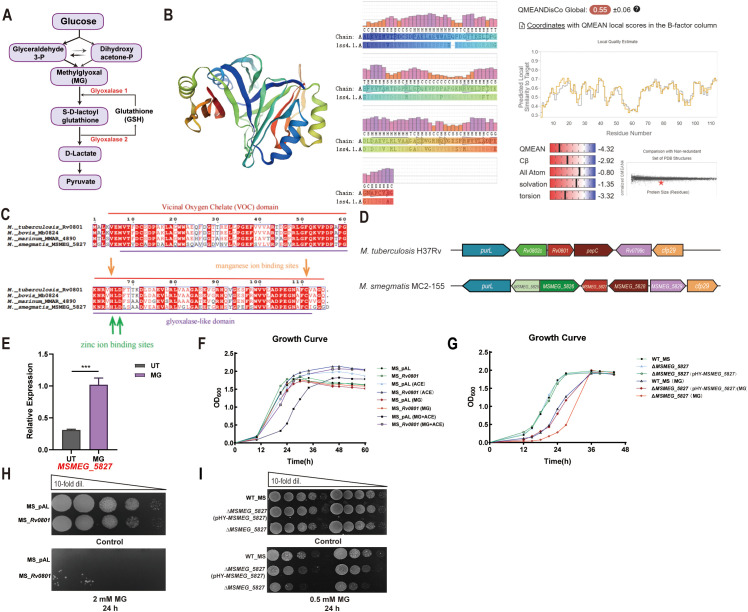 Figure 1
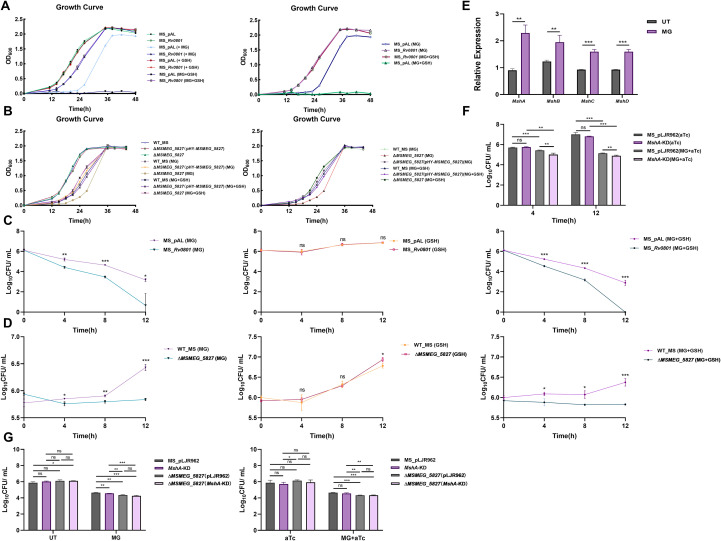 Figure 2
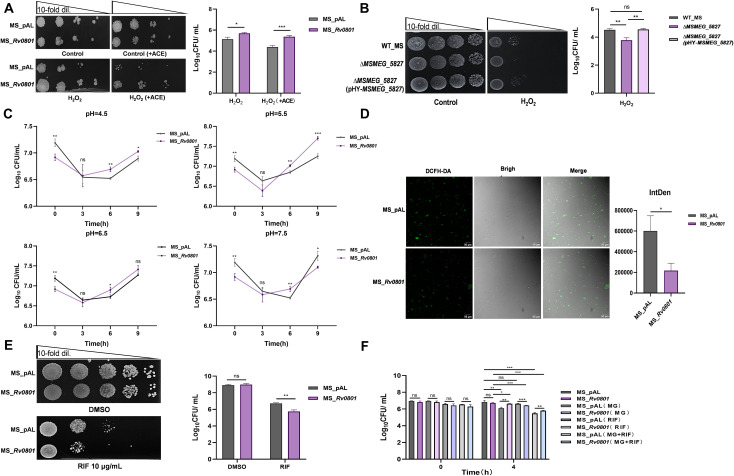 Figure 3
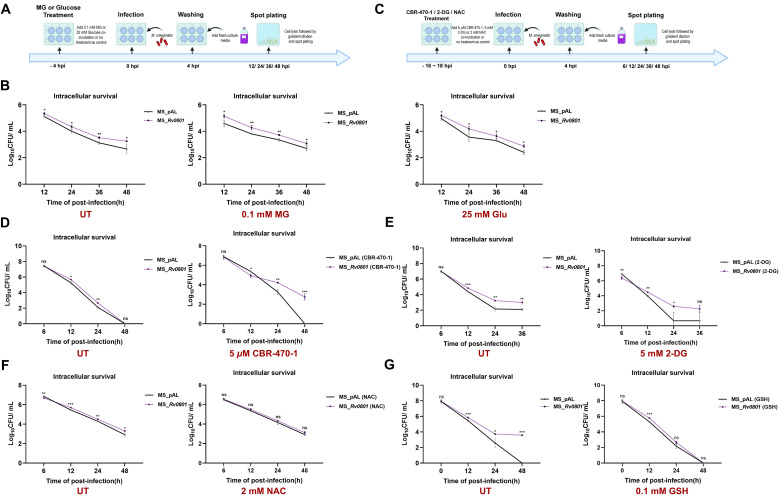 Figure 4
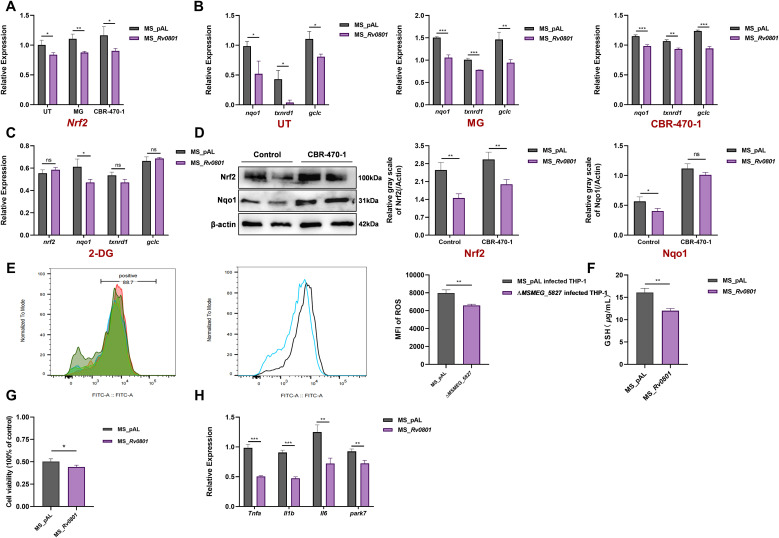 Figure 5
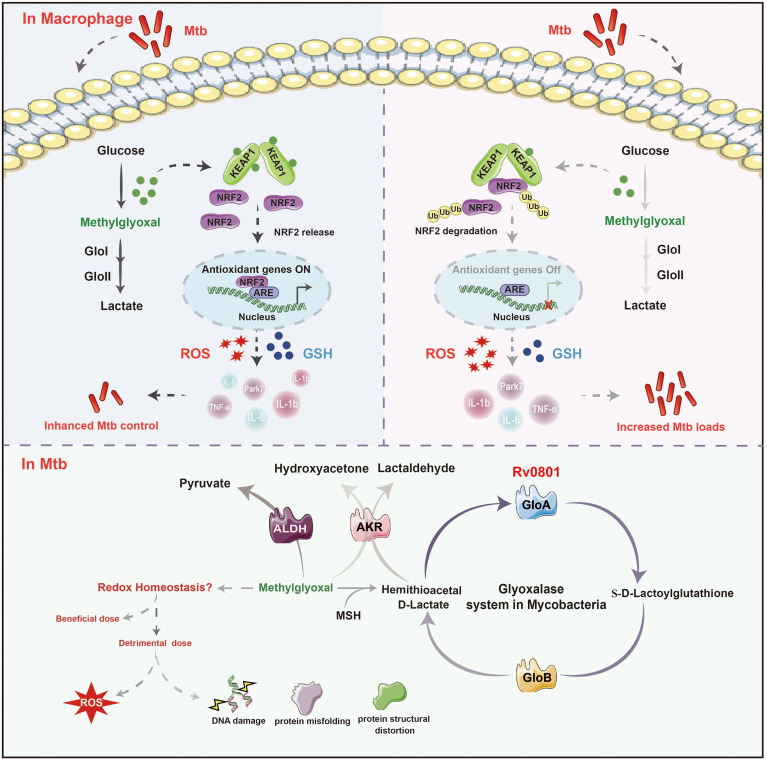 Figure 6
Peer Reviews
No public reviews on file for this paper yet. If you reviewed it on a platform where reviews are public (OpenReview, ICLR, NeurIPS, ICML), you can paste yours below so the community can read it here.
Videos
No videos yet. Explain this paper in a talk, walkthrough, or lecture? Add one.
Taxonomy
TopicsAdvanced Glycation End Products research · Tuberculosis Research and Epidemiology · Carbohydrate Chemistry and Synthesis