High-throughput phenomics of global ant biodiversity
Julian Katzke, Francisco Hita Garcia, Philipp D. Lösel, Fumika Azuma, Tomáš Faragó, Lazzat Aibekova, Alexandre Casadei-Ferreira, Shubham Gautam, Adrian Richter, Evropi Toulkeridou, Sabine Bremer, Elias Hamann, Jenny Hein, Janes Odar, Chandan Sarkar, Marcus Zuber

TL;DR
This paper introduces Antscan, a large-scale open-access database of 3D ant images, enabling detailed study of ant morphology and evolution.
Contribution
Antscan provides a high-throughput, standardized imaging resource for ant biodiversity, linking phenomics with genomics.
Findings
Antscan includes 2,193 3D datasets from 792 ant species across 212 genera.
The database is publicly accessible and supports integrative analyses with genome projects.
Standardized imaging parameters allow for automated analysis and broader scientific use.
Abstract
The big data era in biology is underway, but the study of organismal form has been slow to capitalize on advances in imaging and computation. Imaging approaches can digitize whole organisms, but low throughput has limited the effort to document morphological diversity. Here, within the open science initiative ‘Antscan’, we applied high-throughput synchrotron X-ray microtomography to capture phenotypes across a diverse and ecologically dominant insect group: ants. At https://www.antscan.info, we provide 2,193 whole-body three-dimensional ant datasets from 212 genera and 792 species to broadly cover the ant phylogeny with a global scope, also pairing phenomic data with genome sequencing projects. Scans acquired with standardized parameters facilitate automated analysis, and free access to data can broaden the audience and incentivize methods development. Antscan presents a scalable…
Genes, proteins, chemicals, diseases, species, mutations and cell lines named across the full text — each resolved to its canonical identifier and authoritative record.
Click any figure to enlarge with its caption.
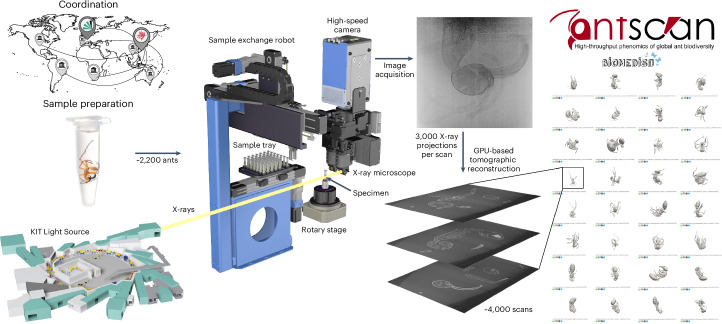 Figure 1
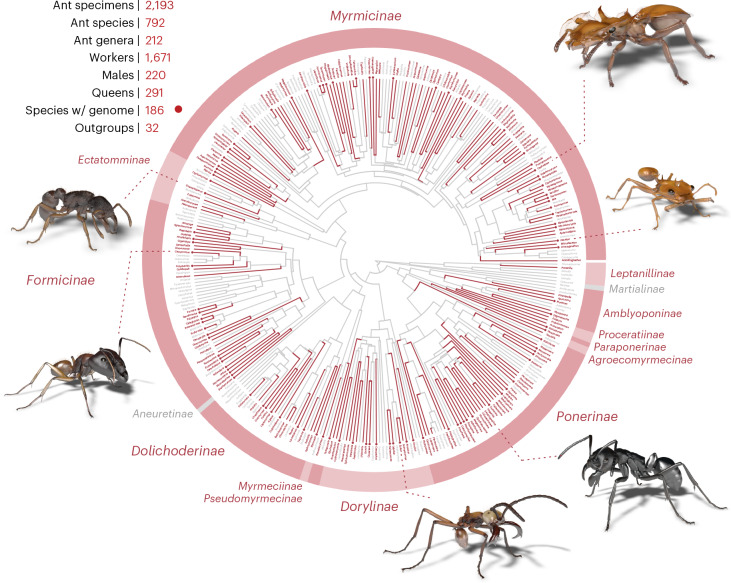 Figure 2
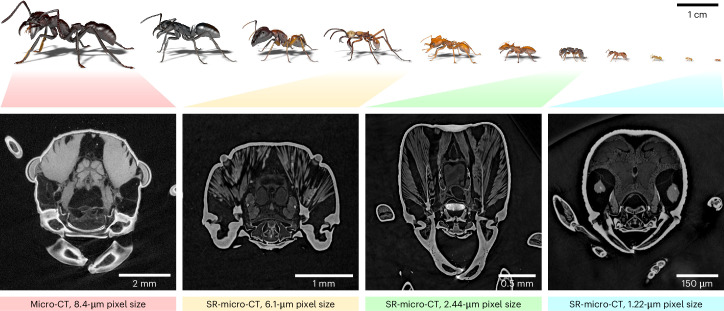 Figure 3
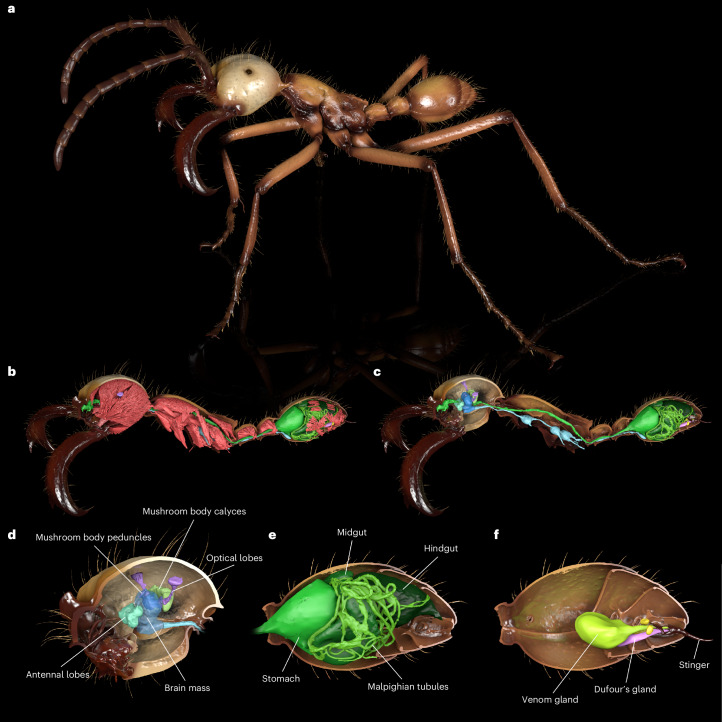 Figure 4
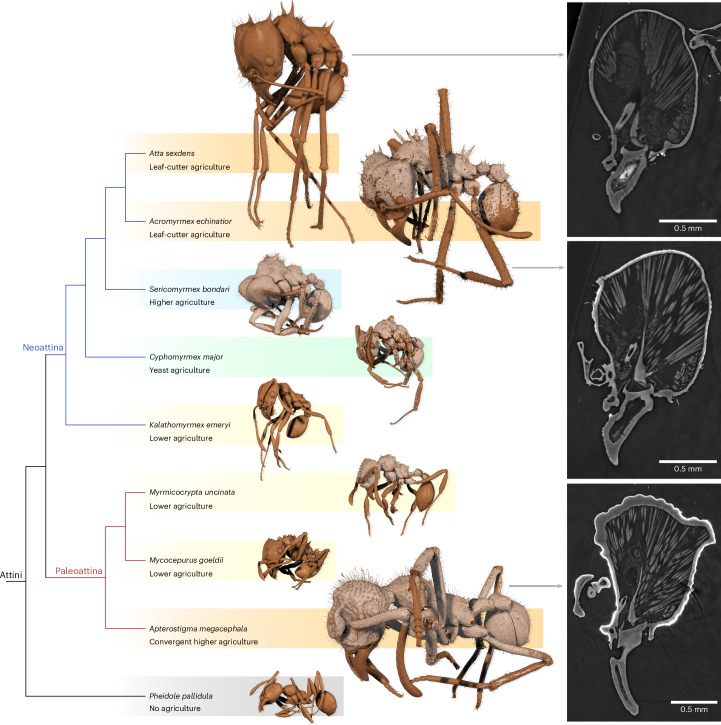 Figure 5
Peer Reviews
No public reviews on file for this paper yet. If you reviewed it on a platform where reviews are public (OpenReview, ICLR, NeurIPS, ICML), you can paste yours below so the community can read it here.
Videos
No videos yet. Explain this paper in a talk, walkthrough, or lecture? Add one.
Taxonomy
TopicsInsect and Arachnid Ecology and Behavior · Species Distribution and Climate Change · Fossil Insects in Amber