Electroacupuncture modulates electroencephalographic microstate dynamics to alleviate chronic insomnia: a machine learning approach for predicting individual treatment response
Enqi Liu, Chi Wang, Xiaoqiu Wang, Kai Liu, Shan Qin, Liyu Lin, Juan Li, Min Xu, Chengyong Liu, Huangan Wu, Wenzhong Wu

TL;DR
This study explores how electroacupuncture affects brain activity in people with chronic insomnia and uses machine learning to predict treatment response based on brainwave patterns.
Contribution
The novel contribution is using EEG microstate dynamics and machine learning to predict individual response to electroacupuncture treatment for chronic insomnia.
Findings
Electroacupuncture improved clinical scores and altered EEG microstate parameters in chronic insomnia patients.
Baseline microstate features showed potential for predicting treatment response, with random forest achieving an AUC of 0.849.
Specific microstate transitions and durations were identified as key predictors of treatment response.
Abstract
Chronic insomnia (CI) is associated with dysregulation of brain network dynamics, and patient response to electroacupuncture (EA) treatment varies. This study aimed to investigate the characteristics of electroencephalographic (EEG) microstates in patients with CI, analyze changes in microstate parameters before and after EA treatment, and explore the potential application of machine learning (ML) models based on baseline microstate features for predicting treatment response. We enrolled 41 CI patients and 19 healthy controls (HC). Baseline resting-state EEG was recorded, and microstate parameters (classes A–D) were analyzed. CI patients underwent 4-week EA treatment. Six clinical scales—including the Pittsburgh Sleep Quality Index (PSQI) and Hamilton Depression Scale, and microstate dynamics were compared pre- and post-treatment. Treatment response was defined as ≥50% PSQI reduction.…
Genes, proteins, chemicals, diseases, species, mutations and cell lines named across the full text — each resolved to its canonical identifier and authoritative record.
Click any figure to enlarge with its caption.
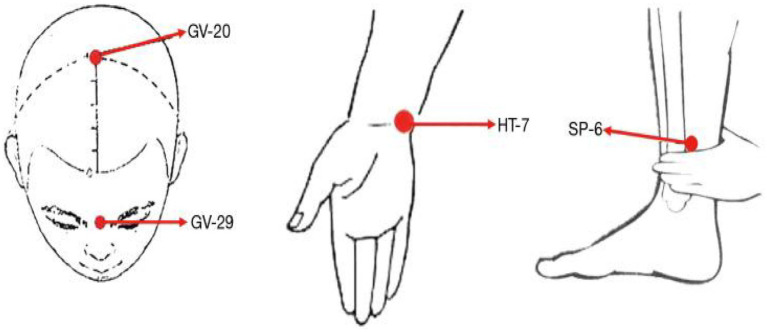 Figure 1
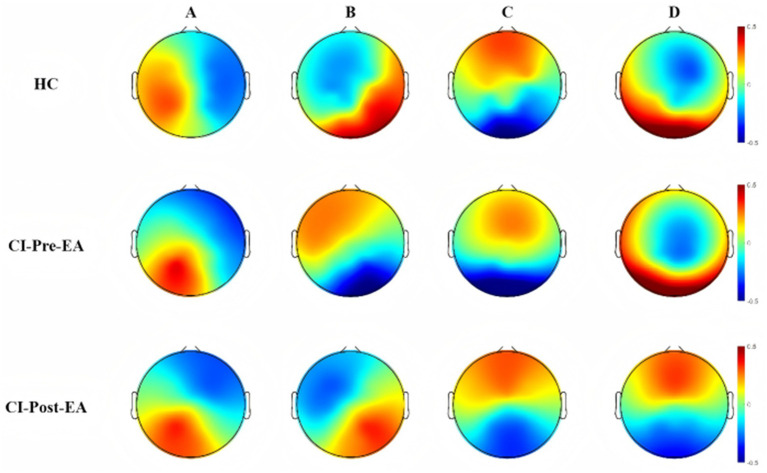 Figure 2
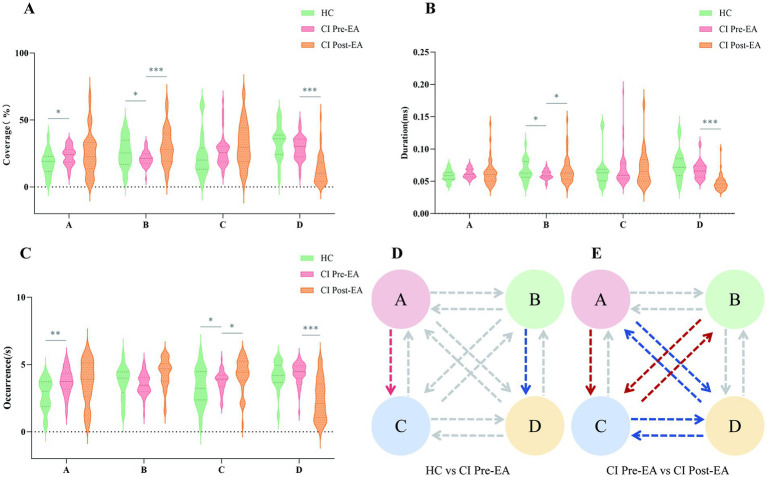 Figure 3
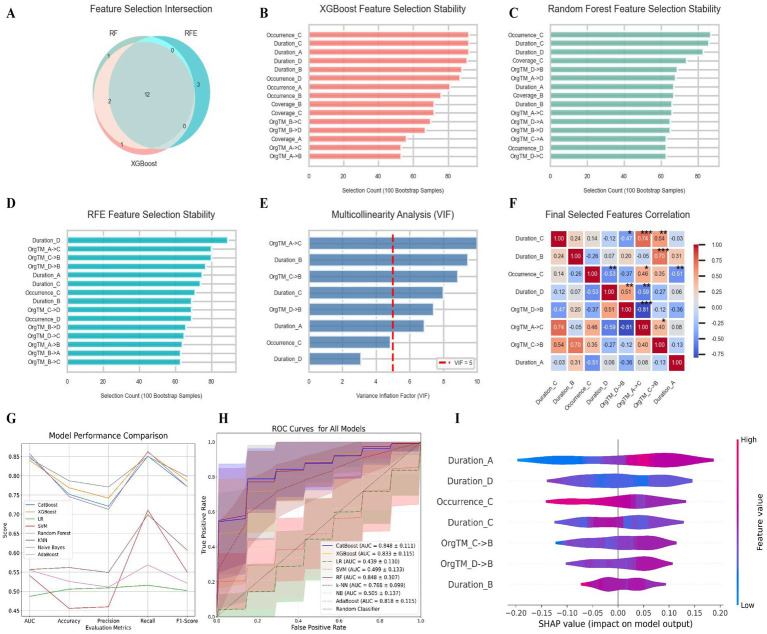 Figure 4
Peer Reviews
No public reviews on file for this paper yet. If you reviewed it on a platform where reviews are public (OpenReview, ICLR, NeurIPS, ICML), you can paste yours below so the community can read it here.
Videos
No videos yet. Explain this paper in a talk, walkthrough, or lecture? Add one.
Taxonomy
TopicsSleep and related disorders · Sleep and Wakefulness Research · EEG and Brain-Computer Interfaces