Anti-secretory and anti-proliferative actions of next-generation dual subtype 2 and 5 somatostatin receptor ligands in neuroendocrine tumor models
Francesco Fedeli, Margarita Bistika, Francesco Ascione, Alessandro Marangelo, Fabio L. Guzzi, Jörg Schrader, Alan G. Harris, Natalia S. Pellegata

TL;DR
New dual receptor drugs show better or equal hormone suppression and tumor growth inhibition in neuroendocrine tumor models compared to existing treatments.
Contribution
Development and evaluation of next-generation dual SSTR2/SSTR5 agonists with improved anti-secretory and anti-proliferative effects in preclinical models.
Findings
Dual SRLs inhibited insulin and ACTH secretion more effectively than existing drugs in cell models.
SMTR-002 reduced cell proliferation in 3D cultures and suppressed cAMP accumulation better than reference SRLs.
Several dual SRLs showed antiproliferative effects comparable to or better than pasireotide in AtT-20 cells.
Abstract
First-generation somatostatin receptor ligands (SRLs) mainly target SSTR2, whereas neuroendocrine tumors (NETs) often express multiple SSTR subtypes, frequently SSTR5. Dual SSTR2/SSTR5 targeting may enhance anti-hormonal and antiproliferative effects. We evaluated five novel dual SSTR2/SSTR5 agonists (SMTR-001 to SMTR-005) in preclinical NET models to assess their anti-secretory and anti-proliferative effects in representative preclinical NET models. The human insulinoma-derived NT-3 cell line and the murine AtT-20 corticotroph cell line, both expressing SSTR2 and SSTR5, were treated with 1–50 nM of the novel SRLs or reference agents (octreotide, pasireotide). Insulin and ACTH secretion were quantified by ELISA and cell viability was measured after 72 h (AtT-20) or 5 days (NT-3). A putative lead compound, SMTR-002, was further tested in 3D spheroid cultures of NT-3 cells. Intracellular…
Genes, proteins, chemicals, diseases, species, mutations and cell lines named across the full text — each resolved to its canonical identifier and authoritative record.
Click any figure to enlarge with its caption.
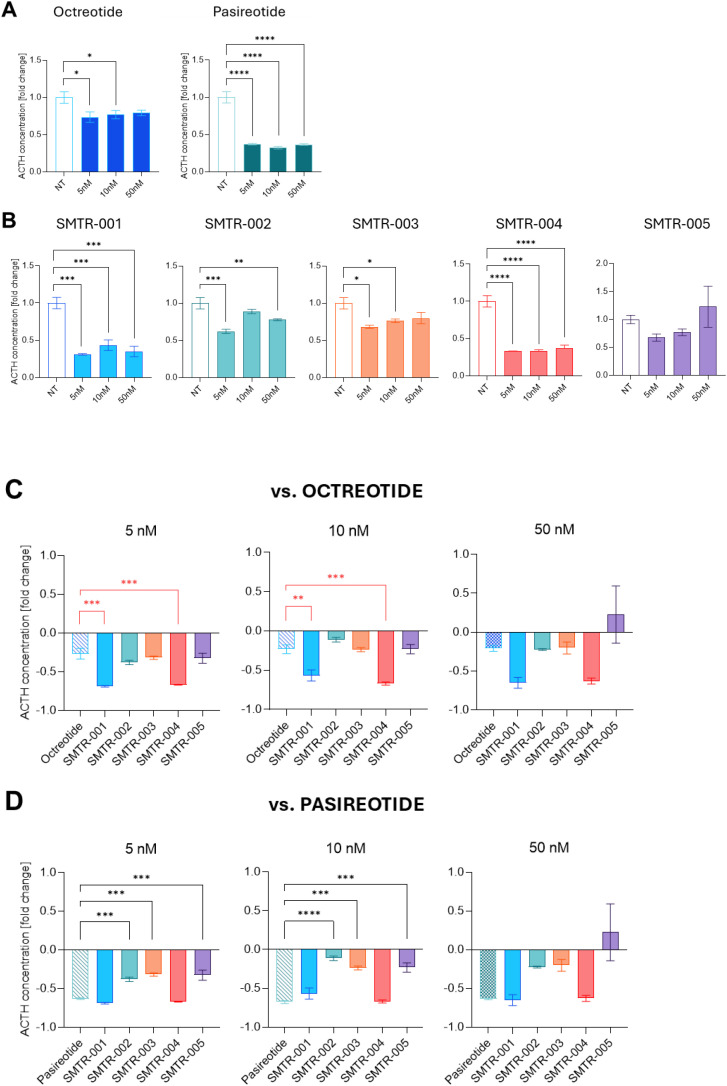 Figure 1
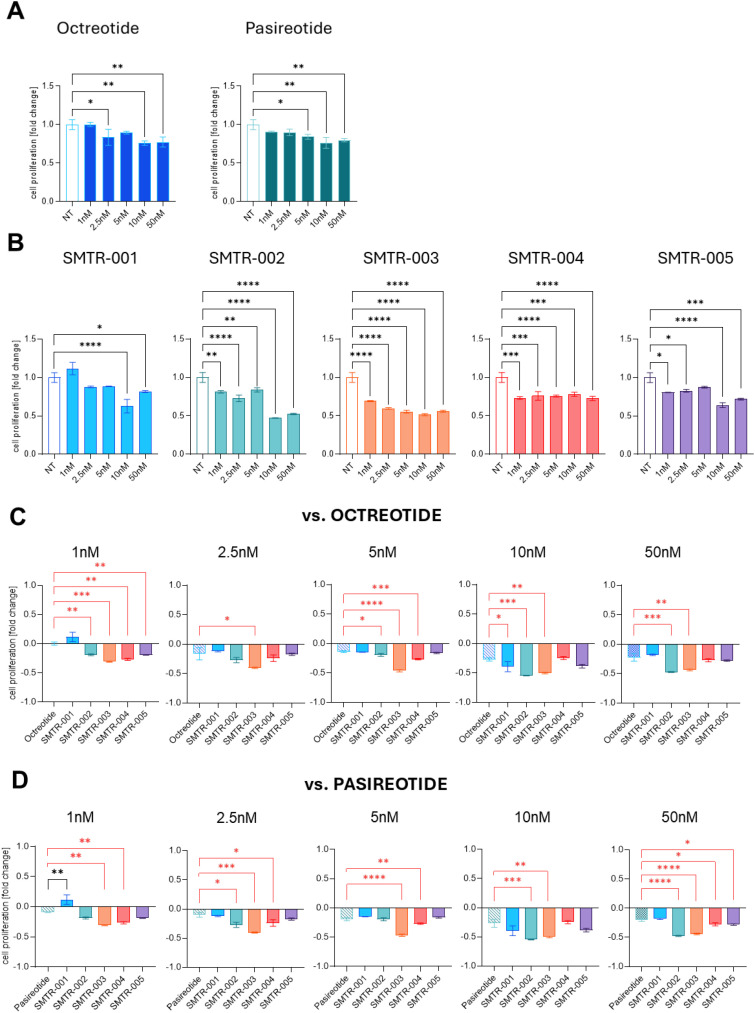 Figure 2
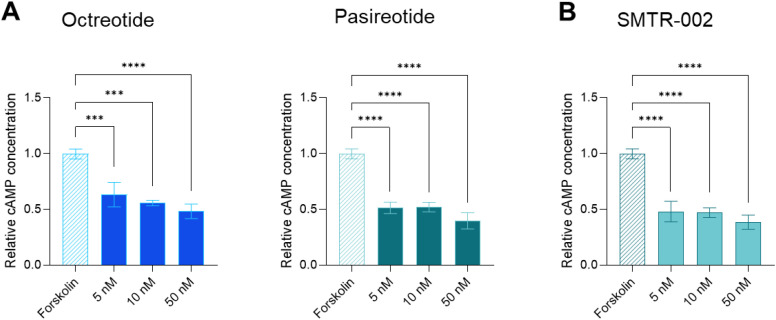 Figure 3
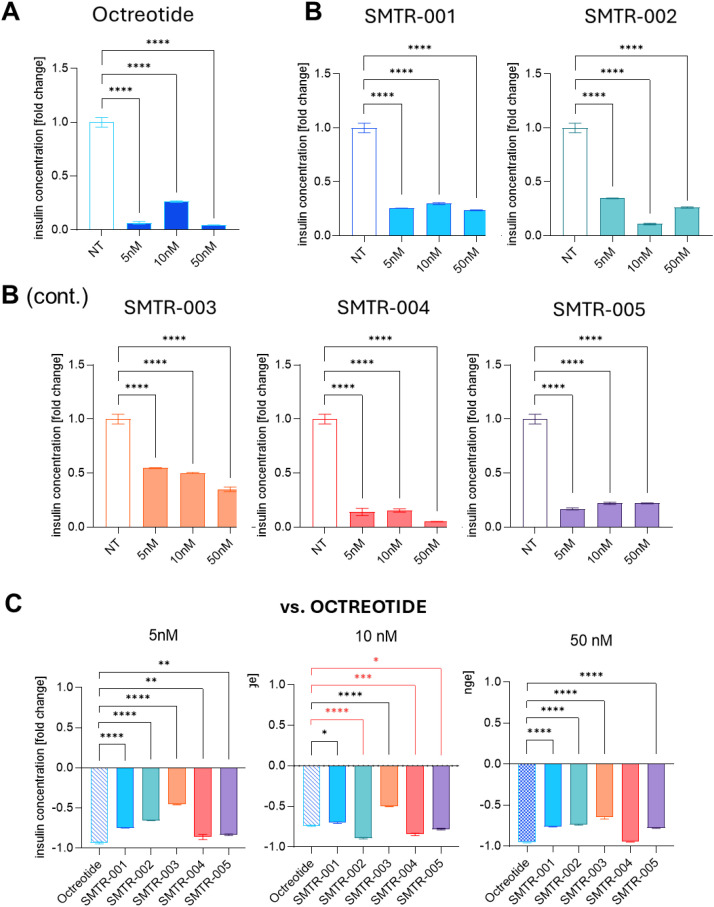 Figure 4
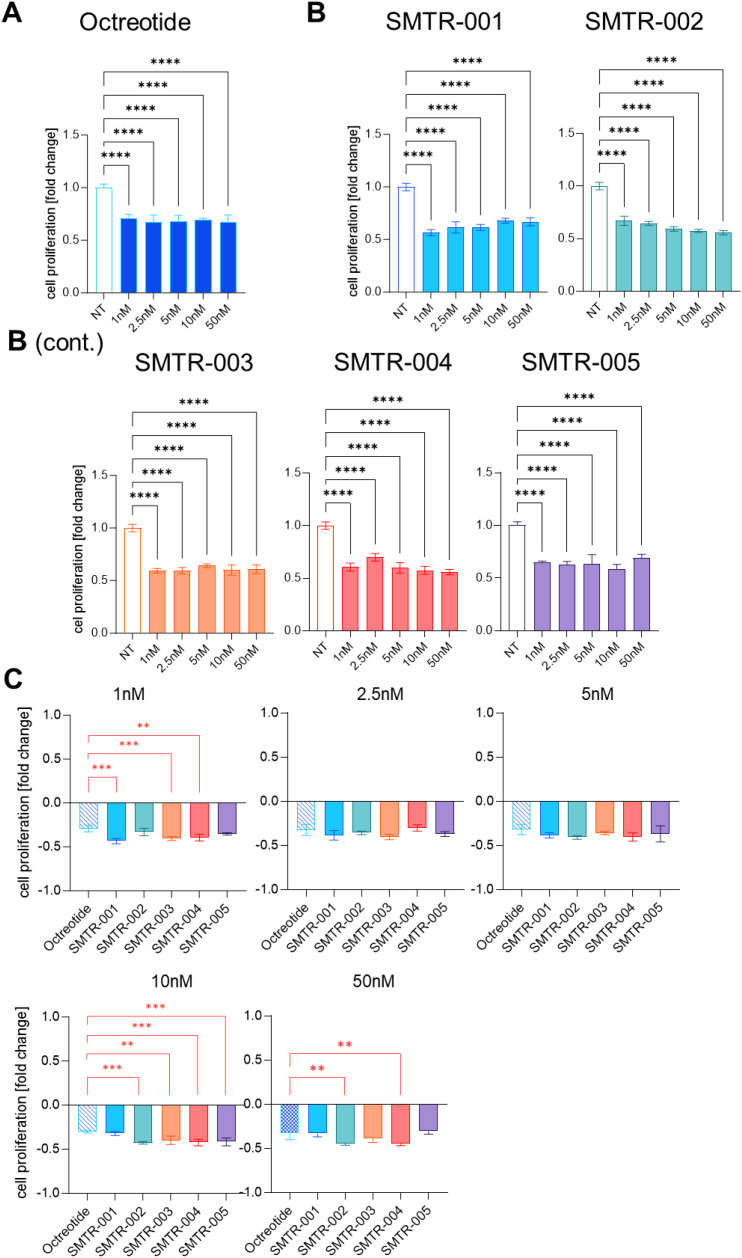 Figure 5
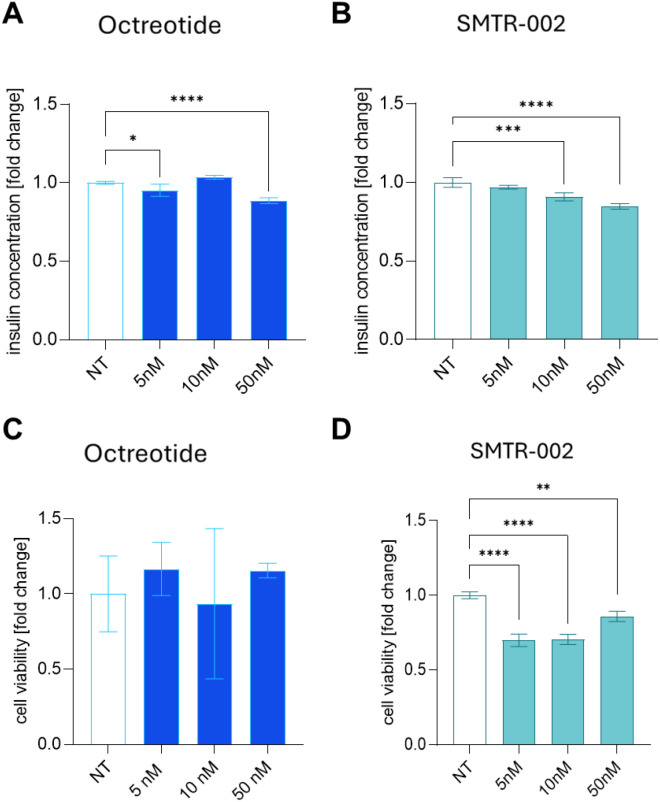 Figure 6
Peer Reviews
No public reviews on file for this paper yet. If you reviewed it on a platform where reviews are public (OpenReview, ICLR, NeurIPS, ICML), you can paste yours below so the community can read it here.
Videos
No videos yet. Explain this paper in a talk, walkthrough, or lecture? Add one.
Taxonomy
TopicsNeuroendocrine Tumor Research Advances · Pituitary Gland Disorders and Treatments · Thyroid Cancer Diagnosis and Treatment