DARC-NESS: a mastery-based cognitive-behavioral model for treating chronic nightmares in youth
Lisa DeMarni Cromer, Emily Kaier Cromwell, Lauren E. Prince, Tara R. Buck

TL;DR
This paper introduces DARC-NESS, a new model for understanding and treating chronic nightmares in children using cognitive-behavioral therapy.
Contribution
The paper introduces DARC-NESS, a novel cognitive-behavioral model emphasizing nightmare self-efficacy as a key factor in chronic nightmare maintenance.
Findings
DARC-NESS identifies seven interacting components that perpetuate chronic nightmares in youth.
The model provides a theoretical framework for CBT interventions targeting each component of nightmare maintenance.
A case illustration demonstrates how modular interventions based on DARC-NESS can disrupt chronic nightmare cycles.
Abstract
Theories of chronic nightmare maintenance highlight dysfunctional beliefs about sleep and nightmares, distress and arousal, anticipatory anxiety, maladaptive sleep habits, and sleep deprivation as perpetuating factors that maintain nightmare disorder over time. Theories of nightmare treatment suggest that self-efficacy is a common factor in nightmare mitigation. The current article introduces DARC-NESS, a multi-component theory of nightmare maintenance that emphasizes nightmare self-efficacy as a central mechanism influencing the maintenance cycle at multiple points. DARC-NESS is a mnemonic for the model's components: Dream (nightmare) content, Appraisals, Resources for regulation, Conditioned arousal, Nightmare Efficacy, Sleep hygiene and patterns, and Sleep quality and quantity, that interact to perpetuate nightmares. This model provides the theoretical basis for cognitive behavioral…
Genes, proteins, chemicals, diseases, species, mutations and cell lines named across the full text — each resolved to its canonical identifier and authoritative record.
Click any figure to enlarge with its caption.
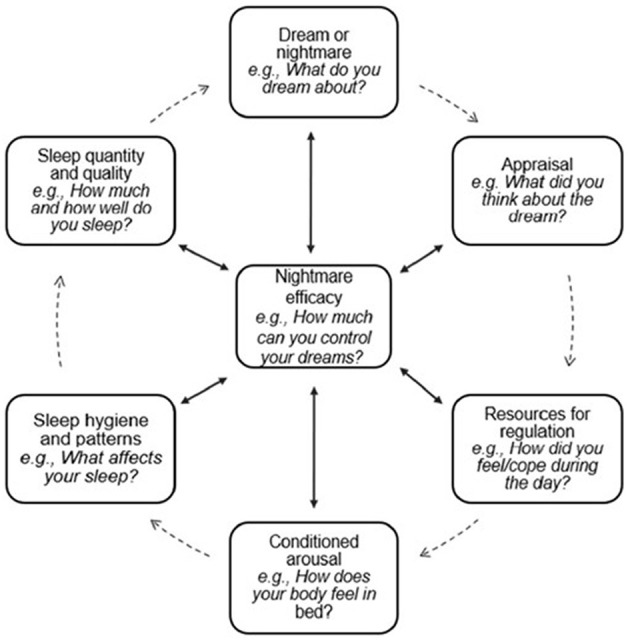 Figure 1
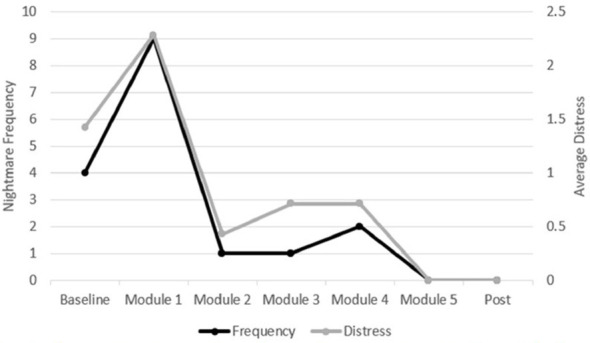 Figure 2
Peer Reviews
No public reviews on file for this paper yet. If you reviewed it on a platform where reviews are public (OpenReview, ICLR, NeurIPS, ICML), you can paste yours below so the community can read it here.
Videos
No videos yet. Explain this paper in a talk, walkthrough, or lecture? Add one.
Taxonomy
TopicsSleep and Wakefulness Research · Sleep and related disorders · Sleep and Work-Related Fatigue