Toxicokinetics and postmortem redistribution of amantadine in rats
Lingxiao Wang, Xiaomeng Sun, Chenxu Gao, Jinkai Wang, Jianbin Gong, Zhe Chen, Zhiwen Wei, Chao Zhang, Keming Yun

TL;DR
This study examines how amantadine distributes in rat tissues and changes after death, highlighting the importance of using multiple tissues for accurate toxicological analysis.
Contribution
The study provides new toxicokinetic and postmortem redistribution data for amantadine across multiple tissues in rats.
Findings
Amantadine shows high tissue-specific distribution, with the liver and kidney having the highest exposure.
Postmortem redistribution is significant and influenced by dose, postmortem interval, and storage temperature.
Liver-to-muscle and spleen-to-brain concentration ratios show consistent trends, aiding toxicological interpretation.
Abstract
Amantadine (AMD) is an antiviral and antiparkinsonian drug with a narrow therapeutic window and a recognized risk of severe intoxication. Interpretation of postmortem drug concentrations is complicated by postmortem redistribution (PMR), yet systematic toxicokinetic and multi-tissue PMR data for amantadine remain limited. An integrated investigation of amantadine toxicokinetics and postmortem redistribution was conducted in male rats. For toxicokinetic assessment, a single oral dose of 450 mg/kg (LD50) was administered, and concentrations were quantified in blood and nine tissues over a 96-h period. For the PMR study, rats received low (42 mg/kg), medium (LD50), and high (2 × LD50) doses, followed by controlled postmortem storage at 4 °C and 20 °C for up to 96 h. Amantadine concentrations were determined using validated HPLC–MS/MS methods and analyzed by pharmacokinetic and statistical…
Genes, proteins, chemicals, diseases, species, mutations and cell lines named across the full text — each resolved to its canonical identifier and authoritative record.
Click any figure to enlarge with its caption.
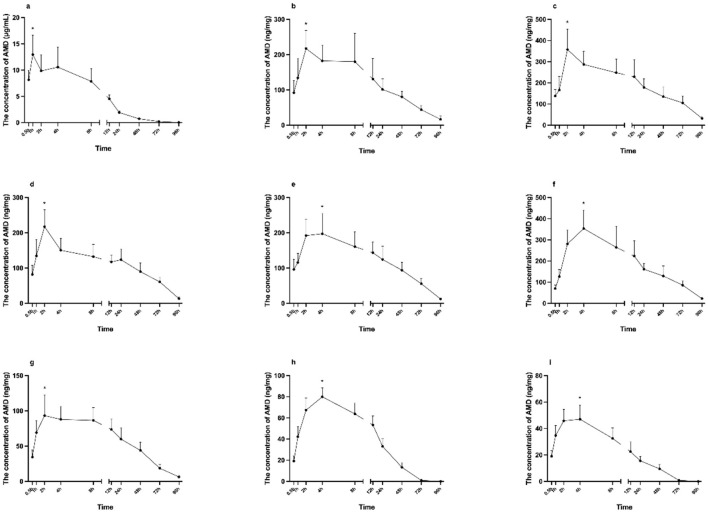 Figure 1
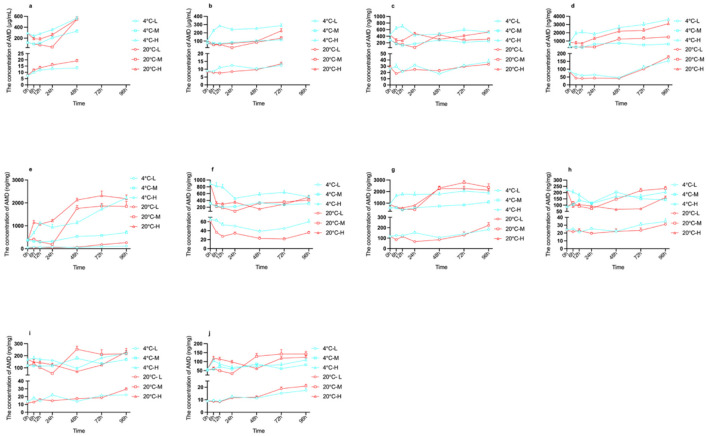 Figure 2
Peer Reviews
No public reviews on file for this paper yet. If you reviewed it on a platform where reviews are public (OpenReview, ICLR, NeurIPS, ICML), you can paste yours below so the community can read it here.
Videos
No videos yet. Explain this paper in a talk, walkthrough, or lecture? Add one.
Taxonomy
TopicsPoisoning and overdose treatments · Pharmacogenetics and Drug Metabolism · Bipolar Disorder and Treatment