Moisture-driven shifts in the fermentation characteristics and microbial community of alfalfa silage treated with different additives
Run Gao, Bo Wu, Zhiqiang Sun, Zhu Yu, Chunlin Jia, Daniel Basigalup, Guoliang Wang

TL;DR
This study explores how moisture levels and additives affect the fermentation and microbial community in alfalfa silage.
Contribution
The study reveals how moisture and specific additives influence microbial communities and fermentation outcomes in alfalfa silage.
Findings
Additives like L. plantarum and propionic acid improved fermentation by reducing pH and Enterococcus abundance at higher moisture levels.
Lower moisture content enhanced the effectiveness of additives in promoting better fermentation characteristics.
Lactobacillus and Sphingomonas were positively correlated with fermentation quality indicators like LA and Flieg’s score.
Abstract
Understanding the changes in the bacterial ecosystem during anaerobic fermentation of alfalfa (Medicago sativa L.) could provide clearer insight into how moisture content and additives affect the fermentation characteristics and chemical composition of alfalfa silage. Alfalfa was harvested at the budding stage, with moisture contents of 78, 68, and 58%. The treatments included a control (CK), commercial Lactiplantibacillus plantarum (CL), screened L. plantarum (LP, 1 × 10⁶ cfu/g FW), and propionic acid (P, 6 mL/kg FW). The results showed that the addition of CL, LP, and P significantly reduced pH and NH3-N content and decreased the relative abundance of Enterococcus at moisture contents of 78 and 68%. These treatments also increased LA and dry matter (DM) content and decreased the relative abundance of Lactobacillus. The addition of CL and LP significantly reduced pH, NH3-N content, and…
Genes, proteins, chemicals, diseases, species, mutations and cell lines named across the full text — each resolved to its canonical identifier and authoritative record.
Click any figure to enlarge with its caption.
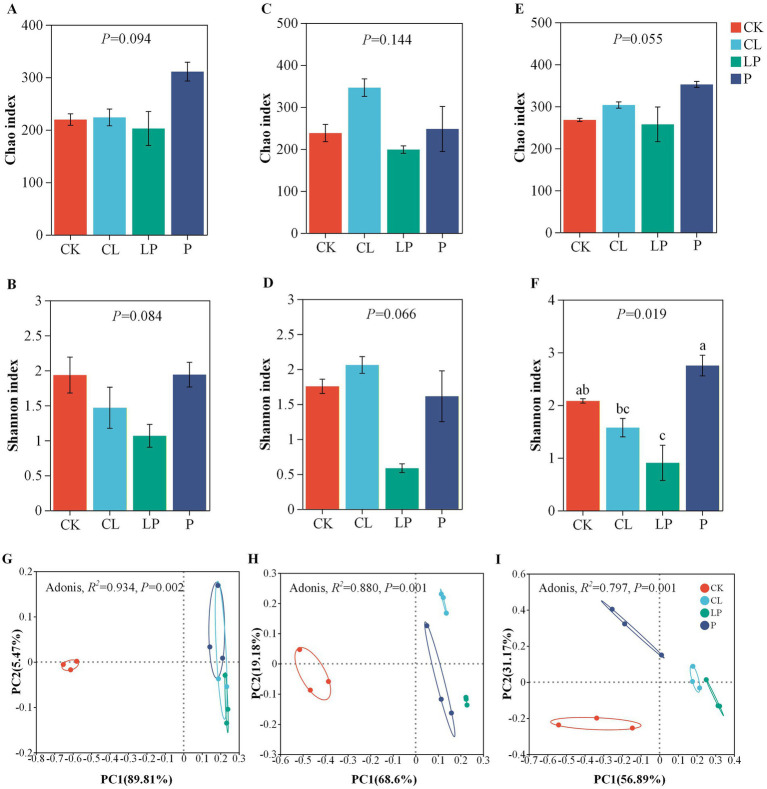 Figure 1
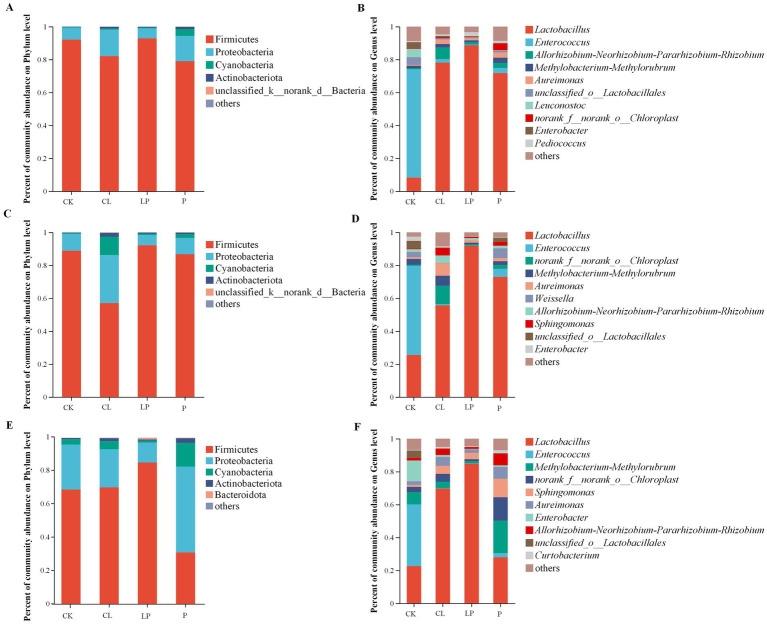 Figure 2
 Figure 3
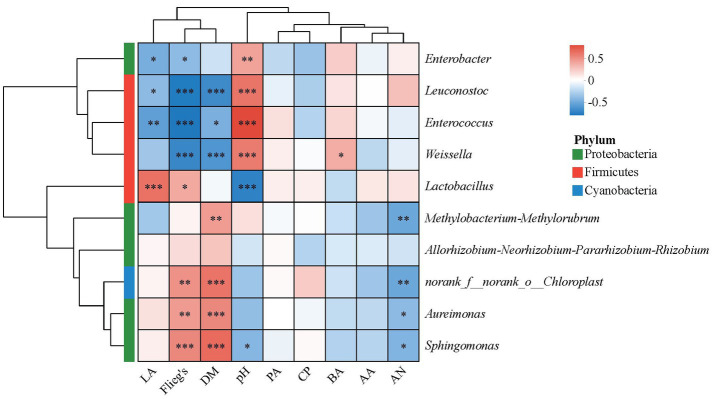 Figure 4
Peer Reviews
No public reviews on file for this paper yet. If you reviewed it on a platform where reviews are public (OpenReview, ICLR, NeurIPS, ICML), you can paste yours below so the community can read it here.
Videos
No videos yet. Explain this paper in a talk, walkthrough, or lecture? Add one.
Taxonomy
TopicsRuminant Nutrition and Digestive Physiology · Food composition and properties · Enzyme Production and Characterization