Penile involvement associated with renal pelvic squamous cell carcinoma: a case report and mechanistic considerations
Kotaro Masaki, Takuya Tsujino, Hiroyuki Okada, Yuki Yoshikawa, Ryoichi Maenosono, Yusaku Imura, Masashi Sanada, Kensuke Hirosuna, Yuta Furusawa, Rei Yoshimi, Issei Kojima, Moritoshi Sakamoto, Kengo Iwatsuki, Yuki Nakajima, Takuya Matsuda, Takuya Higashio, Shuya Tsuchida

TL;DR
This case report describes the first known instance of penile metastasis from renal pelvic squamous cell carcinoma, suggesting a rare hematogenous spread pathway.
Contribution
The paper presents the first documented case of penile involvement from renal pelvic SCC, offering insights into its metastatic mechanism.
Findings
Penile metastasis from renal pelvic SCC was confirmed through histopathology and immunohistochemistry.
The absence of regional lymphadenopathy suggests hematogenous retrograde venous dissemination as the likely pathway.
The case highlights the importance of considering secondary penile involvement in advanced upper urinary tract malignancies.
Abstract
Squamous cell carcinoma (SCC) of the renal pelvis is an uncommon malignancy, accounting for less than 1% of upper urinary tract tumors. Penile metastasis from renal pelvic SCC has not been documented. A 74-year-old man presented with a firm penile nodule. Magnetic resonance imaging (MRI) demonstrated an intracavernosal mass, while contrast-enhanced computed tomography (CT) revealed a large left renal pelvic tumor (89 mm) with hepatic and hilar lymph node metastases, without pelvic or inguinal lymphadenopathy. Histopathological examination of both the renal pelvic and penile lesions showed keratinizing SCC. Immunohistochemistry demonstrated diffuse p40 and p63 positivity with PAX8 and p16 negativity, supporting a urothelial tract origin rather than a primary penile carcinoma. Given the disseminated disease and rapid clinical deterioration, no systemic or surgical therapy was undertaken,…
Genes, proteins, chemicals, diseases, species, mutations and cell lines named across the full text — each resolved to its canonical identifier and authoritative record.
Click any figure to enlarge with its caption.
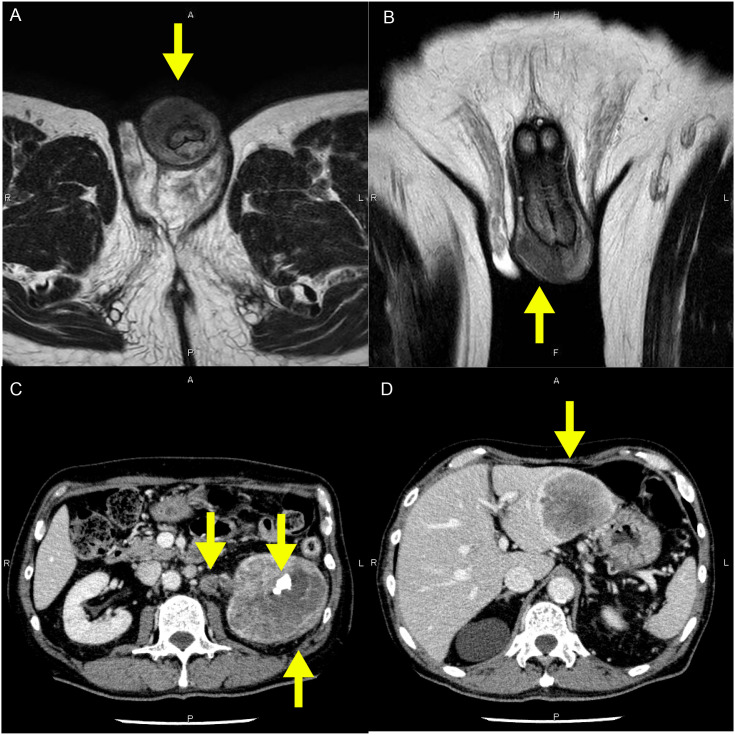 Figure 1
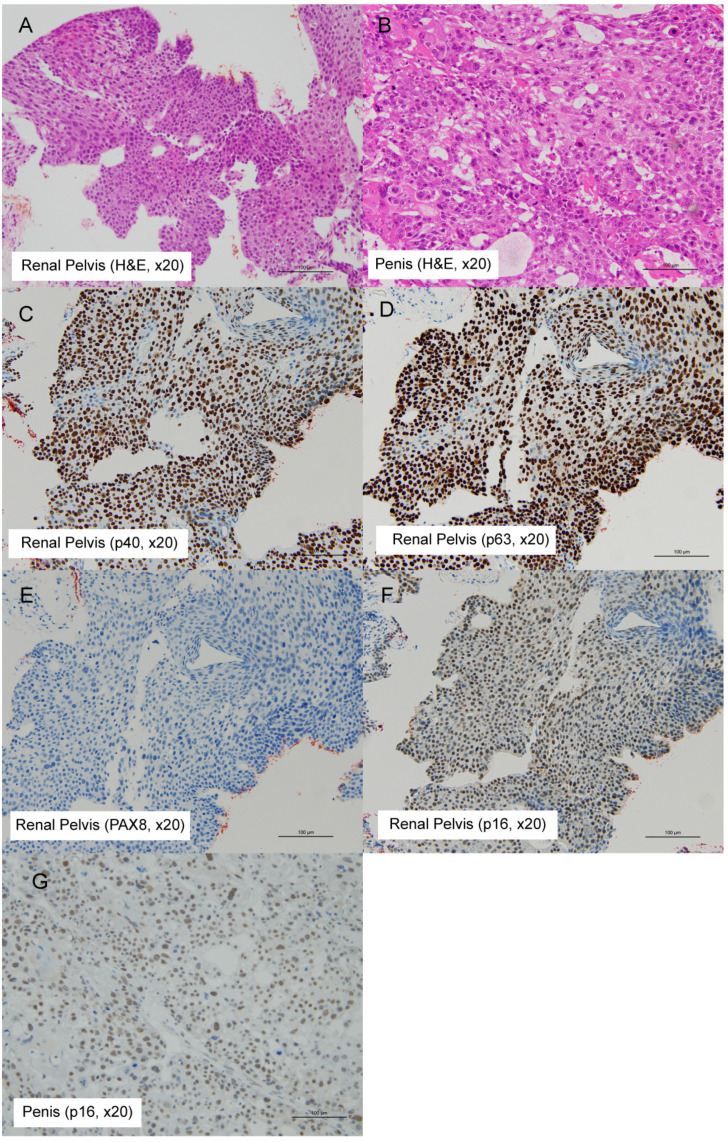 Figure 2
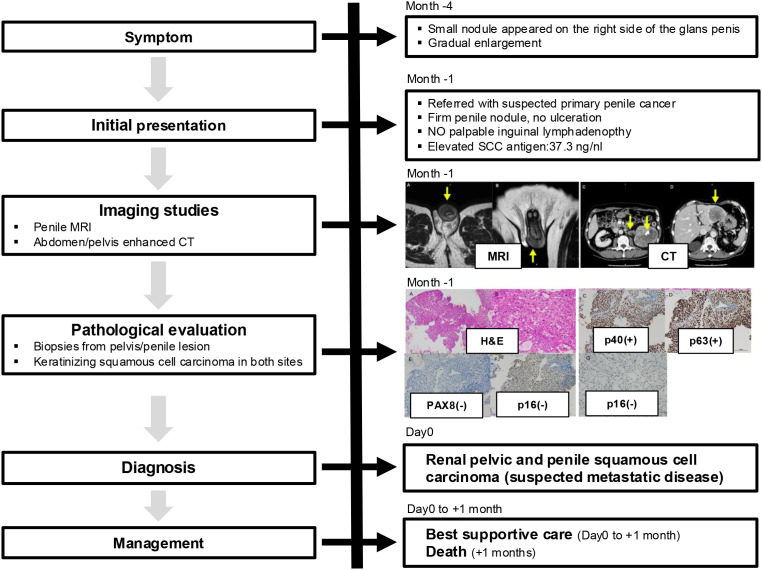 Figure 3
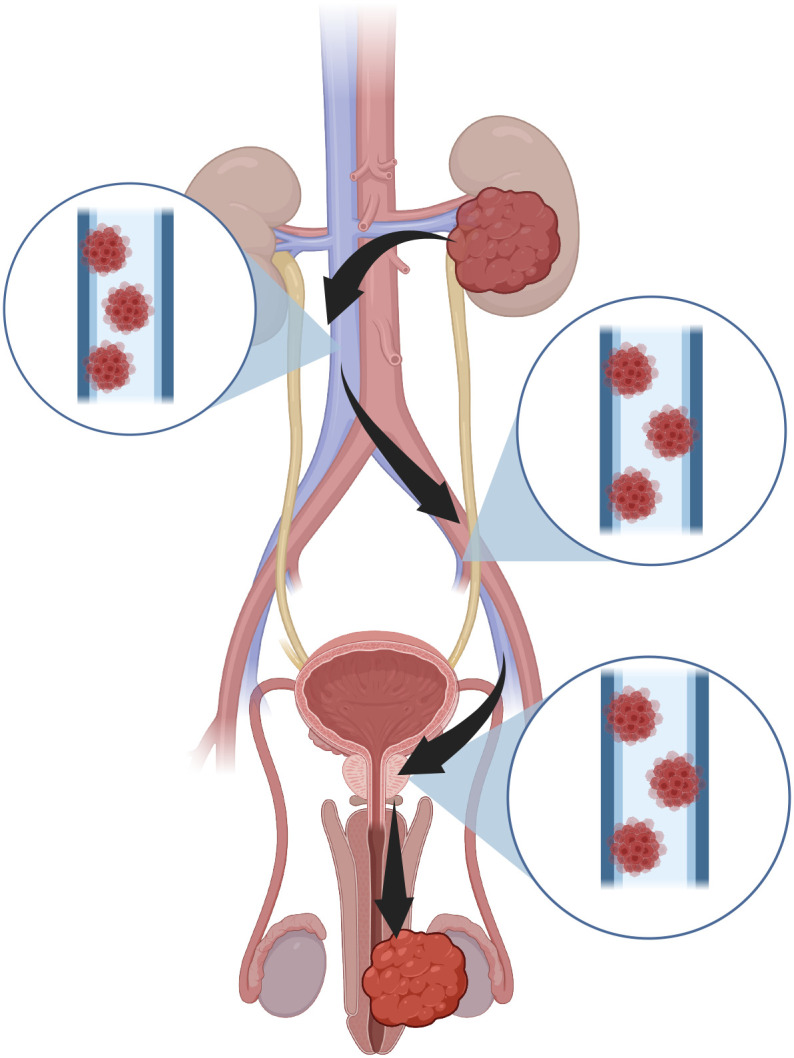 Figure 4
Peer Reviews
No public reviews on file for this paper yet. If you reviewed it on a platform where reviews are public (OpenReview, ICLR, NeurIPS, ICML), you can paste yours below so the community can read it here.
Videos
No videos yet. Explain this paper in a talk, walkthrough, or lecture? Add one.
Taxonomy
TopicsGenital Health and Disease · Bladder and Urothelial Cancer Treatments · Cancer Diagnosis and Treatment