HMGB1: a key molecule linking chronic inflammation to complications in type 2 diabetes mellitus and a target for exercise intervention
Fu Pengyu, Xu Huiyun, Gong Lijing

TL;DR
This paper explores how HMGB1, a molecule linked to inflammation, contributes to type 2 diabetes and its complications, and how exercise can help by targeting this pathway.
Contribution
The paper systematically reviews HMGB1's role in T2DM and proposes exercise as a non-pharmacological intervention to target HMGB1-driven inflammation.
Findings
HMGB1 is dysregulated in T2DM and contributes to insulin resistance and complications via RAGE/TLR4−NF−κB pathways.
Exercise mitigates HMGB1-driven pathology by downregulating HMGB1 and reducing inflammation.
Exercise improves glycemic control, autophagy, and reduces oxidative stress, indirectly targeting HMGB1 effects.
Abstract
The pathological process of type 2 diabetes mellitus (T2DM) is closely associated with chronic low−grade inflammation. High mobility group box 1 (HMGB1), a key damage−associated molecular pattern (DAMP), is frequently dysregulated in T2DM and is implicated in promoting insulin resistance (IR), β cell dysfunction, and the progression of multiple complications—including cardiovascular disease, nephropathy, cognitive impairment, myopathy, and dyslipidemia—primarily through activating signaling pathways such as RAGE/TLR4−NF−κB. Exercise, a cornerstone non−pharmacological intervention, effectively mitigates HMGB1−driven pathology through multifaceted mechanisms. These include direct downregulation of HMGB1 expression and suppression of its downstream inflammatory pathways, as well as indirect effects via improved glycemic control, enhancing autophagy, and reduced oxidative stress. This…
Genes, proteins, chemicals, diseases, species, mutations and cell lines named across the full text — each resolved to its canonical identifier and authoritative record.
Click any figure to enlarge with its caption.
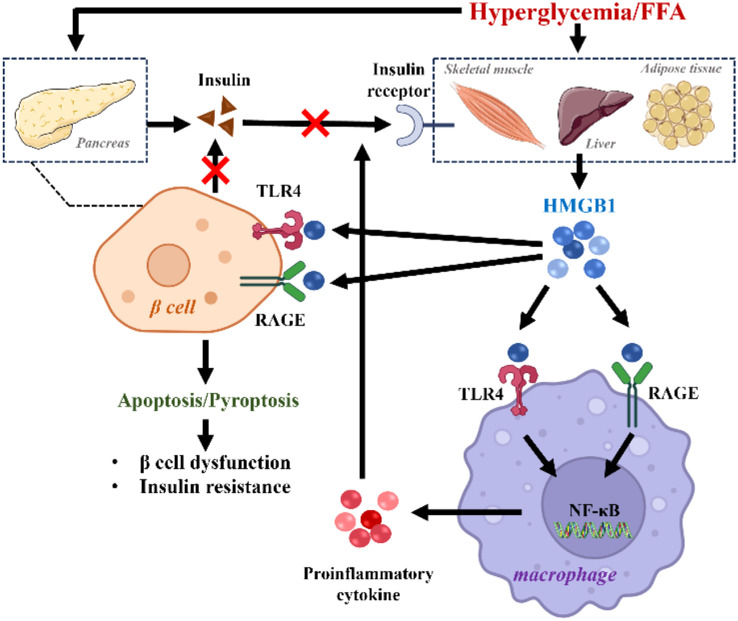 Figure 1
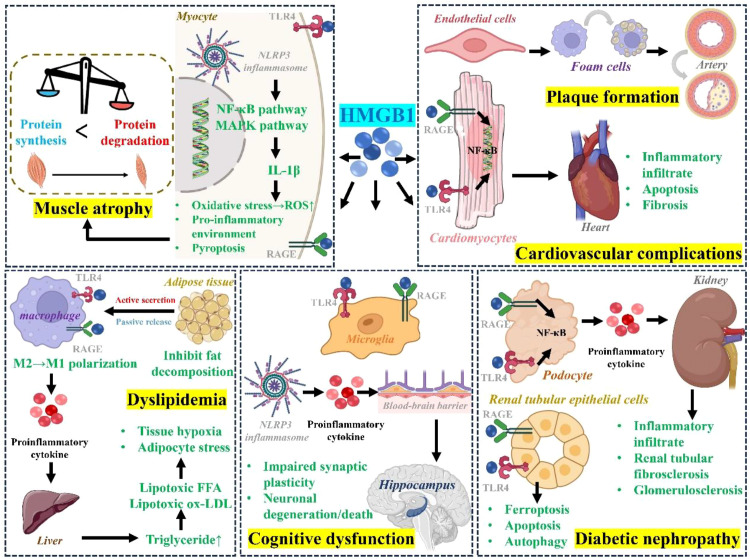 Figure 2
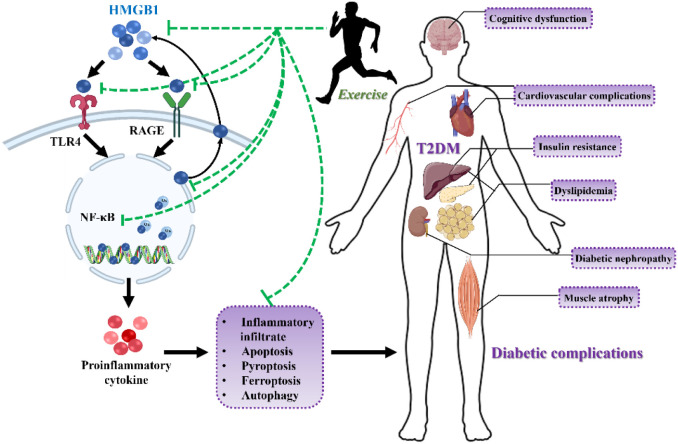 Figure 3
Peer Reviews
No public reviews on file for this paper yet. If you reviewed it on a platform where reviews are public (OpenReview, ICLR, NeurIPS, ICML), you can paste yours below so the community can read it here.
Videos
No videos yet. Explain this paper in a talk, walkthrough, or lecture? Add one.
Taxonomy
TopicsAdvanced Glycation End Products research · Immune responses and vaccinations · Flavonoids in Medical Research