Serum osteopontin is associated with coronary plaque vulnerability and short-term cardiovascular events: a prospective cohort study
Xingxing Wang

TL;DR
Higher levels of a protein called osteopontin in the blood are linked to unstable heart artery plaques and a greater risk of heart events in the short term.
Contribution
This study shows that serum osteopontin (SPP1) is a novel biomarker for identifying vulnerable coronary plaques and predicting cardiovascular events.
Findings
Serum SPP1 levels were significantly higher in patients with vulnerable plaques compared to those with stable plaques.
Elevated SPP1 levels were independently associated with a higher risk of major adverse cardiovascular events within 6 months.
MMP-9 partially mediates the relationship between SPP1 and plaque vulnerability.
Abstract
Coronary plaque vulnerability underlies acute coronary events, yet reliable identification of high-risk plaques in clinical practice remains limited. Osteopontin (SPP1) is an immuno-inflammatory glycoprotein involved in atherosclerosis, but its relevance to plaque vulnerability and short-term cardiovascular events is not fully defined. In this prospective observational cohort study, a total of 300 patients were included, of whom 150 were classified as having vulnerable plaques based on IVUS/OCT imaging. Serum SPP1 and inflammatory biomarkers were measured at baseline. Plaques were classified as stable or vulnerable based on intravascular imaging. Participants were followed for 6 months to record major adverse cardiovascular events (MACE). Multivariable regression, receiver operating characteristic (ROC) analysis, survival analysis, and mediation analysis were performed to evaluate…
Genes, proteins, chemicals, diseases, species, mutations and cell lines named across the full text — each resolved to its canonical identifier and authoritative record.
Click any figure to enlarge with its caption.
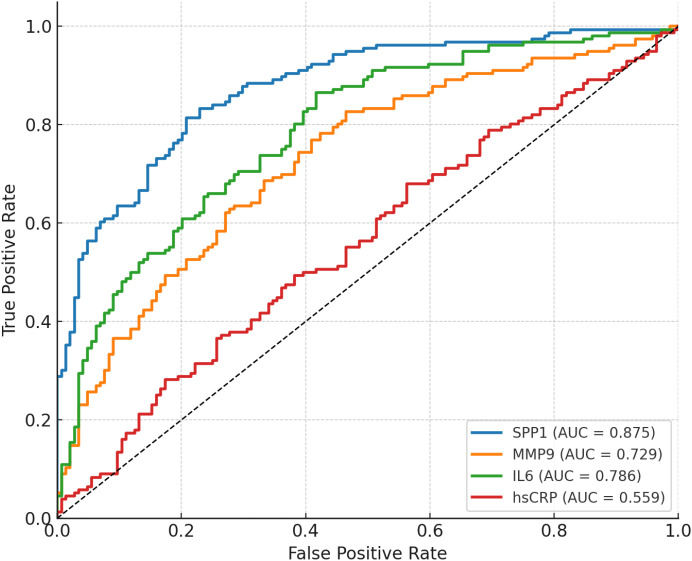 Figure 1
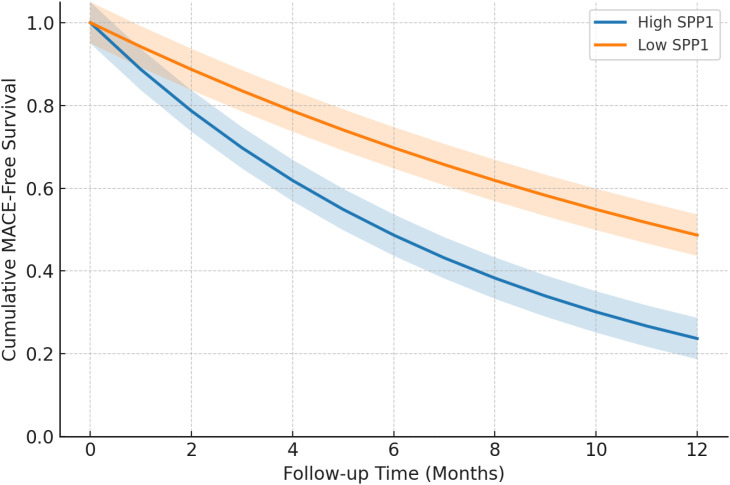 Figure 2
Peer Reviews
No public reviews on file for this paper yet. If you reviewed it on a platform where reviews are public (OpenReview, ICLR, NeurIPS, ICML), you can paste yours below so the community can read it here.
Videos
No videos yet. Explain this paper in a talk, walkthrough, or lecture? Add one.
Taxonomy
TopicsBone and Dental Protein Studies · Kidney Stones and Urolithiasis Treatments · Dental Erosion and Treatment