Rapid anti‐HPA‐1a antibody quantification with a Luminex bead‐based assay: A method evaluation
Klara Asplund Högelin, Emöke Deschmann, Petter Höglund, Agneta Wikman

TL;DR
This study evaluates a new Luminex bead-based assay for quickly measuring anti-HPA-1a antibodies, which are linked to severe fetal and neonatal blood disorders.
Contribution
The study introduces a rapid and accurate alternative to the labor-intensive MAIPA assay for quantifying anti-HPA-1a antibodies.
Findings
The Luminex PakLx assay showed 97.6% agreement with the MAIPA assay in classifying results as positive or negative.
The correlation between PakLx MFI values and MAIPA IU/mL was strong (R² = 0.92).
PakLx enables faster laboratory processing and provides semi-quantitative results for clinical use.
Abstract
High concentration of human platelet antigen‐1a (HPA‐1a) antibodies is reported to be associated with severe foetal and neonatal alloimmune thrombocytopaenia (FNAIT). The gold standard for quantification of anti‐HPA‐1a antibodies is the monoclonal antibody immobilization of platelet antigen (MAIPA) assay, which is a laborious method performed in only a few reference laboratories. The aim of this study was to evaluate the performance of the commercially available bead‐based Luminex assay PakLx (Immucor) for quantitative measurement of anti‐HPA‐1a antibodies. We analysed anti‐HPA‐1a antibody levels in plasma samples from 42 HPA‐1a‐negative women who had given birth to a child with thrombocytopaenia. Quantification of antibodies was performed with two different techniques: MAIPA analysed by spectrophotometry with results expressed in international units (IU)/mL, and PakLx analysed in the…
Genes, proteins, chemicals, diseases, species, mutations and cell lines named across the full text — each resolved to its canonical identifier and authoritative record.
Click any figure to enlarge with its caption.
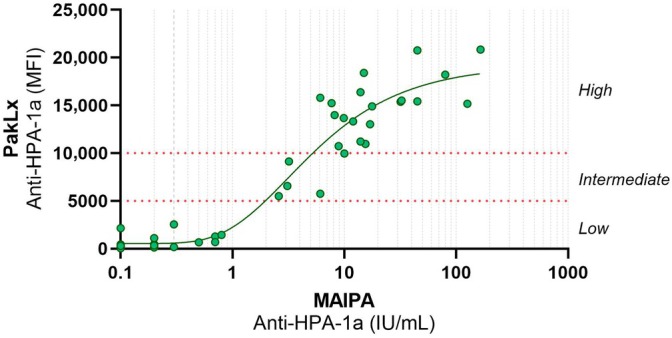 Figure 1
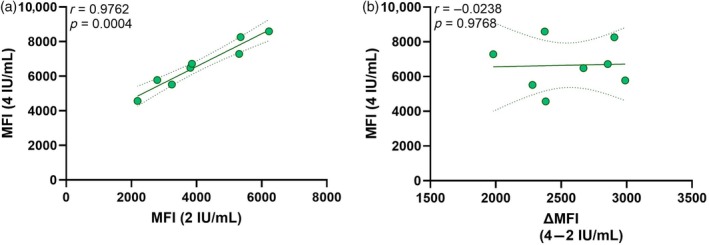 Figure 2
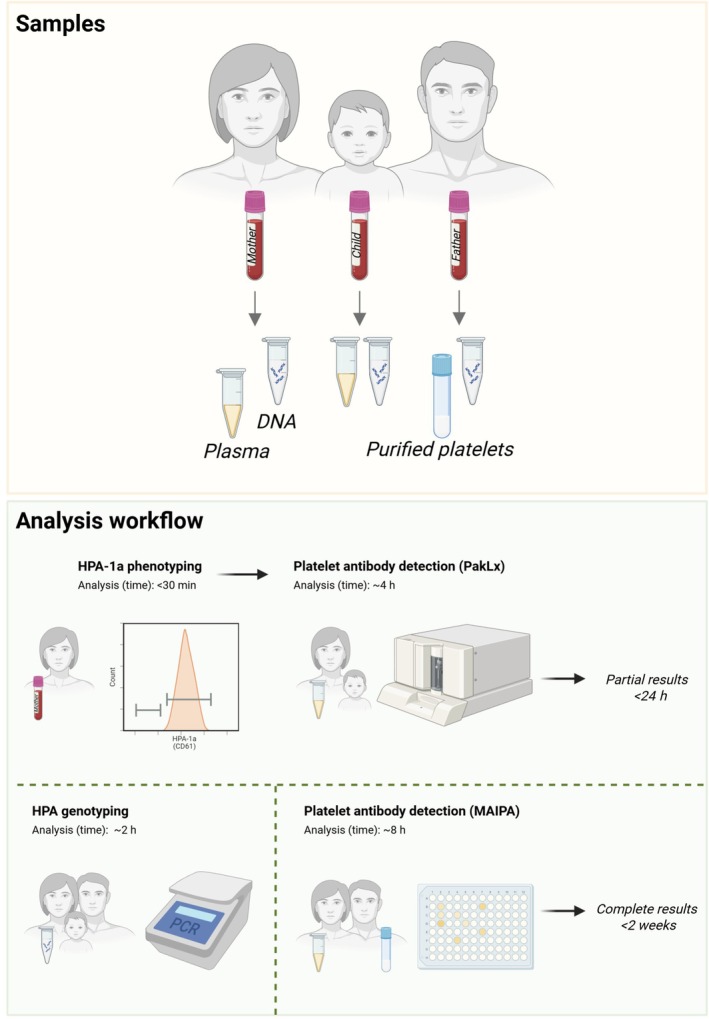 Figure 3
Peer Reviews
No public reviews on file for this paper yet. If you reviewed it on a platform where reviews are public (OpenReview, ICLR, NeurIPS, ICML), you can paste yours below so the community can read it here.
Videos
No videos yet. Explain this paper in a talk, walkthrough, or lecture? Add one.
Taxonomy
TopicsPlatelet Disorders and Treatments · Heparin-Induced Thrombocytopenia and Thrombosis · Blood disorders and treatments