Preliminary Evaluation of Dominant Hand Mimicry Versus Traditional Grip Training for Non-dominant Hand Chopstick Use: A Single-Case Design
Yuwen Fu, Yuki Choji

TL;DR
This study compares two chopstick training methods for non-dominant hand use and finds that a dominant hand-like grip may improve performance in some tasks.
Contribution
The study introduces a novel approach to non-dominant hand training using a dominant hand-like grip for chopstick manipulation.
Findings
Intervention B (dominant hand-like grip) showed stronger effects on bean transfers and traction force for most participants.
Participants using Intervention B shifted toward 'Three Finger' or 'Other' grips, while those using Intervention A adopted the 'Four Finger' grip.
Subjective achievement remained medium to high across both interventions, indicating user satisfaction.
Abstract
Background: Many patients with stroke lose functional use of their hands, highlighting the importance of non-dominant hand training as a compensatory strategy in rehabilitation. Chopstick manipulation training is commonly practiced in East Asia; however, it remains unclear whether a traditional grip or a dominant hand-like grip is more effective for training the non-dominant hand. Methods: Ten right-handed students (five Japanese, five Chinese; eight males, two females; aged 20-26 years) participated in this study. Participants trained with their non-dominant hand for 15 minutes per day over 10 days using an alternating treatments design (ATD), while viewing instructional videos and concurrently practicing chopstick tip alignment exercises with either the traditional grip (Intervention A) or a dominant hand-like grip (Intervention B). Outcomes included the number of bean transfers…
Genes, proteins, chemicals, diseases, species, mutations and cell lines named across the full text — each resolved to its canonical identifier and authoritative record.
Click any figure to enlarge with its caption.
 Figure 1
 Figure 2
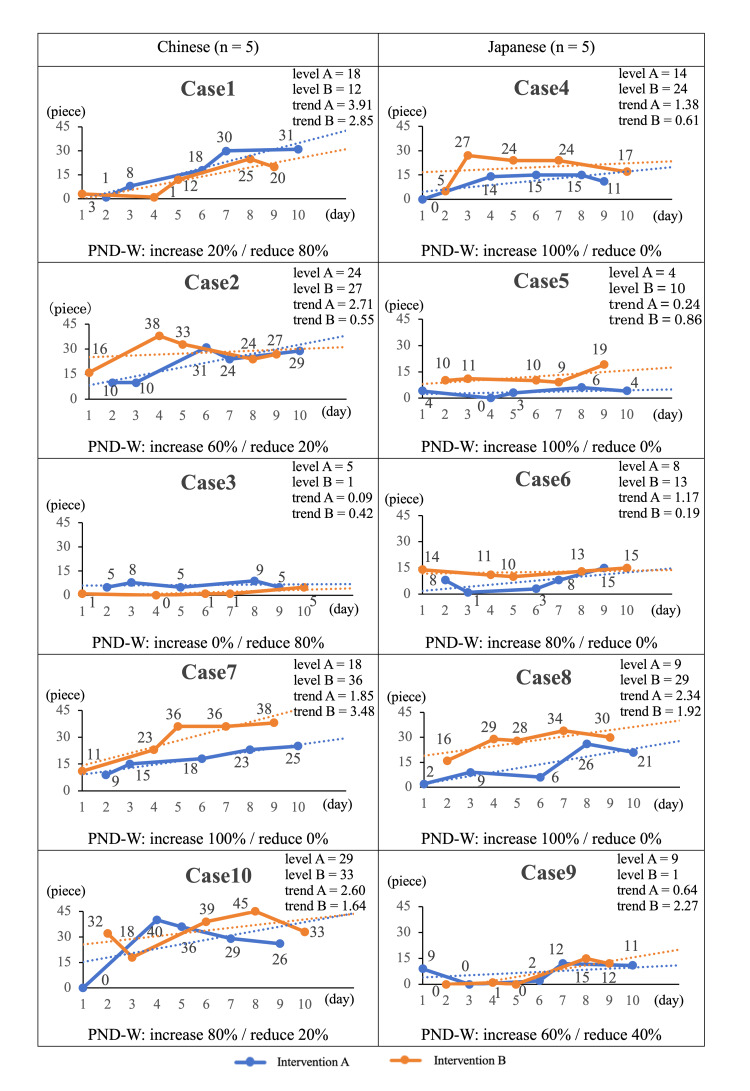 Figure 3
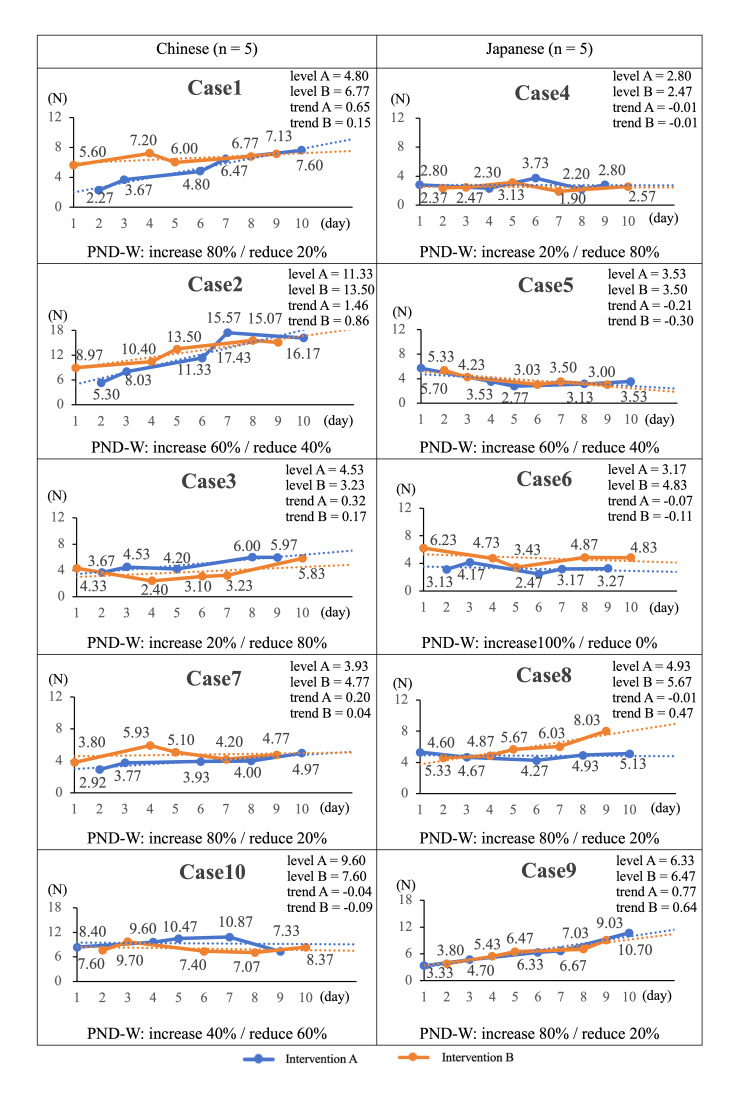 Figure 4
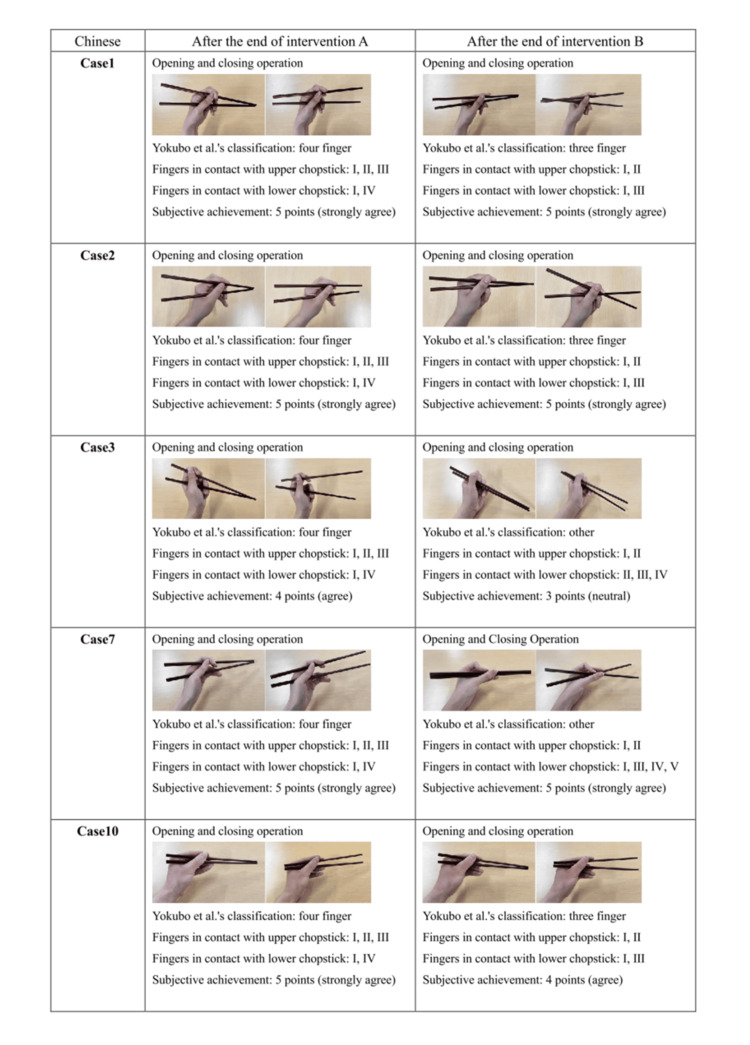 Figure 5
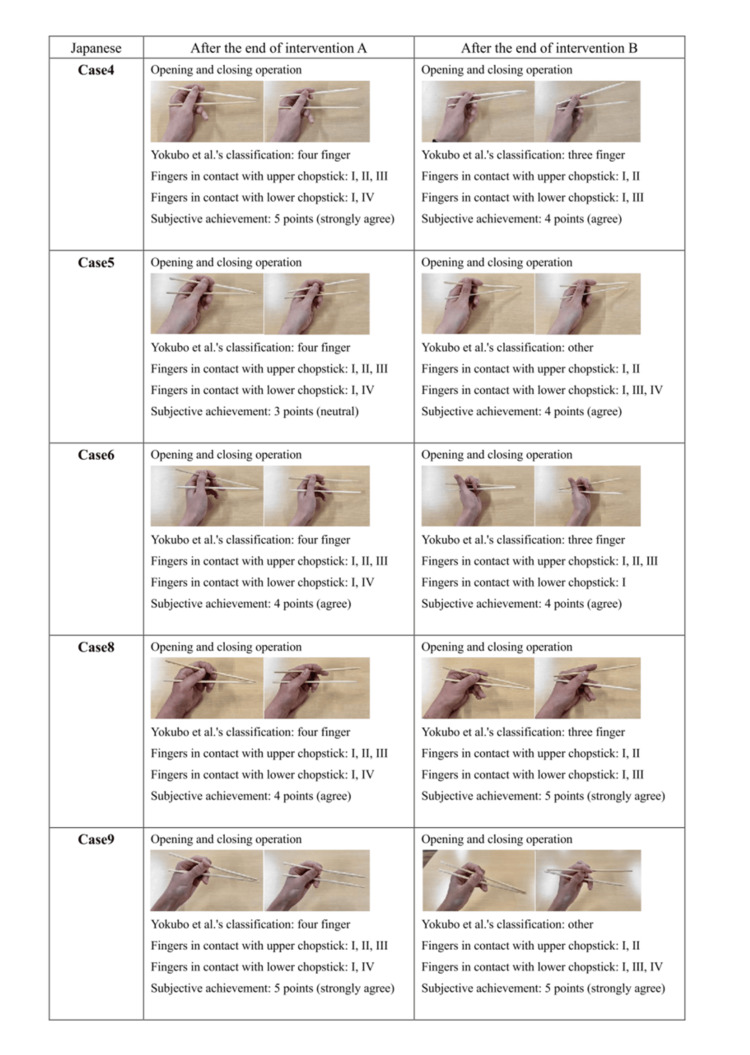 Figure 6
Peer Reviews
No public reviews on file for this paper yet. If you reviewed it on a platform where reviews are public (OpenReview, ICLR, NeurIPS, ICML), you can paste yours below so the community can read it here.
Videos
No videos yet. Explain this paper in a talk, walkthrough, or lecture? Add one.
Taxonomy
TopicsMotor Control and Adaptation · Stroke Rehabilitation and Recovery · Hemispheric Asymmetry in Neuroscience