Bilateral Superior Semicircular Canal Dehiscence Presenting as Progressive Gait Instability in a Patient With Parkinsonism and Autoimmune Features
Radmanesh Khalili, Shivangi Jha, Lukacs S Lesinszki, Haiyang Jiang, Peter G Bernad

TL;DR
A 65-year-old man with Parkinsonism and autoimmune features showed progressive gait instability due to bilateral superior semicircular canal dehiscence, highlighting the need to consider vestibular disorders in complex neurological cases.
Contribution
This case highlights the diagnostic challenge of identifying bilateral SSCD in patients with overlapping neurodegenerative and autoimmune symptoms.
Findings
The patient's progressive gait instability was attributed to bilateral superior semicircular canal dehiscence.
Corticosteroid treatment for autoimmune conditions coincided with subjective improvement in symptoms.
The case illustrates the risk of diagnostic overshadowing in neurodegenerative disorders.
Abstract
Superior semicircular canal dehiscence (SSCD) is a vestibular disorder caused by a defect in the bony roof of the superior semicircular canal, resulting in a third mobile window in the inner ear. This structural abnormality alters vestibular and auditory processing, producing symptoms such as vertigo, imbalance, sound sensitivity, autophony, and oscillopsia. We describe a 65-year-old man with a longstanding diagnosis of atypical Parkinsonism who presented with progressive gait apraxia, disequilibrium, and cognitive slowing. Despite undergoing bilateral deep brain stimulation (DBS) for tremor, his axial symptoms worsened. High-resolution computed tomography (CT) imaging later revealed bilateral SSCD. The patient reported subjective improvement during short courses of corticosteroids prescribed for unrelated autoimmune conditions. While objective physiological testing and lab markers were…
Genes, proteins, chemicals, diseases, species, mutations and cell lines named across the full text — each resolved to its canonical identifier and authoritative record.
Click any figure to enlarge with its caption.
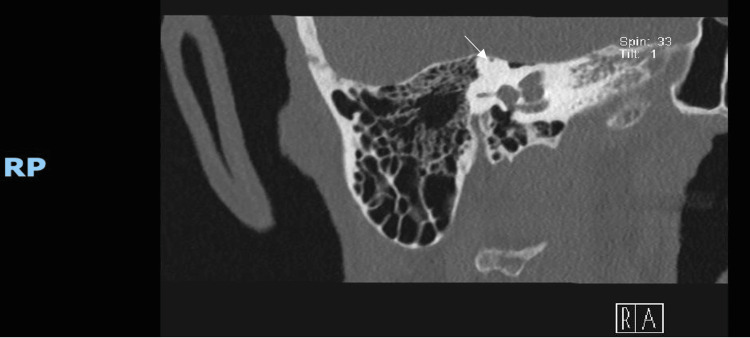 Figure 1
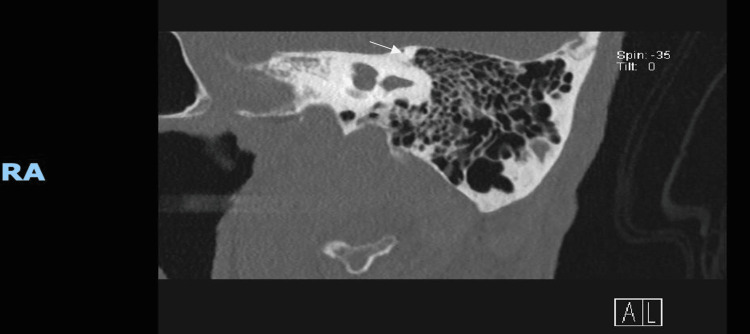 Figure 2
Peer Reviews
No public reviews on file for this paper yet. If you reviewed it on a platform where reviews are public (OpenReview, ICLR, NeurIPS, ICML), you can paste yours below so the community can read it here.
Videos
No videos yet. Explain this paper in a talk, walkthrough, or lecture? Add one.
Taxonomy
TopicsVestibular and auditory disorders · Trigeminal Neuralgia and Treatments · Hearing, Cochlea, Tinnitus, Genetics