Functional validation of the novel KIF5A p.R17Q VUS reveals defective axonal transport in iPSC-motoneurons from a SPG10 patient
Serena Santangelo, Valeria Casiraghi, Claudia Fallini, Sabrina Invernizzi, Silvia Peverelli, Martina Bertocchi, Monica Feole, Marta Cozzi, Stefania Magri, Angelo Poletti, Patrizia Bossolasco, Franco Taroni, Vincenzo Silani, Antonia Ratti

TL;DR
This study shows that a genetic variant in KIF5A causes impaired axonal transport in motor neurons from a SPG10 patient, confirming its harmful effect.
Contribution
The study functionally validates a novel KIF5A variant as pathogenic using patient-derived iPSC-motoneurons.
Findings
The p.R17Q variant in KIF5A leads to axonal swellings and altered protein distribution in iPSC-motoneurons.
Anterograde transport of mitochondria and lysosomes is significantly reduced in mutant iPSC-motoneurons.
The p.R17Q variant is confirmed as pathogenic, expanding the known mutations causing SPG10.
Abstract
Cytoskeletal alterations and axonal transport deficits are key factors in many neurodegenerative disorders. The neuronal kinesin family member 5A (KIF5A) is a microtubule-based motor protein critical for anterograde transport of RNA granules, organelles, and neurofilaments along axons and dendrites. Heterozygous missense and nonsense mutations in the N-terminal motor and stalk domains are associated with hereditary spastic paraplegia 10 (SPG10) and Charcot-Marie-Tooth disease type 2 (CMT2), while frameshift mutations in KIF5A C-terminal cargo-binding domain are linked to amyotrophic lateral sclerosis (ALS). We recently reprogrammed an iPSC line from a SPG10 patient carrying the novel missense variant c.50G>A (p.R17Q) in the KIF5A motor domain, classified as variant of unknown significance (VUS) and predicted to affect ATP binding. Here we gene-edited this mutant iPSC line by CRISPR-Cas9…
Genes, proteins, chemicals, diseases, species, mutations and cell lines named across the full text — each resolved to its canonical identifier and authoritative record.
Click any figure to enlarge with its caption.
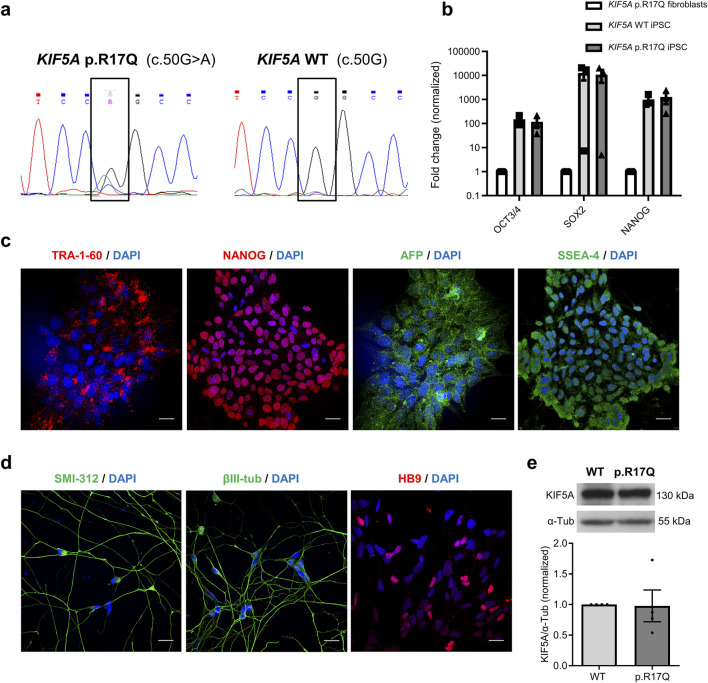 Figure 1
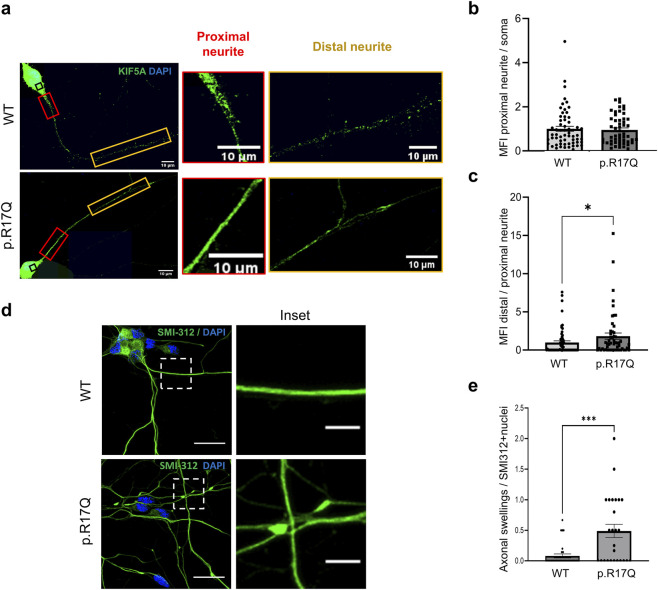 Figure 2
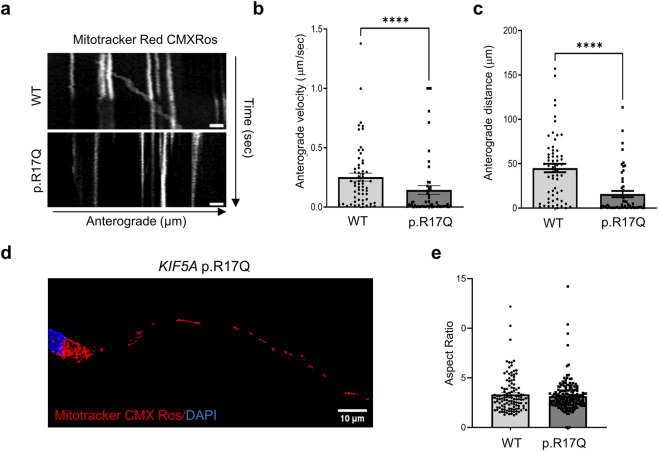 Figure 3
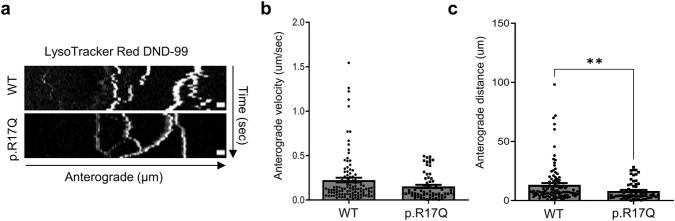 Figure 4
Peer Reviews
No public reviews on file for this paper yet. If you reviewed it on a platform where reviews are public (OpenReview, ICLR, NeurIPS, ICML), you can paste yours below so the community can read it here.
Videos
No videos yet. Explain this paper in a talk, walkthrough, or lecture? Add one.
Taxonomy
TopicsHereditary Neurological Disorders · Amyotrophic Lateral Sclerosis Research · Neurogenetic and Muscular Disorders Research