Microbial cohorts: bringing ecological meaning to the modularity concept of co-occurrence networks
Felix Milke, Sarahi L Garcia, Meinhard Simon, Armando Pacheco-Valenciana, Sinikka T Lennartz

TL;DR
This study shows that microbial co-occurrence networks are modular, with stable subcommunities (cohorts) that are consistent across diverse environments.
Contribution
The study demonstrates that microbial cohorts are universal, stable, and ecologically meaningful units across ecosystems.
Findings
Microbial co-occurrence networks consistently show high modularity across different biomes.
Cohorts represent up to 90% of community composition and respond predictably to environmental gradients.
Cohort structure is robust to sample size and inference algorithm variations.
Abstract
Microbial communities are structured through complex interactions that are difficult to observe directly. Co-occurrence networks offer a way to infer community structure, revealing (not exclusively) potential biotic interactions. Such networks have been inferred for diverse biomes and repeatedly found to be modular, yet the ecological significance of this modularity remains underexplored. We tested whether clusters within co-occurrence networks (“cohorts”), are universal and ecologically meaningful units by assessing their ubiquity, stability, and environmental specificity across diverse ecosystems. Our meta-analysis spans 25 previously published 16S rRNA gene amplicon sequencing datasets (14 160 samples) and covers high environmental variability ranging from aquatic, terrestrial to anthropogenic environments. Microbial co-occurrence networks consistently exhibited high modularity…
Genes, proteins, chemicals, diseases, species, mutations and cell lines named across the full text — each resolved to its canonical identifier and authoritative record.
Click any figure to enlarge with its caption.
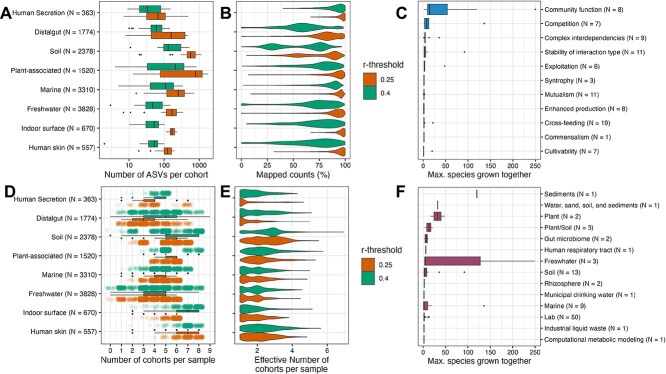 Figure 1
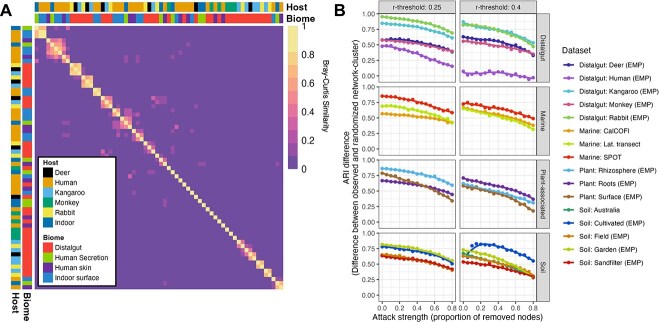 Figure 2
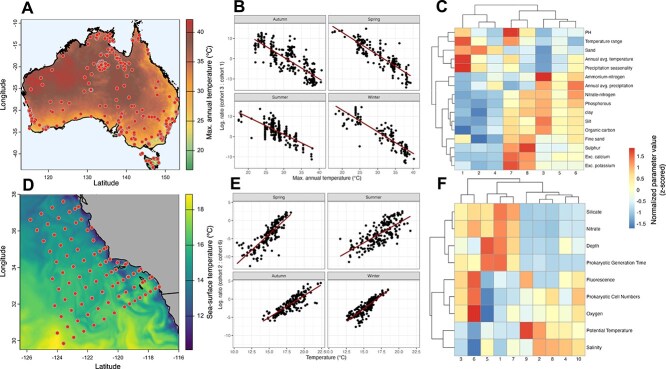 Figure 3
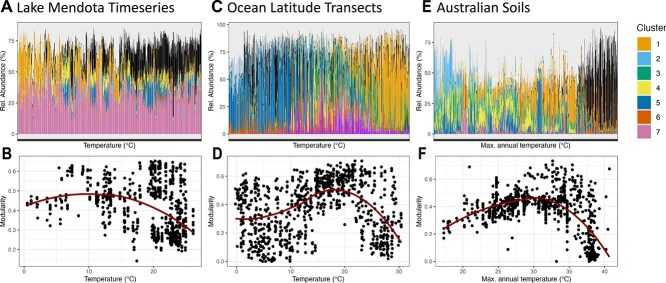 Figure 4
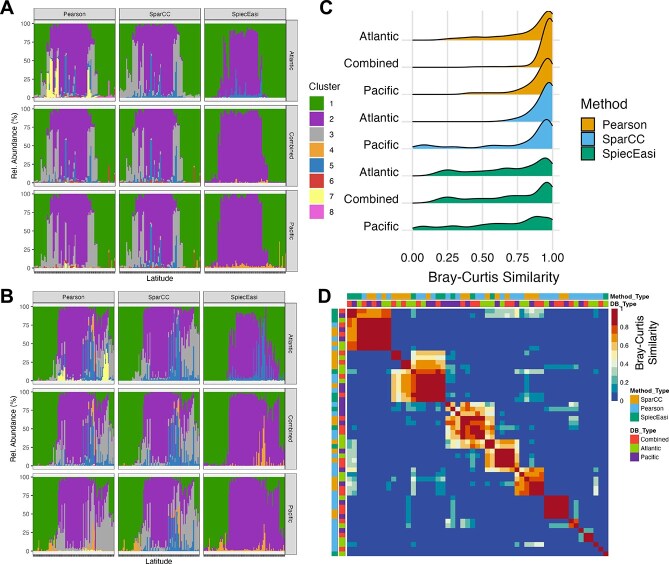 Figure 5
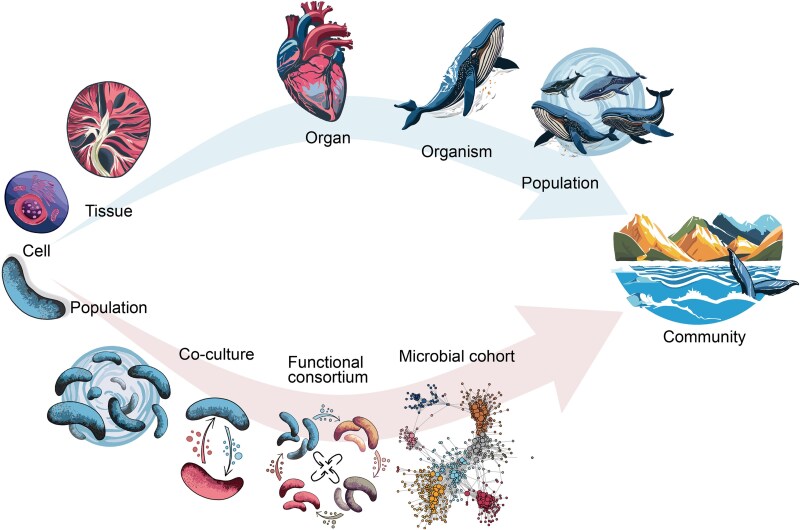 Figure 6
Peer Reviews
No public reviews on file for this paper yet. If you reviewed it on a platform where reviews are public (OpenReview, ICLR, NeurIPS, ICML), you can paste yours below so the community can read it here.
Videos
No videos yet. Explain this paper in a talk, walkthrough, or lecture? Add one.
Taxonomy
TopicsMicrobial Community Ecology and Physiology · Gut microbiota and health · Wastewater Treatment and Nitrogen Removal