The Epidemiology, Phylogeny, and Strain Antigenicity of an Influenza A/H3N2 Virus Outbreak Among Vaccinated US Navy Midshipmen
Simon D. Pollett, Emily Hone, Stephanie A. Richard, Kat Schmidt, Mark P. Simons, Michele Wayman, Jennifer Rothenberg, Vivian Hogan, Robert J. O'Connell, Timothy H. Burgess, Daniel Ewing, Appavu K. Sundaram, Anthony C. Fries, Drake H. Tilley, Rhonda E. Colombo

TL;DR
This study examines an influenza A/H3N2 outbreak among vaccinated US Navy midshipmen, highlighting vaccine limitations and the need for universal vaccines.
Contribution
The study provides insights into vaccine antigenic divergence and its impact in a highly vaccinated population.
Findings
The outbreak caused significant duty-days lost and rapid spread despite high vaccination rates.
Vaccine antigenic divergence was observed, indicating a mismatch between the vaccine and circulating strains.
Abstract
We performed epidemiological, genetic, and antigenic characterization of an influenza A/H3N2 outbreak in a congregate setting of young adults with high vaccination rates. We noted substantial duty‐days lost, rapid spread, and vaccine antigenic divergence. The risk of influenza in healthy vaccinated adults underscores the need to develop universal influenza vaccines.
Genes, proteins, chemicals, diseases, species, mutations and cell lines named across the full text — each resolved to its canonical identifier and authoritative record.
Click any figure to enlarge with its caption.
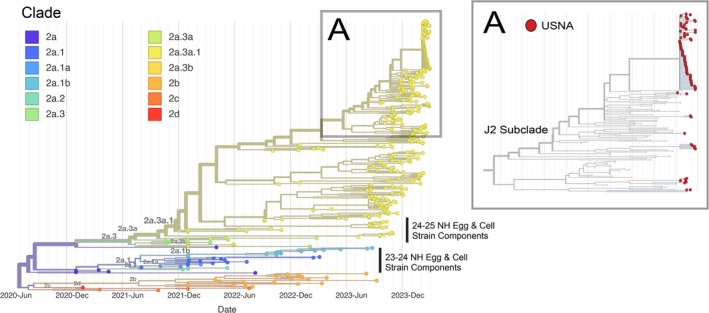 Figure 1
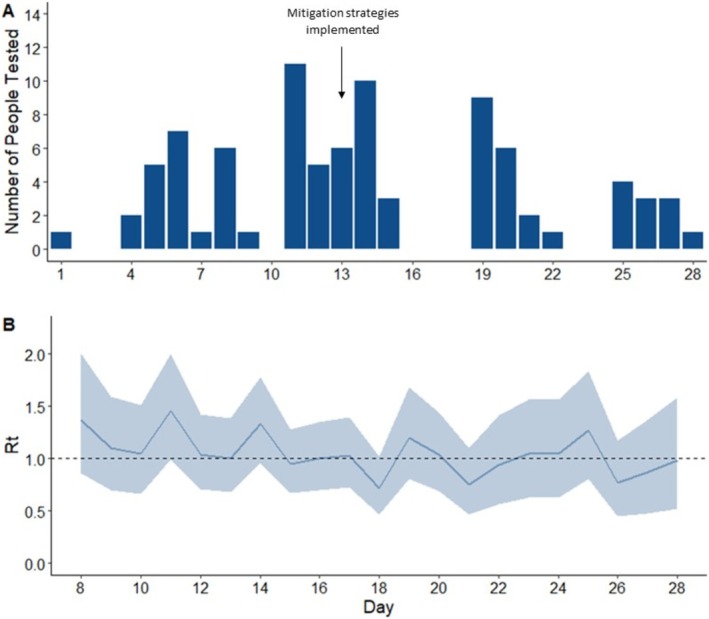 Figure 2
Peer Reviews
No public reviews on file for this paper yet. If you reviewed it on a platform where reviews are public (OpenReview, ICLR, NeurIPS, ICML), you can paste yours below so the community can read it here.
Videos
No videos yet. Explain this paper in a talk, walkthrough, or lecture? Add one.
Taxonomy
TopicsInfluenza Virus Research Studies · Respiratory viral infections research · Infection Control and Ventilation