External-knowledge enhanced dual encoder and contrastive learning for aspect sentiment triplet extraction
Yuan Huang, Xiaozheng Zhou, Ruizhi Yin, Pengwei Shi

TL;DR
This paper introduces a new method for extracting sentiment triplets from text using dual encoders and contrastive learning to improve accuracy.
Contribution
The novel approach combines dual encoders with contrastive learning to better capture sentence semantics and word meanings for ASTE.
Findings
The dual encoder setup improves semantic and syntactic information extraction.
The boundary-aware contrastive learning module enhances boundary tag recognition.
Experiments show the method outperforms existing approaches on ASTE datasets.
Abstract
Aspect Sentiment Triplet Extraction (ASTE) is an emerging subtask of Aspect-Based Sentiment Analysis (ABSA), aiming to extract aspect terms, opinion terms, and the corresponding sentiment polarity from sentences. Many existing ASTE methods neglect to mine the deeper semantics of the sentence as well as ignore the intrinsic meanings of individual words. In order to address these limitations, this paper proposes a novel approach for ASTE. Firstly, dual encoders are used to extract the semantic and syntactic information of the sentence, the semantic encoder uses BERT and Graph Convolutional Networks (GCNs) to extract the semantic information, and the syntactic encoder employs a Bi-directional Long and Short-Term Memory (Bi-LSTM) network and GCNs to extract the syntactic information. Secondly, a feature fusion module is designed to fuse the information from the dual encoders. Finally, to…
Genes, proteins, chemicals, diseases, species, mutations and cell lines named across the full text — each resolved to its canonical identifier and authoritative record.
Click any figure to enlarge with its caption.
 Figure 1
 Figure 2
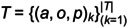 Figure 3
 Figure 4
 Figure 5
 Figure 6
 Figure 7
 Figure 8
 Figure 9
 Figure 10
 Figure 11
 Figure 12
 Figure 13
 Figure 14
 Figure 15
 Figure 16
 Figure 17
 Figure 18
 Figure 19
 Figure 20
 Figure 21
 Figure 22
 Figure 23
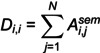 Figure 24
 Figure 25
 Figure 26
 Figure 27
 Figure 28
 Figure 29
 Figure 30
 Figure 31
 Figure 32
 Figure 33
 Figure 34
 Figure 35
 Figure 36
 Figure 37
 Figure 38
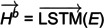 Figure 39
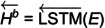 Figure 40
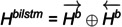 Figure 41
 Figure 42
 Figure 43
 Figure 44
 Figure 45
 Figure 46
 Figure 47
 Figure 48
 Figure 49
 Figure 50
Peer Reviews
No public reviews on file for this paper yet. If you reviewed it on a platform where reviews are public (OpenReview, ICLR, NeurIPS, ICML), you can paste yours below so the community can read it here.
Videos
No videos yet. Explain this paper in a talk, walkthrough, or lecture? Add one.
Taxonomy
TopicsSentiment Analysis and Opinion Mining · Text and Document Classification Technologies · Advanced Text Analysis Techniques