Communication competences of multiple sclerosis neurologists during advance care planning conversations: A multi-observer study
Andrea Giordano, Ludovica De Panfilis, Roberta Martina Zagarella, Giulia Di Domenico, Mariangela Farinotti, Alberto Gajofatto, Maria Grazia Grasso, Alessandra Lugaresi, Sara Montepietra, Francesco Patti, Claudio Solaro, Riccardo Orlandi, Giorgia Presicce, Simona Toscano

TL;DR
This study evaluates how well neurologists trained in advance care planning communicate with patients and their families, finding high ratings from patients and families but more moderate self-assessments from the neurologists.
Contribution
The study provides novel insights into the communication competences of neurologists in advance care planning for progressive multiple sclerosis.
Findings
Neurologists received high communication scores from patients and significant others but rated their own communication lower.
ACP conversations evoked emotional expressions, with neurologists responding to most cues and concerns.
SDM competences of neurologists were moderate but better than previously reported in MS consultations.
Abstract
The ConCure-SM intervention [ISRCTN48527663] consists of an advance care planning (ACP) training program for neurologists/other professionals caring for people with progressive multiple sclerosis (PwPMS). We assessed the communication competences of ACP-trained neurologists who participated in the trial. Eighteen ACP conversations were audio-recorded. After each conversation, participants (PwPMS, significant others [SOs], and neurologists) rated the neurologist’s communication skills using dedicated versions of the Quality of Communication questionnaire (QOC). Independent observers assessed the conversations using the Observing Patient Involvement in Shared Decision Making (SDM; OPTION), and the Verona Coding Definitions of Emotional Sequences (VR-CoDES). Mean duration of the ACP conversations was 62.7 minutes. Neurologists (5/7 women) were 30–62-year-old. PwPMS mean age was 61.8…
Genes, proteins, chemicals, diseases, species, mutations and cell lines named across the full text — each resolved to its canonical identifier and authoritative record.
Click any figure to enlarge with its caption.
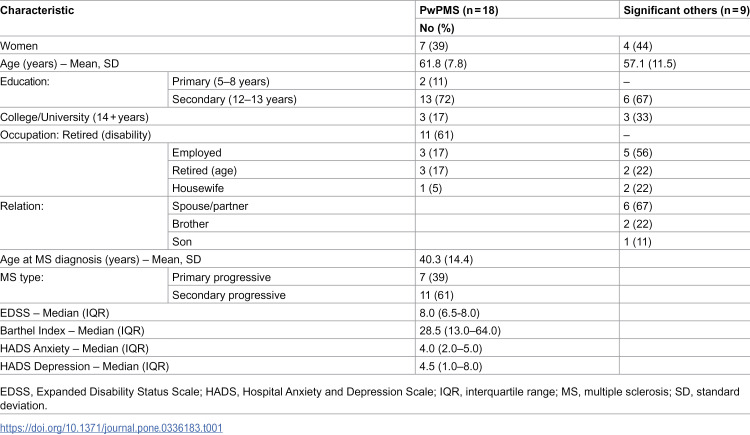 Figure 1
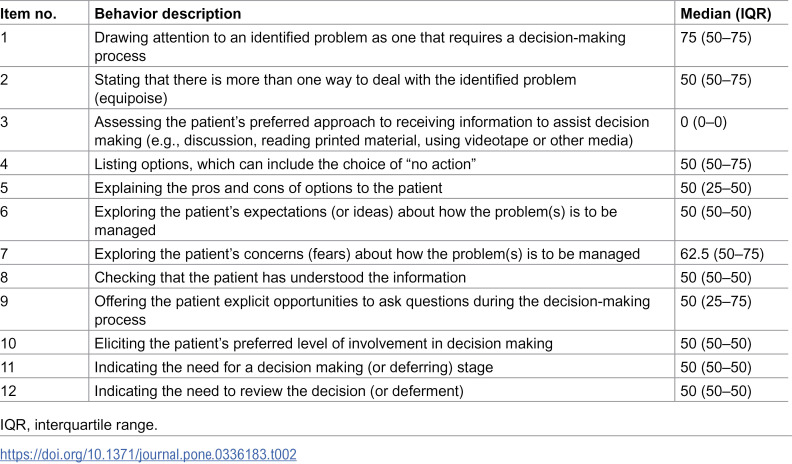 Figure 2
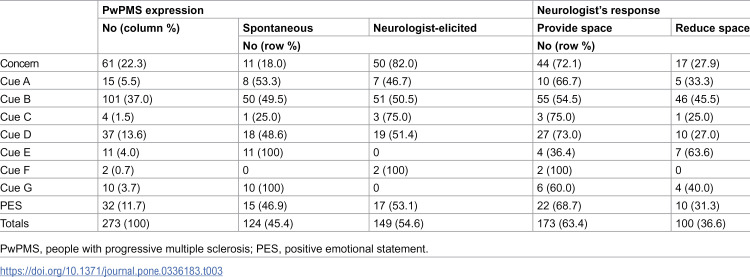 Figure 3
 Figure 4
Peer Reviews
No public reviews on file for this paper yet. If you reviewed it on a platform where reviews are public (OpenReview, ICLR, NeurIPS, ICML), you can paste yours below so the community can read it here.
Videos
No videos yet. Explain this paper in a talk, walkthrough, or lecture? Add one.
Taxonomy
TopicsPalliative Care and End-of-Life Issues · Patient-Provider Communication in Healthcare · Multiple Sclerosis Research Studies