Deep-Fed: A comprehensive solution for precise bone fracture identification in athletes
Tariq Ali, Asif Nawaz, Muhammad Rizwan Rashid Rana, Azhar Imran, Ahmad Alshammari, Javed Rashid, Lorenzo Faggioni, Lorenzo Faggioni, Lorenzo Faggioni, Lorenzo Faggioni

TL;DR
Deep-Fed is a privacy-preserving AI system that improves the accuracy of bone fracture detection in athletes using federated learning.
Contribution
A novel federated deep learning framework, Deep-Fed, that achieves high accuracy in fracture diagnosis while preserving data privacy.
Findings
Deep-Fed achieved 96.23 ± 0.42% accuracy on the Deep-I dataset, outperforming existing baselines.
The framework showed significant improvements over three baselines with p-values < 0.05 in statistical tests.
Federated learning enabled accurate diagnosis across distributed clinics without sharing raw patient data.
Abstract
Bone fracture diagnosis is a critical aspect of sports medicine, where accurate and timely detection enables effective treatment and rapid recovery. This study proposes Deep-Fed, a federated deep learning framework for fracture diagnosis in athletes. Deep-Fed integrates convolutional neural networks with a specialized classification module, FractureNet, and trains it across distributed athletic clinics using federated averaging without exchanging raw images, thereby preserving patient privacy while leveraging diverse data sources. The framework was evaluated on three benchmark datasets—Deep-I, Deep-II, and Deep-III—representing varied imaging conditions and patient groups. Deep-Fed achieved accuracy rates of 96.23 ± 0.42%, 97.11 ± 0.35%, and 96.73 ± 0.39%, respectively, significantly outperforming Baseline 1 (87.23 ± 0.68%), Baseline 2 (90.15 ± 0.55%), and Baseline 3 (94.49 ± 0.47%).…
Genes, proteins, chemicals, diseases, species, mutations and cell lines named across the full text — each resolved to its canonical identifier and authoritative record.
Click any figure to enlarge with its caption.
 Figure 1
 Figure 2
 Figure 3
 Figure 4
 Figure 5
 Figure 6
 Figure 7
 Figure 8
 Figure 9
 Figure 10
 Figure 11
 Figure 12
 Figure 13
 Figure 14
 Figure 15
 Figure 16
 Figure 17
 Figure 18
 Figure 19
 Figure 20
 Figure 21
 Figure 22
 Figure 23
 Figure 24
 Figure 25
 Figure 26
 Figure 27
 Figure 28
 Figure 29
 Figure 30
 Figure 31
 Figure 32
 Figure 33
 Figure 34
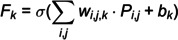 Figure 35
 Figure 36
 Figure 37
 Figure 38
 Figure 39
 Figure 40
 Figure 41
 Figure 42
 Figure 43
 Figure 44
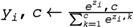 Figure 45
 Figure 46
 Figure 47
 Figure 48
 Figure 49
 Figure 50
Peer Reviews
No public reviews on file for this paper yet. If you reviewed it on a platform where reviews are public (OpenReview, ICLR, NeurIPS, ICML), you can paste yours below so the community can read it here.
Videos
No videos yet. Explain this paper in a talk, walkthrough, or lecture? Add one.
Taxonomy
TopicsArtificial Intelligence in Healthcare and Education · Medical Imaging and Analysis · COVID-19 diagnosis using AI