Gene-Level Analyses of Novel Olfactory-Related Signal from Severe SARS-CoV-2 GWAS Reveal Association with Disease Mortality
Yu Chen Zhao, Xinan Wang, Yujia Lu, Rounak Dey, Yuchen Liu, Francesca Giacona, Elizabeth A. Abe, Emma White, Li Su, Qingyi Wei, Xihong Lin, Lorelei A. Mucci, Jehan Alladina, David C. Christiani

TL;DR
This study identifies a genetic variant in the RTP5 gene linked to higher mortality in severe COVID-19 patients, suggesting a potential role in disease severity.
Contribution
The study discovers a novel SNP in RTP5 associated with mortality in severe COVID-19 and provides functional evidence via eQTL analysis.
Findings
The SNP rs7420371 G>A in RTP5 is significantly associated with 30- and 60-day mortality in severe COVID-19 patients.
The A allele of rs7420371 upregulates RTP5 mRNA expression in brain tissues.
RTP5 is a receptor transporter protein involved in olfactory and taste perception, potentially modulating SARS-CoV-2 infection responses.
Abstract
The coronavirus disease 2019 (COVID-19) was the third leading cause of mortality in the United States for three years in a row. The genetic contributions to disease severity remain unclear and many previously identified single nucleotide polymorphisms (SNPs) have not been replicated nor linked with functional significance. To identify SNPs associated with mortality among hospitalized COVID-19 patients supplemented by expression quantitative trait loci (eQTL) evidence to infer plausible functional mechanisms related to COVID-19 severity. A quality-controlled genome-wide association study (GWAS) supported by robust gene-level omnibus kernel association tests (SKAT-O), functional prediction, and eQTL analyses of the top GWAS signal. Massachusetts General Hospital (MGH). 370 adult ICU patients with SARS-CoV-2 infection and acute hypoxemic respiratory failure and floor patients with mild…
Genes, proteins, chemicals, diseases, species, mutations and cell lines named across the full text — each resolved to its canonical identifier and authoritative record.
Click any figure to enlarge with its caption.
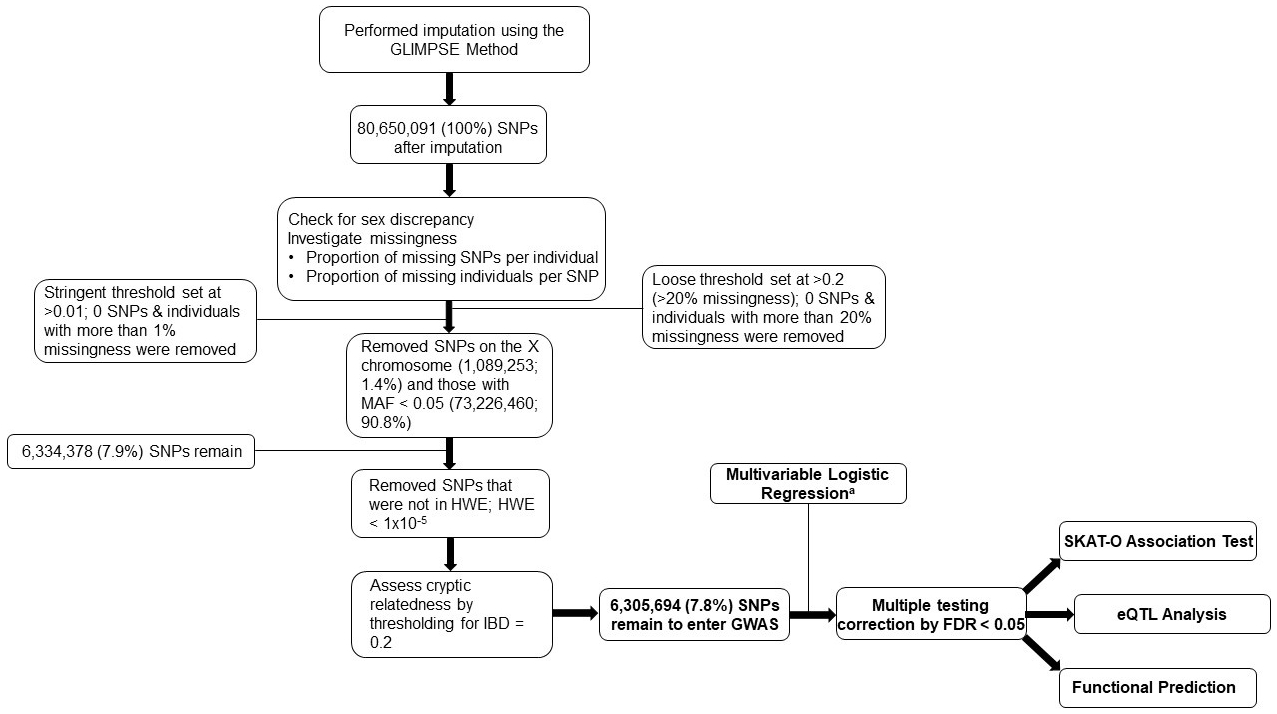 Figure 1
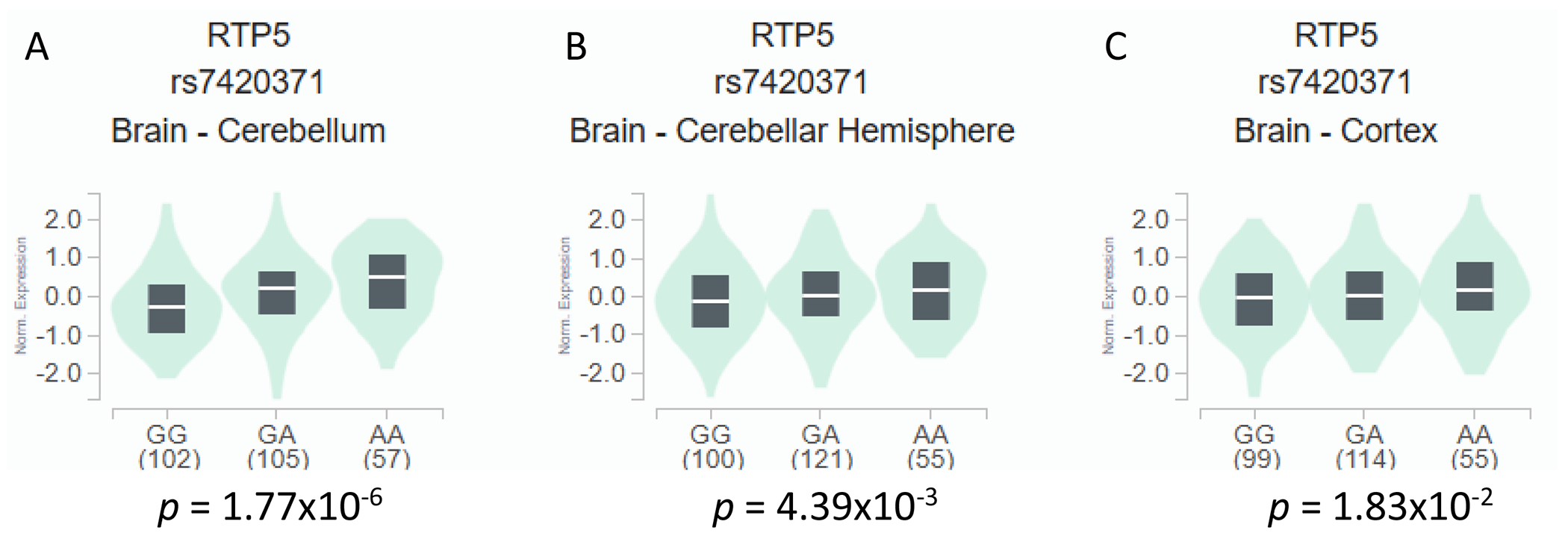 Figure 2
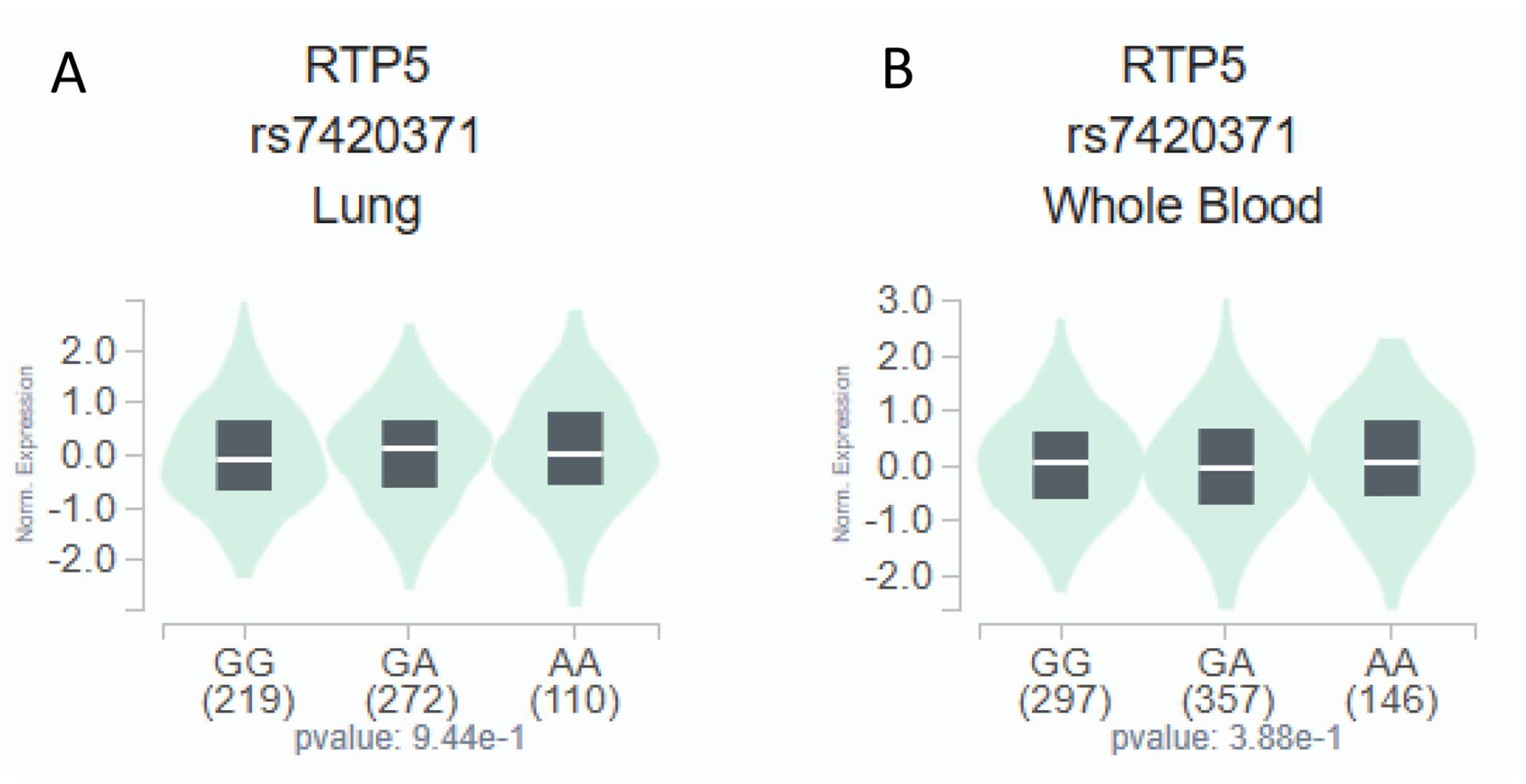 Figure 3
Peer Reviews
No public reviews on file for this paper yet. If you reviewed it on a platform where reviews are public (OpenReview, ICLR, NeurIPS, ICML), you can paste yours below so the community can read it here.
Videos
No videos yet. Explain this paper in a talk, walkthrough, or lecture? Add one.
Taxonomy
TopicsOlfactory and Sensory Function Studies · Long-Term Effects of COVID-19 · Fibromyalgia and Chronic Fatigue Syndrome Research