Evaluation of the autonomic nervous system in autochthonous patients from Amazon with acute Chagas disease treated with benznidazole
Mônica Regina Hosannah da Silva e Silva, Débora Raysa Teixeira de Sousa, Jessica Vanina Ortiz, Matheus Martins Monteiro, Alba Regina Jorge Brandão, Marcia Regina Silva e Silva, Susan Smith-Doria, Melissa de Sousa Melo Cavalcante, Katia do Nascimento Couceiro

TL;DR
This study evaluates autonomic nervous system function in Amazonian patients with acute Chagas disease before and after benznidazole treatment, finding persistent autonomic imbalances that could lead to long-term cardiac issues.
Contribution
The study provides new empirical evidence on autonomic nervous system dysfunction in acute Chagas disease patients from the Amazon region.
Findings
Acute Chagas disease patients showed significant reductions in heart rate variability indicators, indicating sympathovagal imbalance and reduced parasympathetic tone.
Persistent autonomic modulation alterations were observed even after benznidazole treatment, suggesting a need for continued monitoring.
These autonomic dysfunctions may predispose patients to structural cardiac changes and arrhythmias in the long term.
Abstract
Chagas disease, a neglected tropical disease, is endemic in the Amazon region, where oral transmission predominates. Autonomic nervous system (ANS) impairment is a recognized pathophysiological mechanism contributing to disease progression, including Chagas cardiomyopathy. This study aimed to assess ANS function in patients with acute Chagas disease from the Amazon, evaluating responses pre- and post-benznidazole treatment. We included 28 acute-phase patients and 20 healthy controls. Participants underwent comprehensive cardiac evaluations, including 12-lead ECG, echocardiogram, 24-hour Holter monitoring, treadmill stress testing, and 5-minute heart rate variability (HRV) assessment. HRV was analyzed across time, frequency, and nonlinear domains, with statistical comparisons performed between groups and within the patient cohort. The study population predominantly comprised individuals…
Genes, proteins, chemicals, diseases, species, mutations and cell lines named across the full text — each resolved to its canonical identifier and authoritative record.
Click any figure to enlarge with its caption.
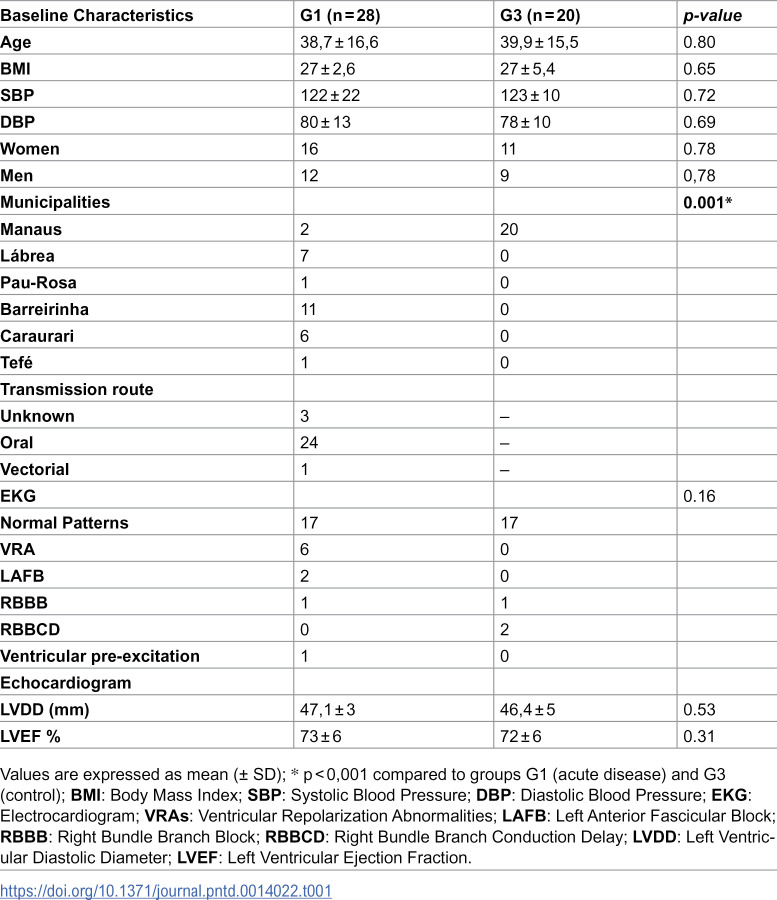 Figure 1
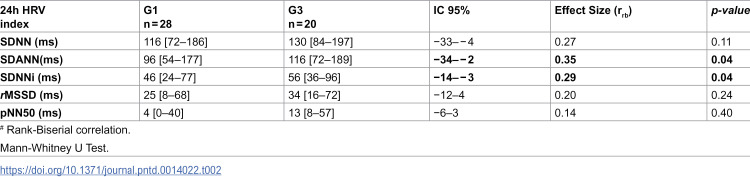 Figure 2
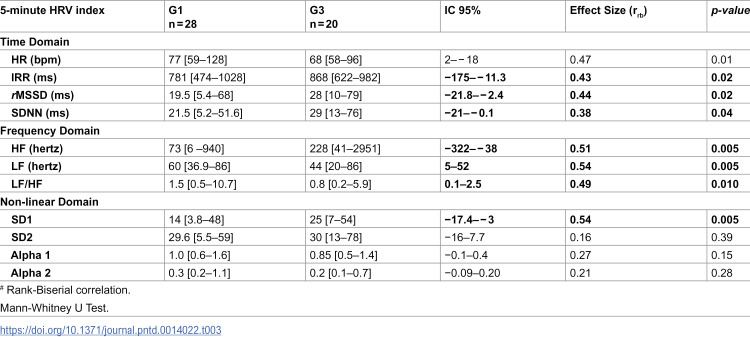 Figure 3
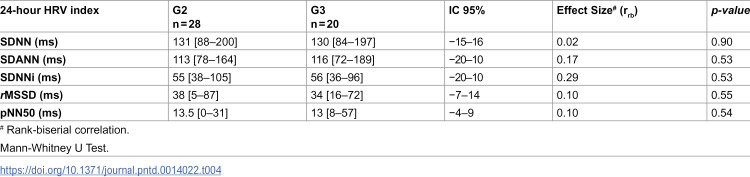 Figure 4
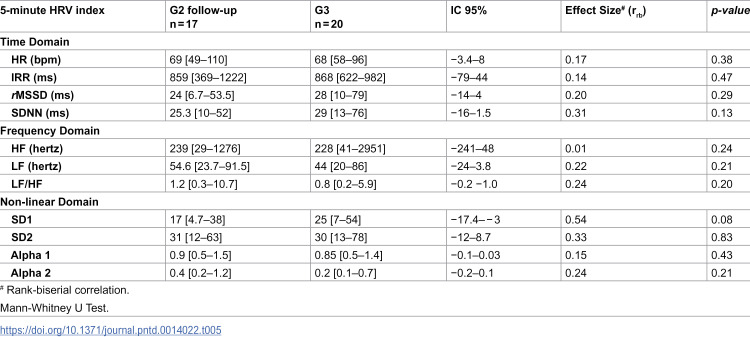 Figure 5
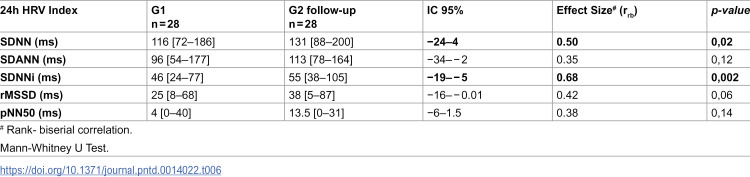 Figure 6
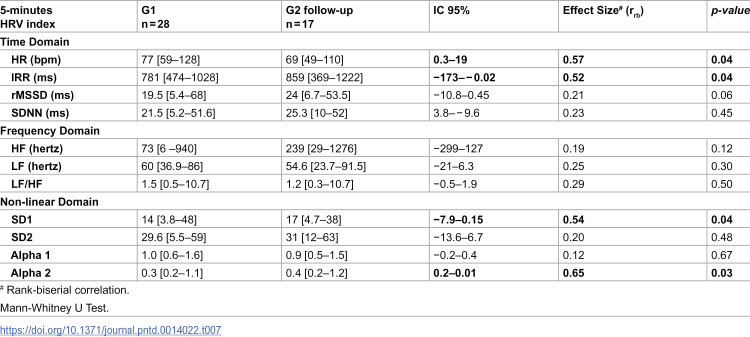 Figure 7
 Figure 8
Peer Reviews
No public reviews on file for this paper yet. If you reviewed it on a platform where reviews are public (OpenReview, ICLR, NeurIPS, ICML), you can paste yours below so the community can read it here.
Videos
No videos yet. Explain this paper in a talk, walkthrough, or lecture? Add one.
Taxonomy
TopicsTrypanosoma species research and implications · Heart Rate Variability and Autonomic Control · Morinda citrifolia extract uses