A cluster of acidic residues in the cytoplasmic domain of SARS-CoV-2 Spike is required for virion-incorporation and infectivity
Charlotte A. Stoneham, Rajendra Singh, Amalia De Leon, Petra Tafelmeyer, Francisco Acosta, Angus Fuori, Michael Anderson, Peter W. Ramirez, Hannah S. Schwartzer-Sperber, Satish Pillai, Mary K. Lewinski, John Guatelli

TL;DR
This study identifies a cluster of acidic amino acids in the SARS-CoV-2 Spike protein that is essential for virus particle formation and infectivity.
Contribution
The study reveals a novel acidic cluster motif in the Spike cytoplasmic domain critical for virion incorporation and infectivity.
Findings
Replacing the acidic cluster DEDDSE with alanines rendered virus-like particles non-infectious.
The acidic cluster interacts with cellular proteins like Ezrin, Radixin, Moesin, Vps35, and AP1/AP2 complexes.
The motif is necessary for efficient Spike incorporation into virions despite normal surface expression and syncytia formation.
Abstract
Like all coronaviruses, the infectivity of SARS-CoV-2 virus particles (virions) requires incorporation of the Spike glycoprotein. Yet, the mechanisms that support the virion-incorporation of Spike are incompletely defined. We noted an unusual feature of human sarbecovirus Spike proteins: their cytoplasmic domains (CDs) contain a stretch of acidic amino acids (DEDDSE). This sequence resembles a cluster of acidic residues, or acidic cluster (AC) motif, found in the cytoplasmic domain of the cellular endoprotease Furin. In Furin, the acidic cluster acts as a protein sorting signal, supporting its intracellular localization at the trans-Golgi network (TGN). We tested the contribution of the acidic cluster motif in the Spike CD to protein interactions and to the infectivity of SARS-CoV-2. We used virus-like particles (VLPs) as a model for viral “infection” (transduction). The SARS-CoV2 VLPs…
Genes, proteins, chemicals, diseases, species, mutations and cell lines named across the full text — each resolved to its canonical identifier and authoritative record.
Click any figure to enlarge with its caption.
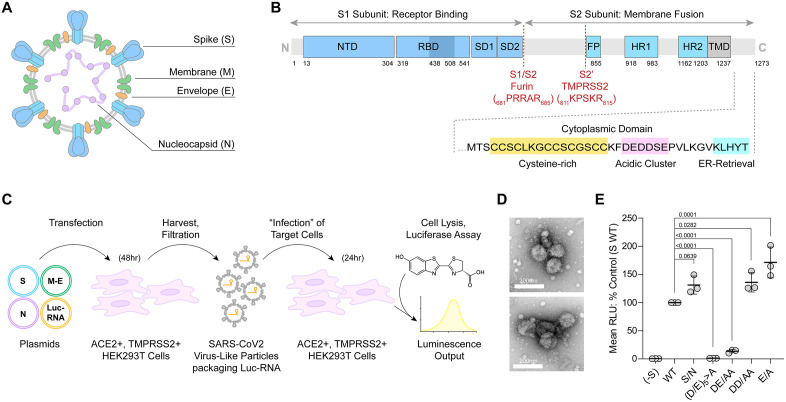 Figure 1
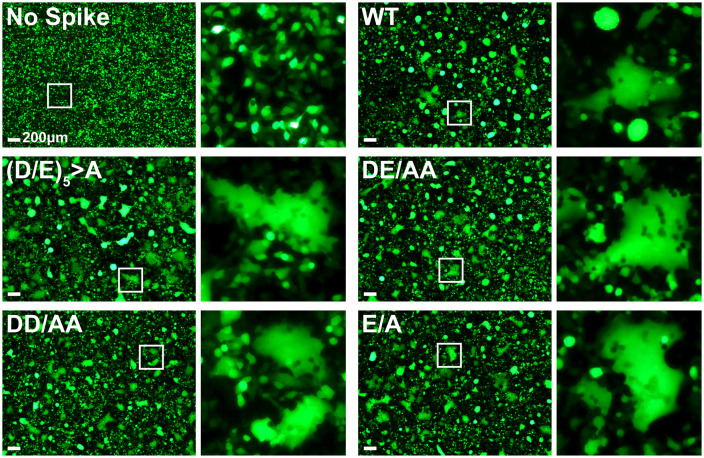 Figure 2
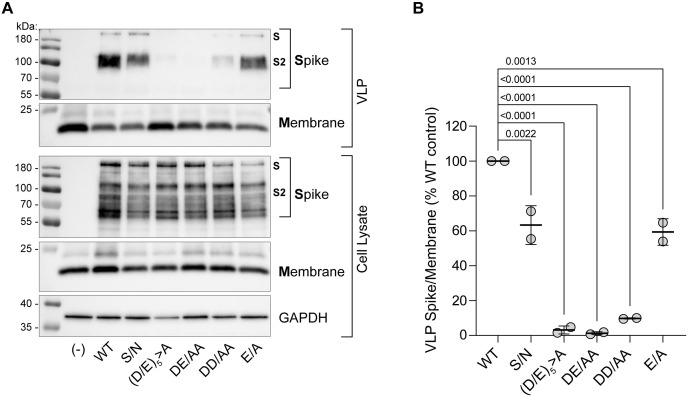 Figure 3
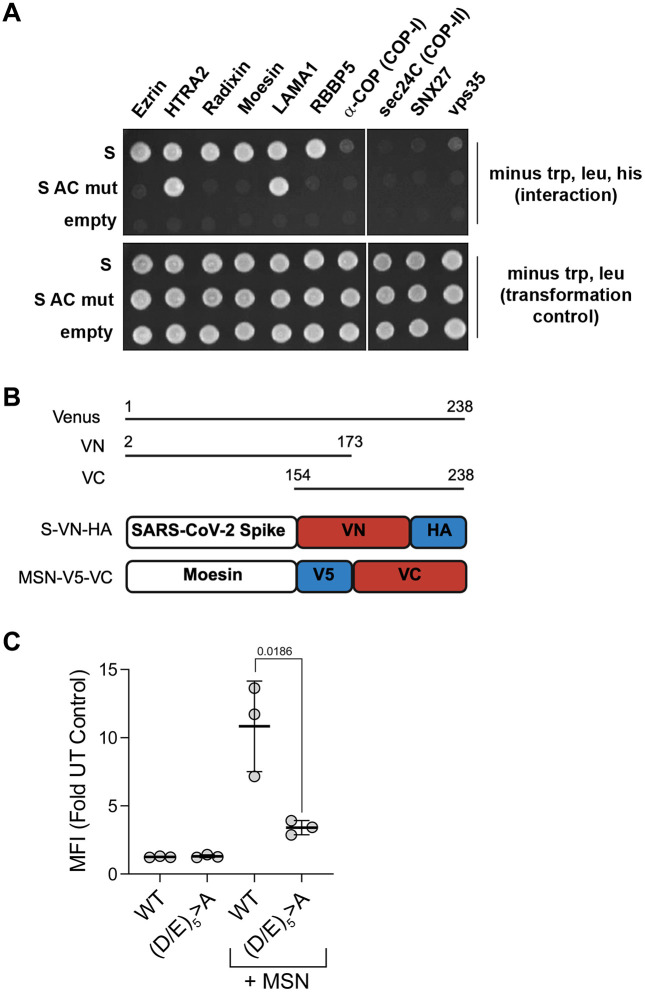 Figure 4
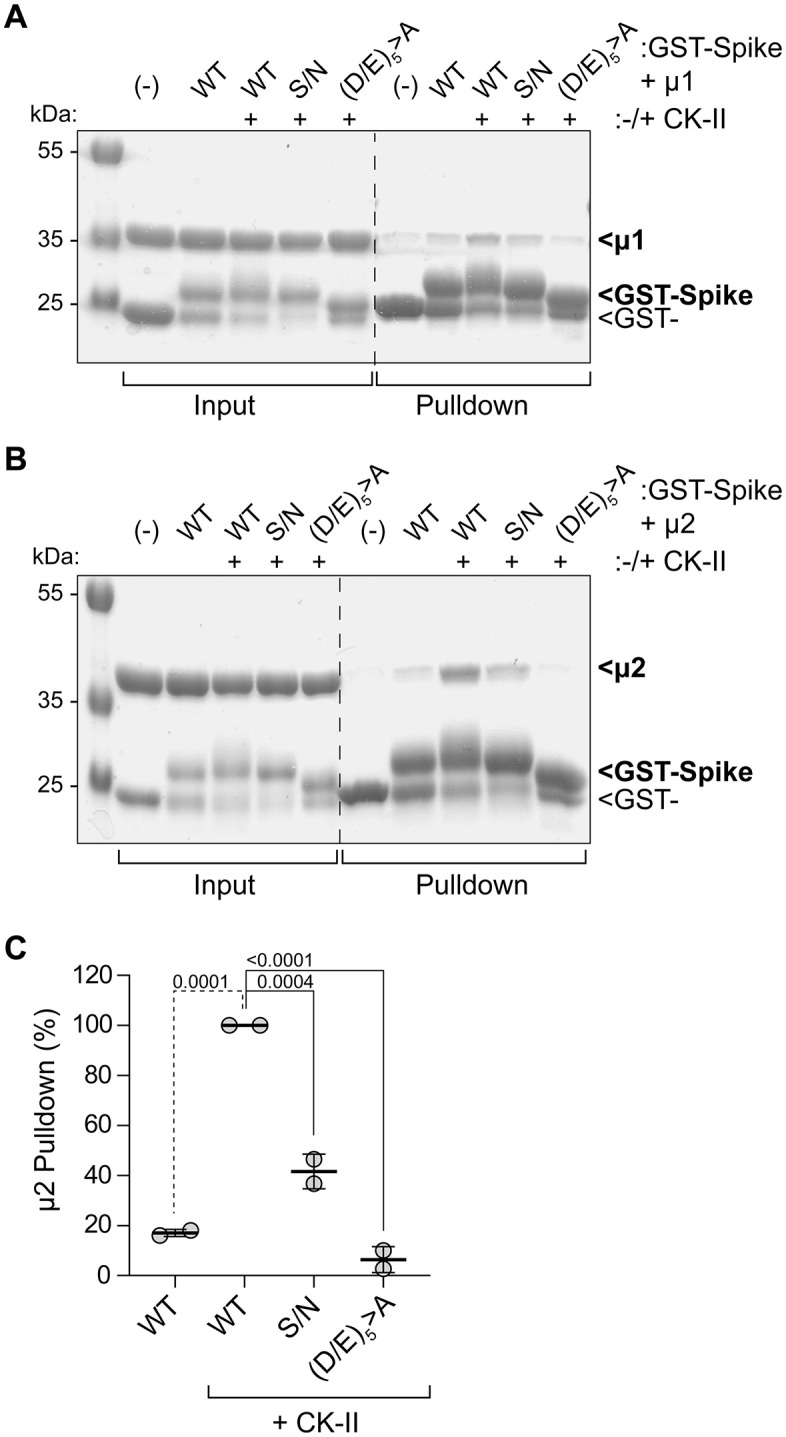 Figure 5
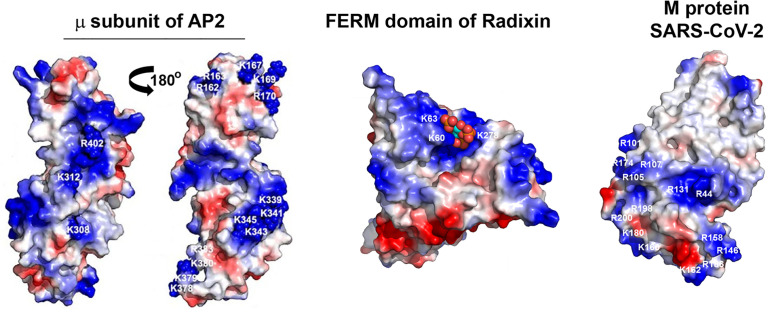 Figure 6
Peer Reviews
No public reviews on file for this paper yet. If you reviewed it on a platform where reviews are public (OpenReview, ICLR, NeurIPS, ICML), you can paste yours below so the community can read it here.
Videos
No videos yet. Explain this paper in a talk, walkthrough, or lecture? Add one.
Taxonomy
TopicsSARS-CoV-2 and COVID-19 Research · Animal Virus Infections Studies · Viral Infections and Outbreaks Research