Comparative analysis of the characteristics, care pathways, and outcomes of English and Welsh major trauma patients injured by high versus low energy transfer mechanisms in 2019
Thomas A G Shanahan, Michael Tonkins, Omar Bouamra, Dhushy Surendra Kumar, Antoinette Edwards, Laura White, Anthony Kehoe, Jason E Smith, Timothy J Coats, Fiona Lecky, Kathleen Finlayson, Kathleen Finlayson, Kathleen Finlayson, Kathleen Finlayson

TL;DR
The study compares trauma patients injured by low-energy falls versus high-energy injuries, finding that low-energy falls affect older patients with more comorbidities and worse outcomes.
Contribution
The paper provides new insights into the differences in demographics, care, and outcomes between low- and high-energy trauma patients in England and Wales.
Findings
Low-energy fall patients were older and had more comorbidities and traumatic brain injuries compared to high-energy injury patients.
Low-energy fall patients had higher in-hospital mortality and were less likely to receive critical care or surgery.
The study highlights the need to adapt trauma care systems to address the growing burden of low-energy trauma cases.
Abstract
Recent trends in high-income countries indicate a shift in the causes of major trauma, with low-energy transfer mechanisms, particularly falls from less than two meters, becoming increasingly prevalent. This study aimed to compare the demographics, care processes, and outcomes of major trauma patients injured by low and high-energy transfer mechanisms. This comparative cohort study utilized anonymized data from adult patients recorded in the Trauma Audit and Research Network in 2019. Patients were categorized into low-energy (falls less than 2 meters) and high-energy (other mechanisms) groups. The study focused on patients with an Injury Severity Score (ISS) greater than 15. Data from up to 179 English and Welsh hospitals were included. In 2019, 53.6% (n = 16,087) of major trauma patients were injured by low-energy falls. When compared to the high-energy cohort, these affected older…
Genes, proteins, chemicals, diseases, species, mutations and cell lines named across the full text — each resolved to its canonical identifier and authoritative record.
Click any figure to enlarge with its caption.
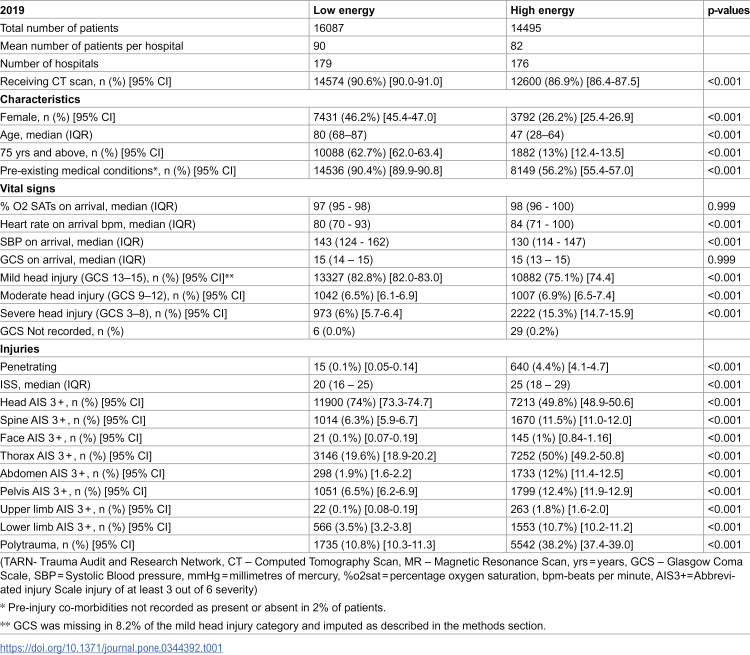 Figure 1
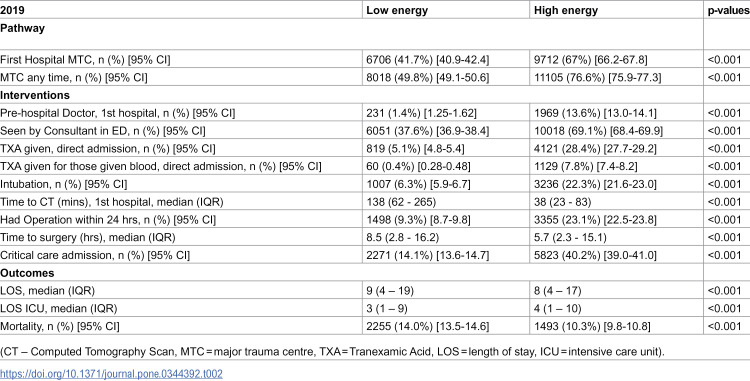 Figure 2
Peer Reviews
No public reviews on file for this paper yet. If you reviewed it on a platform where reviews are public (OpenReview, ICLR, NeurIPS, ICML), you can paste yours below so the community can read it here.
Videos
No videos yet. Explain this paper in a talk, walkthrough, or lecture? Add one.
Taxonomy
TopicsTrauma and Emergency Care Studies · Injury Epidemiology and Prevention · Bone fractures and treatments