Advancing the science of qualitative patient preference assessment using large language models
Ted Grover, Emanuel Krebs, Deirdre Weymann, Morgan Ehman, Dean A. Regier

TL;DR
This paper explores using large language models to analyze patient preferences from focus group transcripts, showing they can generate themes similar to those identified by humans.
Contribution
The study introduces optimized prompt frameworks for LLMs to perform inductive thematic analysis in patient preference assessments, a novel application of LLMs in healthcare.
Findings
LLMs generated themes with median Jaccard similarity coefficients of 0.46–0.64 compared to human-analyzed themes.
The best-performing framework showed 12% higher semantic overlap with human themes than published benchmarks.
LLMs can produce patient preference themes similar in content and style to human analysis when given sufficient domain context.
Abstract
Patient experiences and perspectives are essential for shaping patient-centered healthcare. While large language models (LLMs) in healthcare are typically applied to specific clinical or patient-facing tasks, they have not been used for qualitative patient preference assessment, which often relies on thematic analysis to understand patient views expressed in interviews or focus groups. LLMs show initial promise for performing inductive thematic analysis of healthcare interview or focus group transcripts, yet no empirical studies have investigated LLMs to facilitate qualitative patient preference assessment. We employed the open-source Hermes-3-Llama-3.1-70B LLM to perform inductive thematic analysis on focus group transcripts from a previously published qualitative patient preference assessment study using three optimized prompt frameworks, and evaluated semantic similarity of LLM…
Genes, proteins, chemicals, diseases, species, mutations and cell lines named across the full text — each resolved to its canonical identifier and authoritative record.
Click any figure to enlarge with its caption.
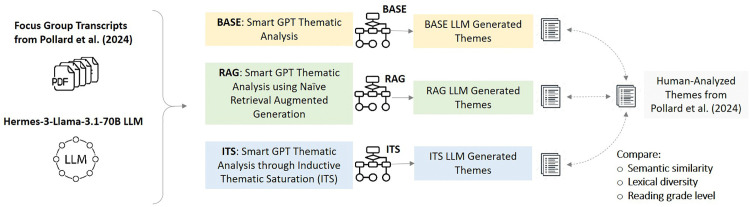 Figure 1
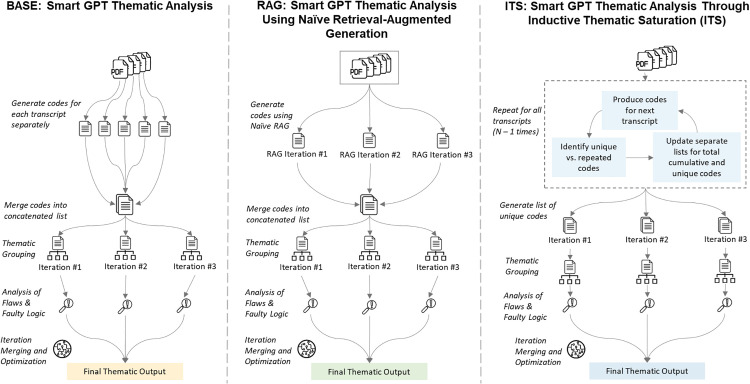 Figure 2
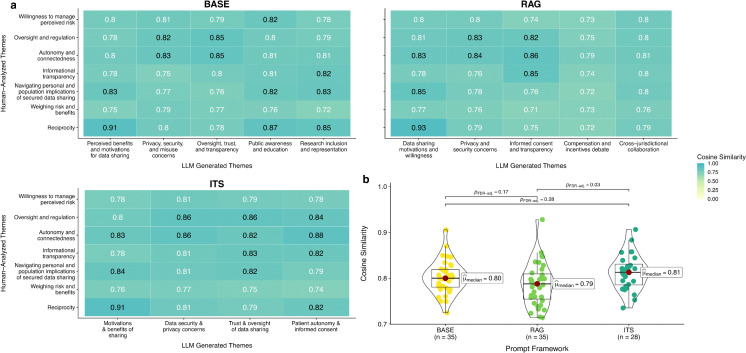 Figure 3
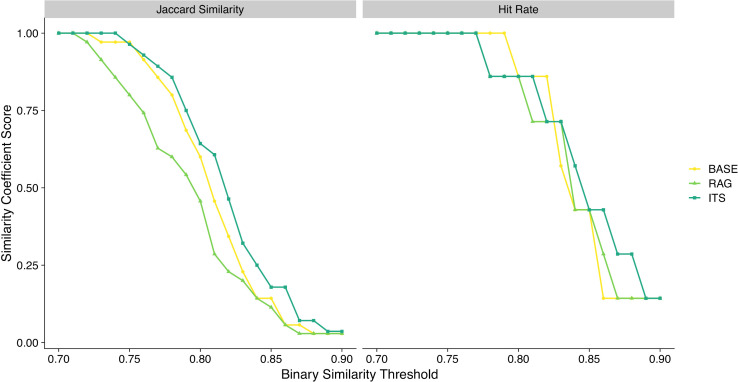 Figure 4
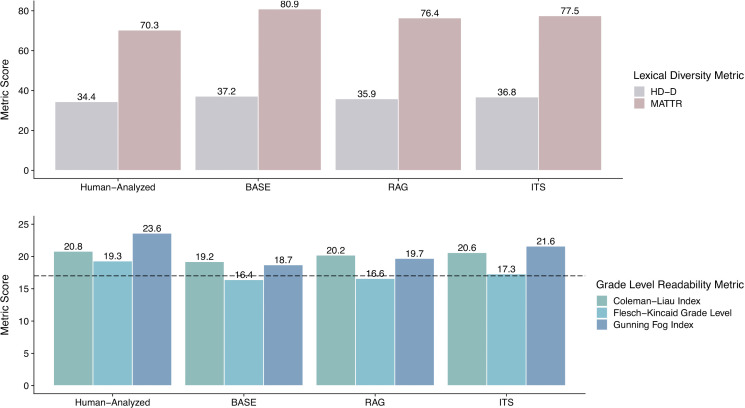 Figure 5
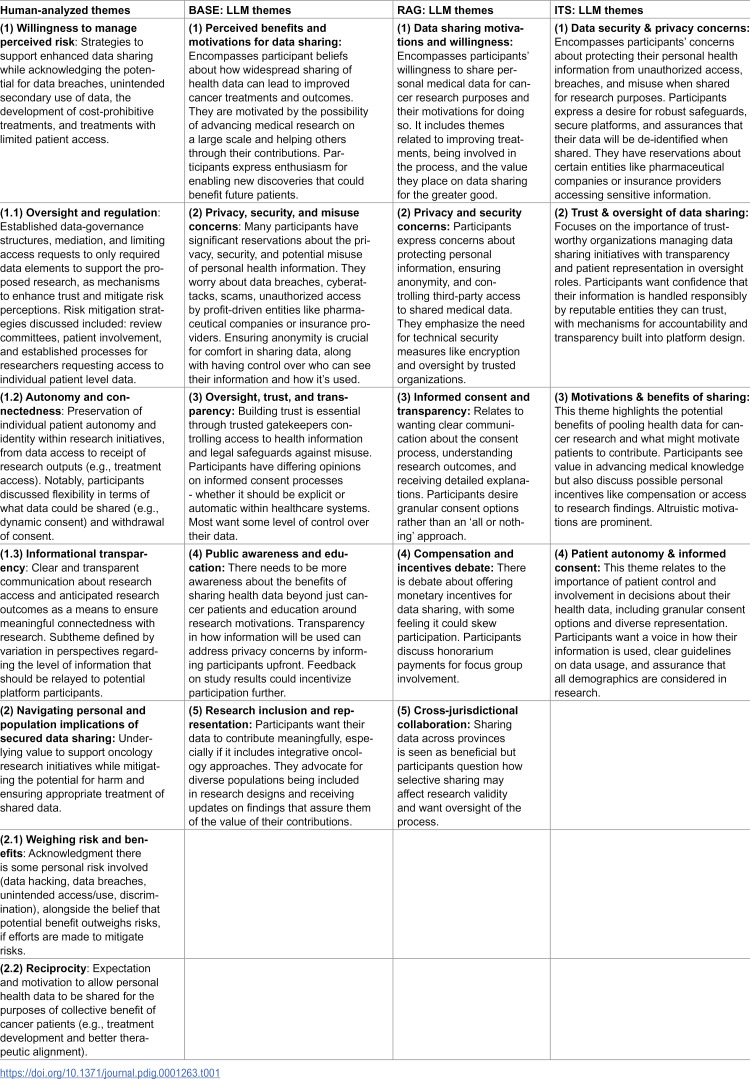 Figure 6
Peer Reviews
No public reviews on file for this paper yet. If you reviewed it on a platform where reviews are public (OpenReview, ICLR, NeurIPS, ICML), you can paste yours below so the community can read it here.
Videos
No videos yet. Explain this paper in a talk, walkthrough, or lecture? Add one.
Taxonomy
TopicsPatient-Provider Communication in Healthcare · Machine Learning in Healthcare · Health Literacy and Information Accessibility