Asian-White racial disparities in postpartum hemorrhage and severe postpartum hemorrhage in Ontario, Canada: A population-based cohort study
Parnian Hossein-Pour, Rohan D’Souza, Anastasia Gayowsky, Irina Oltean, Esther Chin, Azar Mehrabadi, Giulia M. Muraca

TL;DR
The study finds racial disparities in postpartum hemorrhage rates between Asian and White individuals in Ontario, with language and immigration status playing a role.
Contribution
The study introduces a nuanced analysis of PPH disparities by combining race, language, and immigration status in a Canadian context.
Findings
Asian individuals had marginally higher PPH rates compared to White individuals after adjusting for confounding factors.
Southeast Asian language speakers had higher PPH rates compared to White individuals.
Immigrants overall had lower PPH rates than non-immigrants, but disparities emerged when considering primary language.
Abstract
Postpartum hemorrhage (PPH) is the leading preventable cause of maternal morbidity and mortality globally, occurring in 4–6% of Canadian deliveries with evidence suggesting higher rates among Asian individuals. We compared rates of PPH and severe PPH in Ontario, Canada, among Asian and White individuals, focusing on the intersectional relationships between race, language, and immigration status. We performed a population-based cohort study in Ontario, Canada (2013–2021). PPH was identified by diagnosis codes used to indicate blood loss of ≥500 mL (vaginal delivery) or ≥1000 mL (cesarean delivery). Severe PPH was defined as PPH with an intervention to control bleeding. Rates were examined by maternal self-reported race, immigration category, duration in Canada, and language at immigration. Modified Poisson regression models were fit to determine the relationships between race, PPH and…
Genes, proteins, chemicals, diseases, species, mutations and cell lines named across the full text — each resolved to its canonical identifier and authoritative record.
Click any figure to enlarge with its caption.
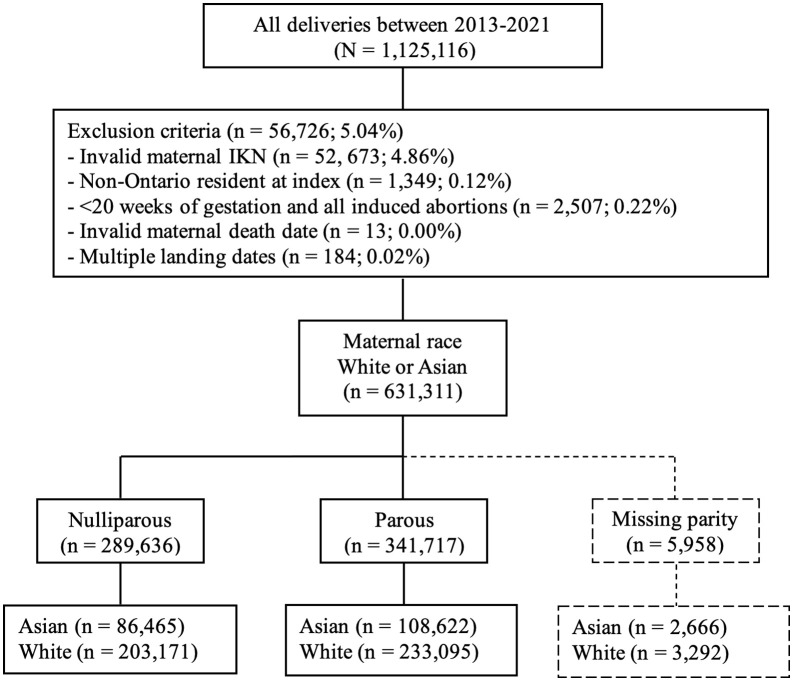 Figure 1
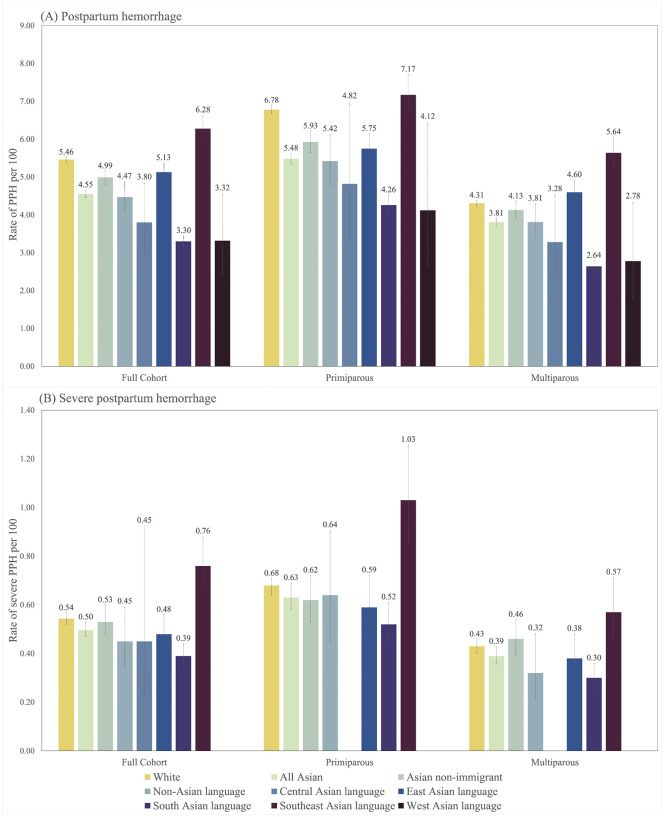 Figure 2
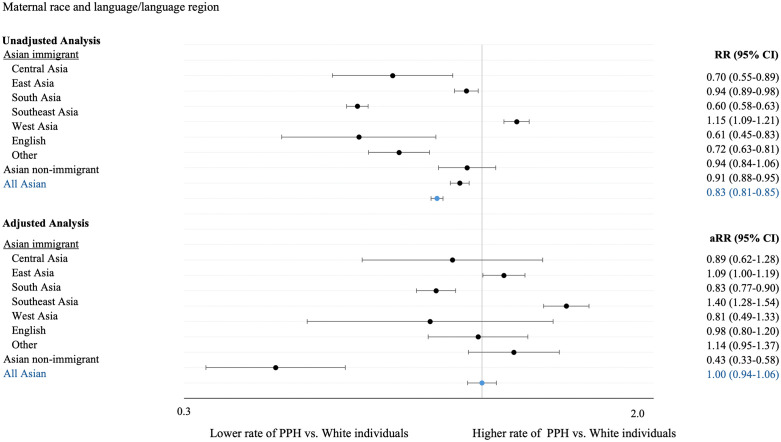 Figure 3
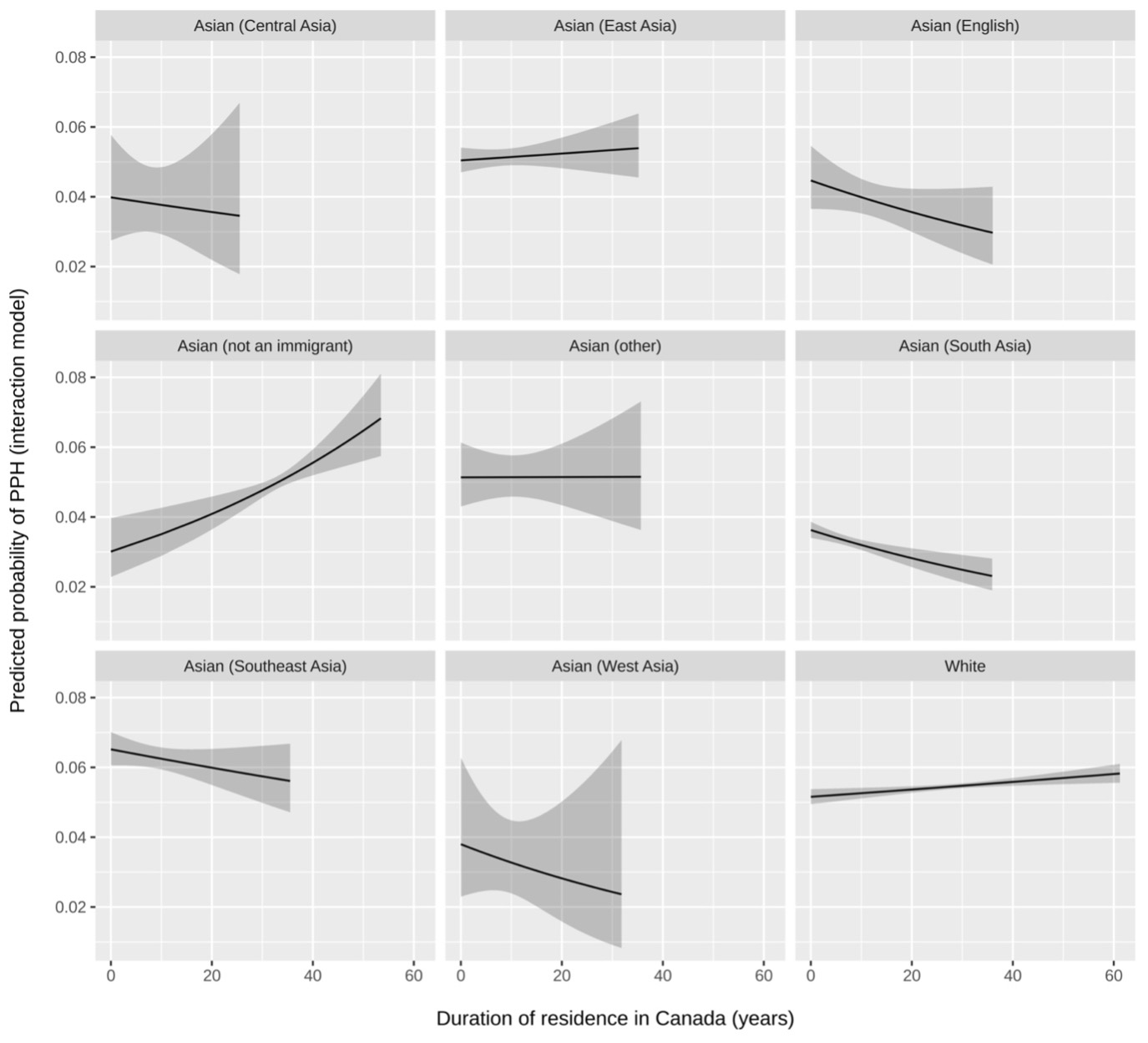 Figure 4
 Figure 5
Peer Reviews
No public reviews on file for this paper yet. If you reviewed it on a platform where reviews are public (OpenReview, ICLR, NeurIPS, ICML), you can paste yours below so the community can read it here.
Videos
No videos yet. Explain this paper in a talk, walkthrough, or lecture? Add one.
Taxonomy
TopicsMaternal and fetal healthcare · Maternal and Perinatal Health Interventions · Hospital Admissions and Outcomes