Study protocol for a multiarm, randomized controlled trial to determine the effectiveness of community-based frailty rehabilitation to improve physical function in older adults: The OPTIMAL Fitness Trial
Alexandra Papaioannou, Courtney Kennedy, Justin Lee, Patricia Hewston, Caitlin McArthur, Shyam Maharaj, Jonathan Adachi, Pauline Boulos, Raja Bobba, Alexander Rabinovich, Brian McKenna, Lisa Palubiski, Dee Mangin, Lehana Thabane, Sharon Marr, Sharon Kaasalainen

TL;DR
This study will test if a community-based rehabilitation program can improve physical function in older adults with frailty.
Contribution
The trial is the first to evaluate a community-based frailty rehabilitation model with multiple intervention components.
Findings
The study will compare multimodal and exercise-only interventions against a control group.
It will assess physical function, frailty, sarcopenia, and cost-effectiveness in older adults.
Results may guide the development of a standardized global frailty rehabilitation program.
Abstract
Frailty in older adults is on the rise with the rapid aging population. Frailty is dynamic and proven to be reversible or treatable. Evidence regarding the clinical effectiveness of community-based frailty interventions is limited. Frailty rehabilitation has the potential to be an accessible community-based intervention that may enable independence. We will examine a model of frailty rehabilitation and consider key components for improving physical function, frailty, sarcopenia, and cost-effectiveness. A multiarm, parallel-group, partially blinded, randomized controlled trial will compare the clinical and cost-effectiveness of OPTimizing Independence, Mobility, and Active Life (OPTIMAL) Fitness multimodal (group exercise, nutritional coaching/supplementation, medication optimization) versus OPTIMAL Fitness exercise-only and control. Participants in the OPTIMAL Fitness multimodal and…
Genes, proteins, chemicals, diseases, species, mutations and cell lines named across the full text — each resolved to its canonical identifier and authoritative record.
Click any figure to enlarge with its caption.
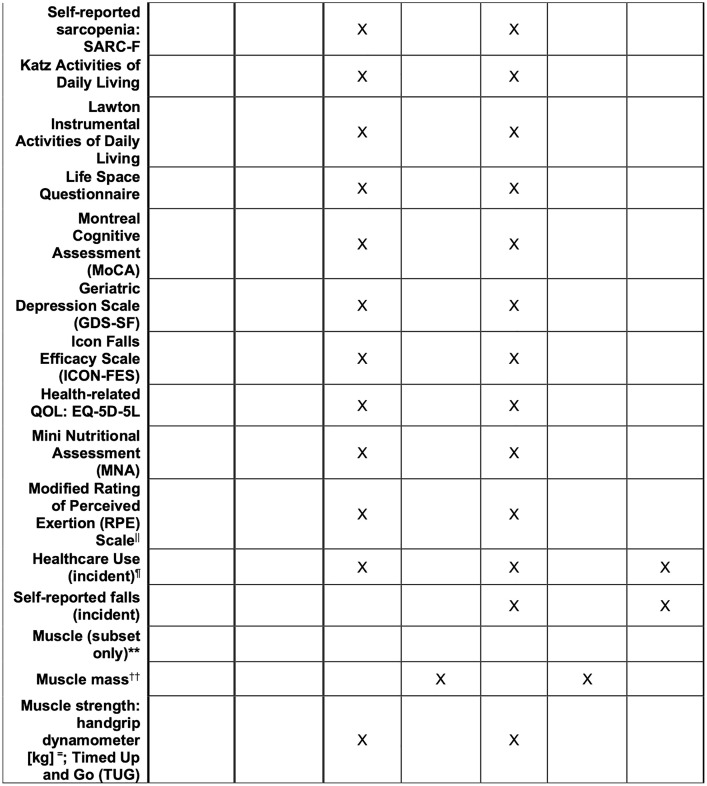 Figure 1
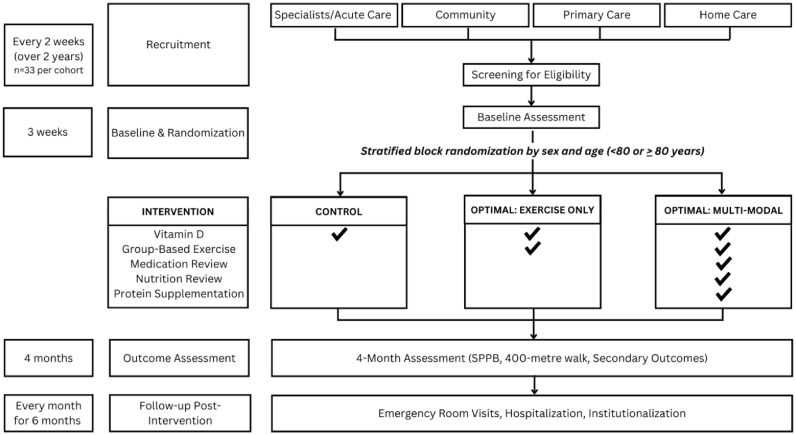 Figure 2
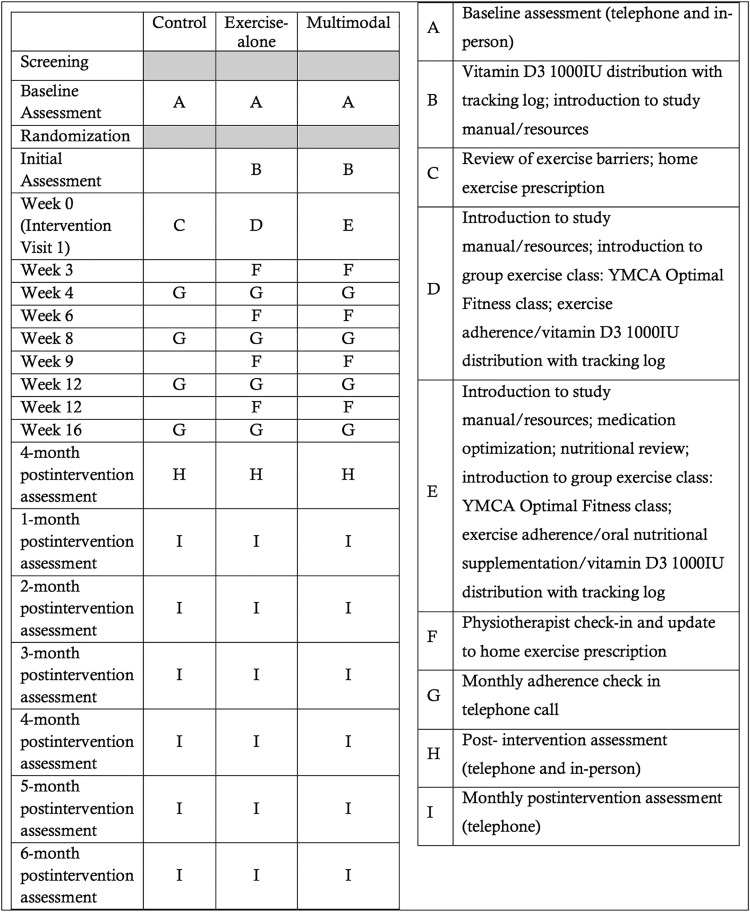 Figure 3
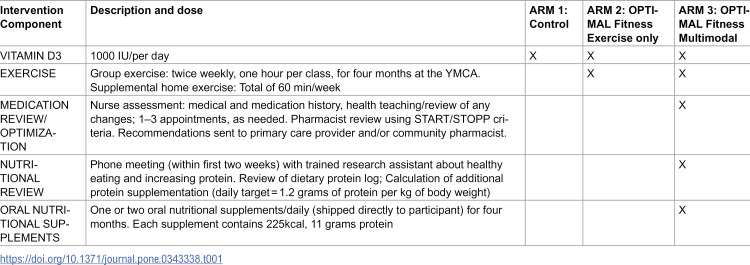 Figure 4
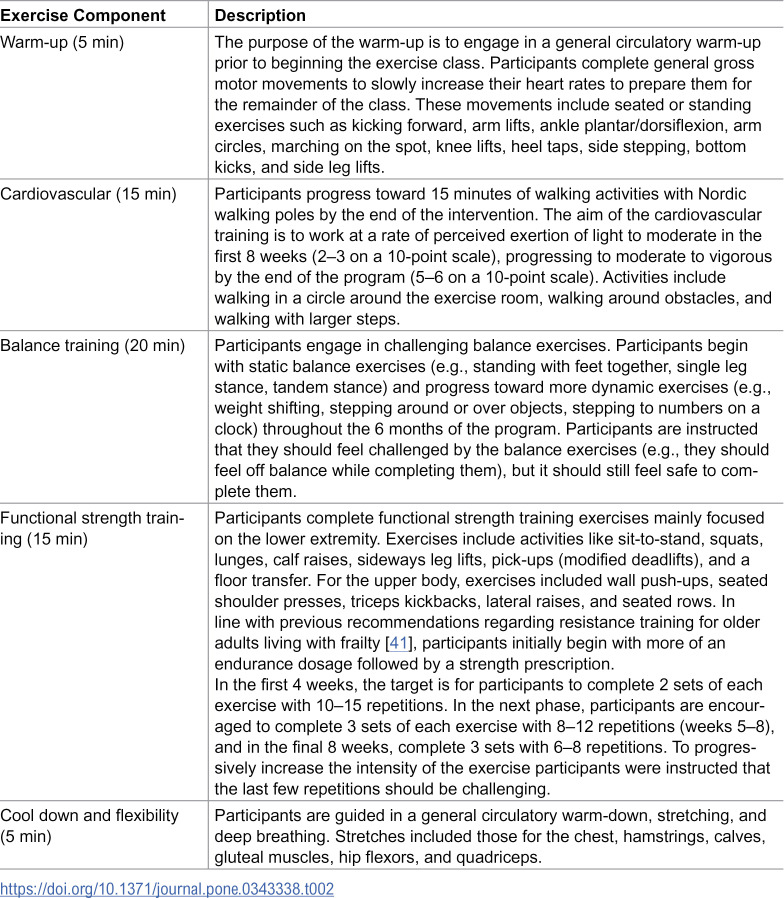 Figure 5
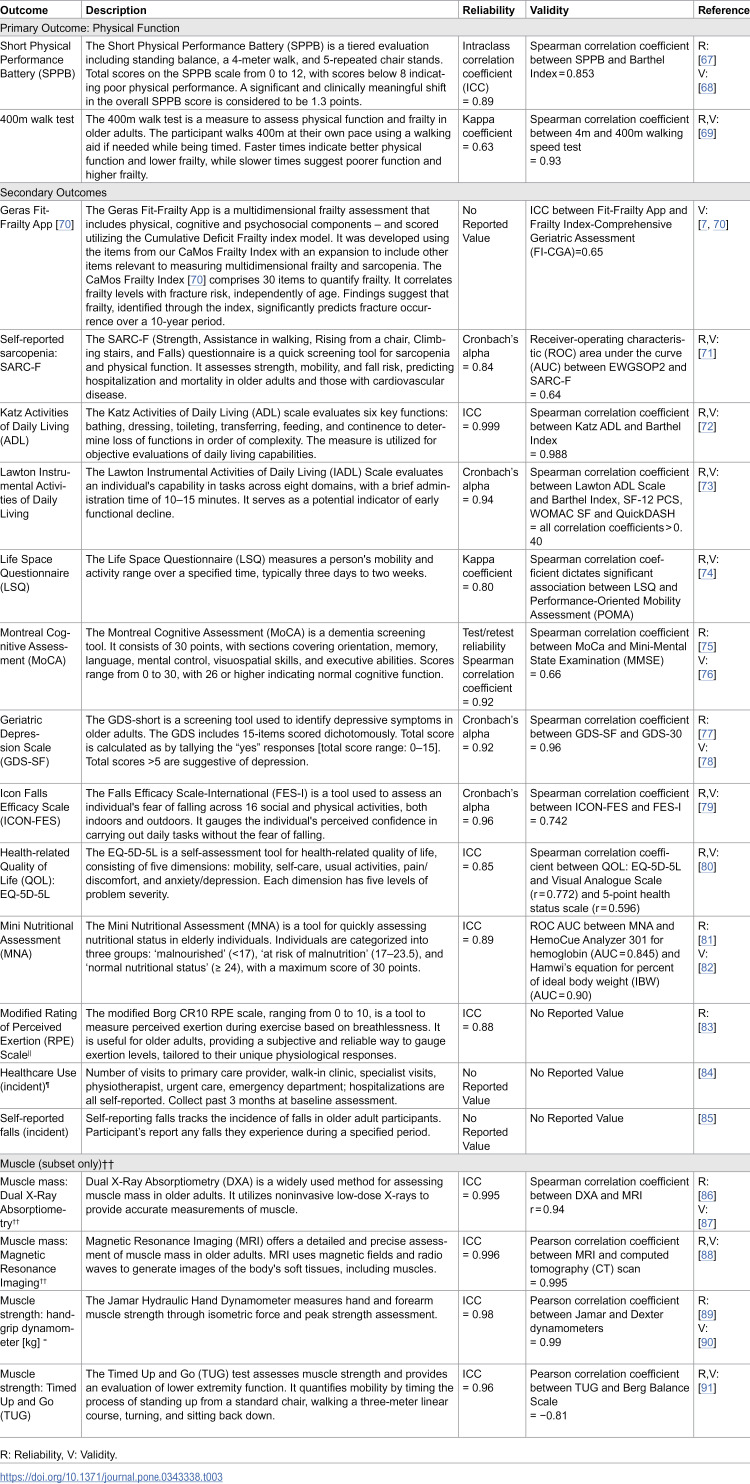 Figure 6
Peer Reviews
No public reviews on file for this paper yet. If you reviewed it on a platform where reviews are public (OpenReview, ICLR, NeurIPS, ICML), you can paste yours below so the community can read it here.
Videos
No videos yet. Explain this paper in a talk, walkthrough, or lecture? Add one.
Taxonomy
TopicsFrailty in Older Adults · Nutrition and Health in Aging · Balance, Gait, and Falls Prevention