Working conditions, job stress and work-related consequences among hospital employees—differences by professional group, working hours and job levels: A cross-sectional study
Nicole R. Hander, Rebecca Erschens, Thomas Klein, Marc N. Jarczok, Nadine Mulfinger, Monika A. Rieger, Florian Junne, Peter Angerer, Bernd Puschner, Andreas Müller, Janna Küllenberg, Imad Maatouk, Stefan Süß, Elena Gesang, Sascha Ruhle, Harald Gündel, Eva Rothermund-Nassir

TL;DR
Hospital workers, especially nurses and part-time staff, face high job stress and poor work conditions, leading to dissatisfaction and intentions to leave their jobs.
Contribution
The study identifies how job stress and work-related consequences vary across professional groups, working hours, and job levels in hospitals.
Findings
Nurses reported the lowest effort-reward balance and highest job dissatisfaction.
Part-time workers felt less control and cooperation at work and were more likely to consider leaving.
Leadership roles were associated with better psychosocial outcomes.
Abstract
Hospital employees face significant occupational stress that negatively impacts both their well-being and organizational outcomes. This challenge is amplified during times of staff shortages, economic difficulties and conflicting roles. To support hospital workers effectively and create a positive work environment, it is crucial to identify specific groups experiencing greater challenges. This study examines how working conditions, job stress, and related consequences vary across professional groups, working hours, and job levels within hospitals. The study analyzed data from 406 employees (66% female) across three German hospitals, collected between December 2019 and January 2020 as part of the SEEGEN (Mental Health at the Hospital Workplace) study on mental health in hospital workplaces. Group differences in target variables were investigated via between-group one-way independent…
Genes, proteins, chemicals, diseases, species, mutations and cell lines named across the full text — each resolved to its canonical identifier and authoritative record.
Click any figure to enlarge with its caption.
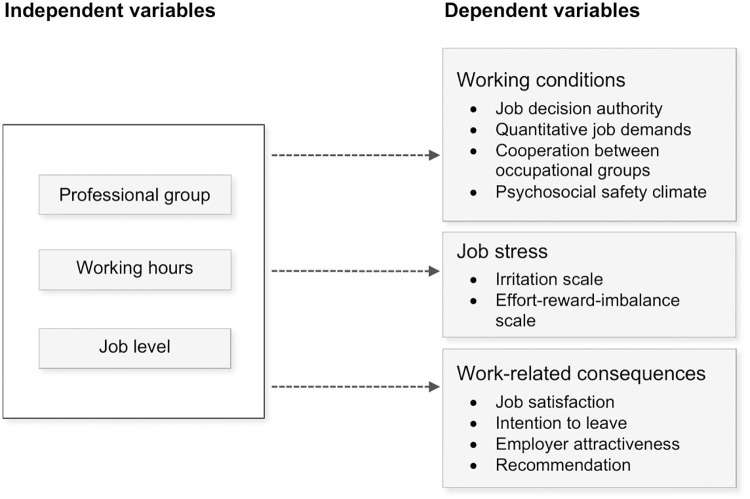 Figure 1
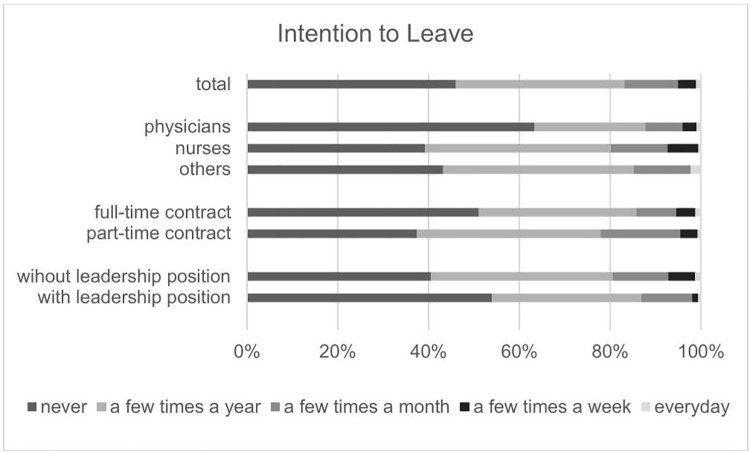 Figure 2
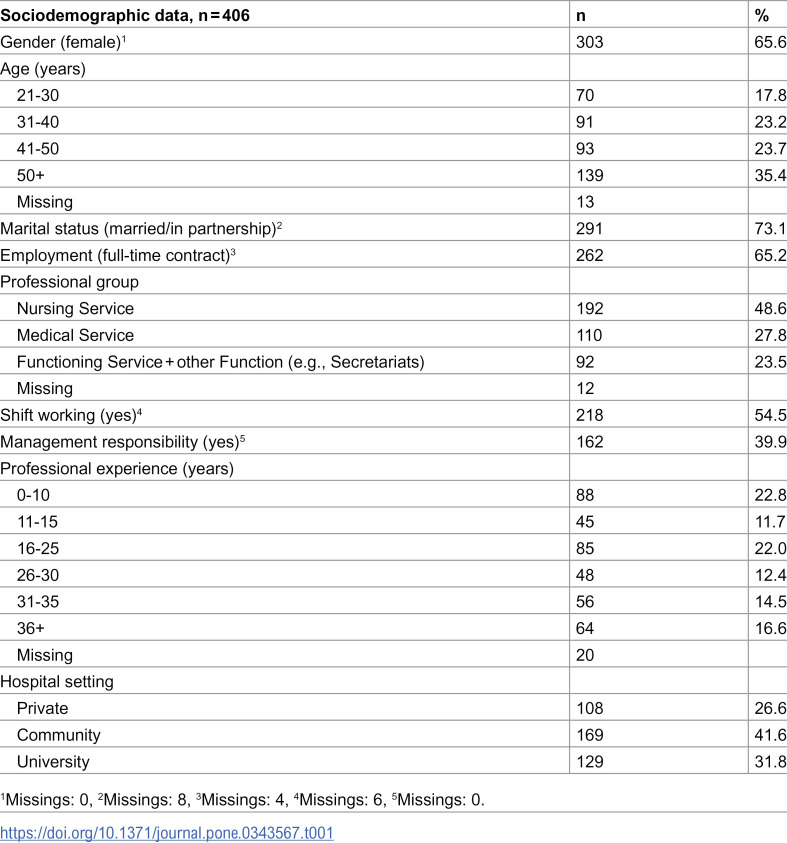 Figure 3
 Figure 4
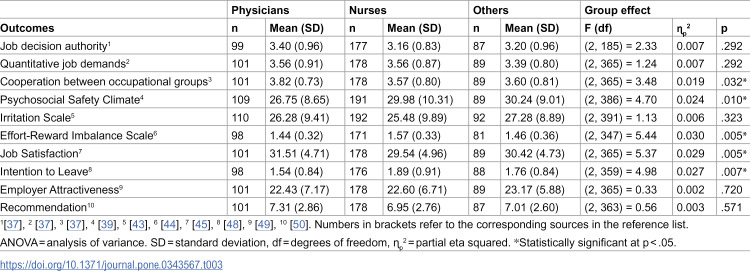 Figure 5
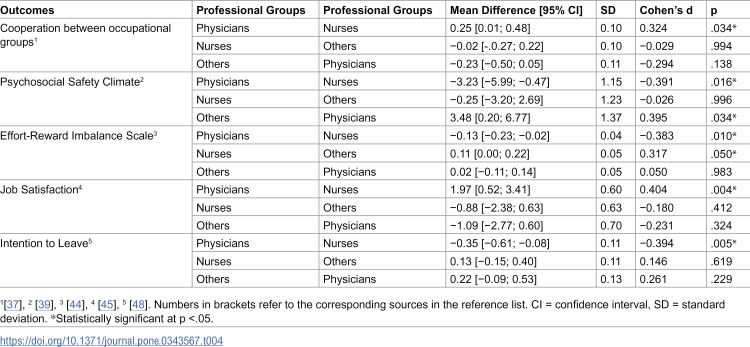 Figure 6
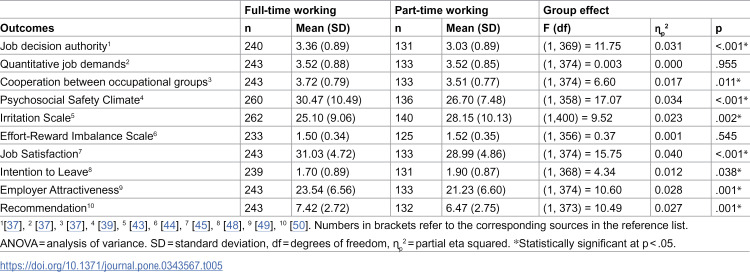 Figure 7
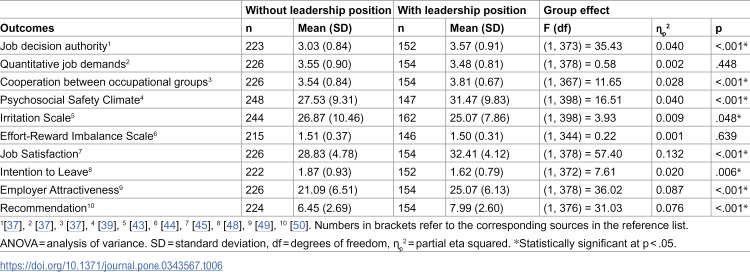 Figure 8
Peer Reviews
No public reviews on file for this paper yet. If you reviewed it on a platform where reviews are public (OpenReview, ICLR, NeurIPS, ICML), you can paste yours below so the community can read it here.
Videos
No videos yet. Explain this paper in a talk, walkthrough, or lecture? Add one.
Taxonomy
TopicsHealthcare professionals’ stress and burnout · Workplace Health and Well-being · Nursing education and management