Thriving in place: Multidimensional neighborhood typologies and cognitive function among U.S. older adults in the Health and Retirement Study
Jiao Yu, Weidi Qin, Jiuzhou Wang, Eva Kahana

TL;DR
This study explores how different types of U.S. neighborhoods affect cognitive health in older adults, finding that neighborhoods with more amenities support better cognitive function.
Contribution
The study introduces a novel classification of neighborhood typologies combining physical, social, and service features to assess cognitive health outcomes.
Findings
Four distinct neighborhood typologies were identified, including high-amenity and disadvantaged neighborhoods.
Older adults in high-amenity neighborhoods showed significantly better cognitive function compared to those in disadvantaged neighborhoods.
Neighborhood features like deprivation and environmental hazards were linked to cognitive disparities.
Abstract
Neighborhood physical, social, and service environments are increasingly recognized as important contextual factors related to cognitive health; however, few studies have examined how these features collectively shape cognitive outcomes. This study aimed to classify neighborhood typologies based on a constellation of neighborhood features and to investigate their associations with cognitive function among U.S. older adults. We conducted a cross-sectional analysis of 6,480 participants from the 2016 wave of the Health and Retirement Study. To examine contemporaneous associations, neighborhood features were derived from the 2015 National Neighborhood Data Archive, including measures of neighborhood deprivation, service facilities, food access, healthcare facilities, and environmental hazards. Cognitive function was assessed using the 27-point Telephone Interview for Cognitive Status…
Genes, proteins, chemicals, diseases, species, mutations and cell lines named across the full text — each resolved to its canonical identifier and authoritative record.
Click any figure to enlarge with its caption.
 Figure 1
 Figure 2
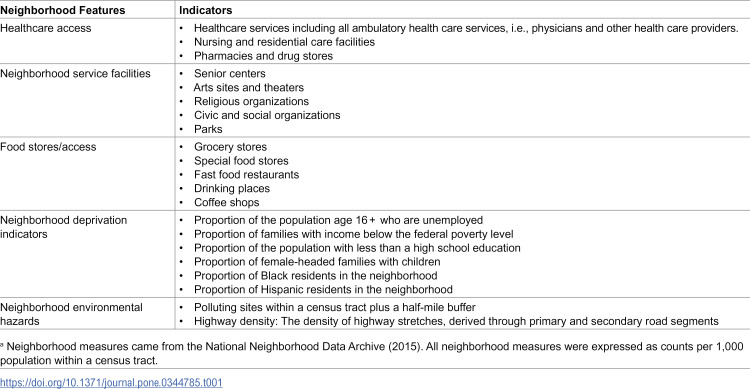 Figure 3
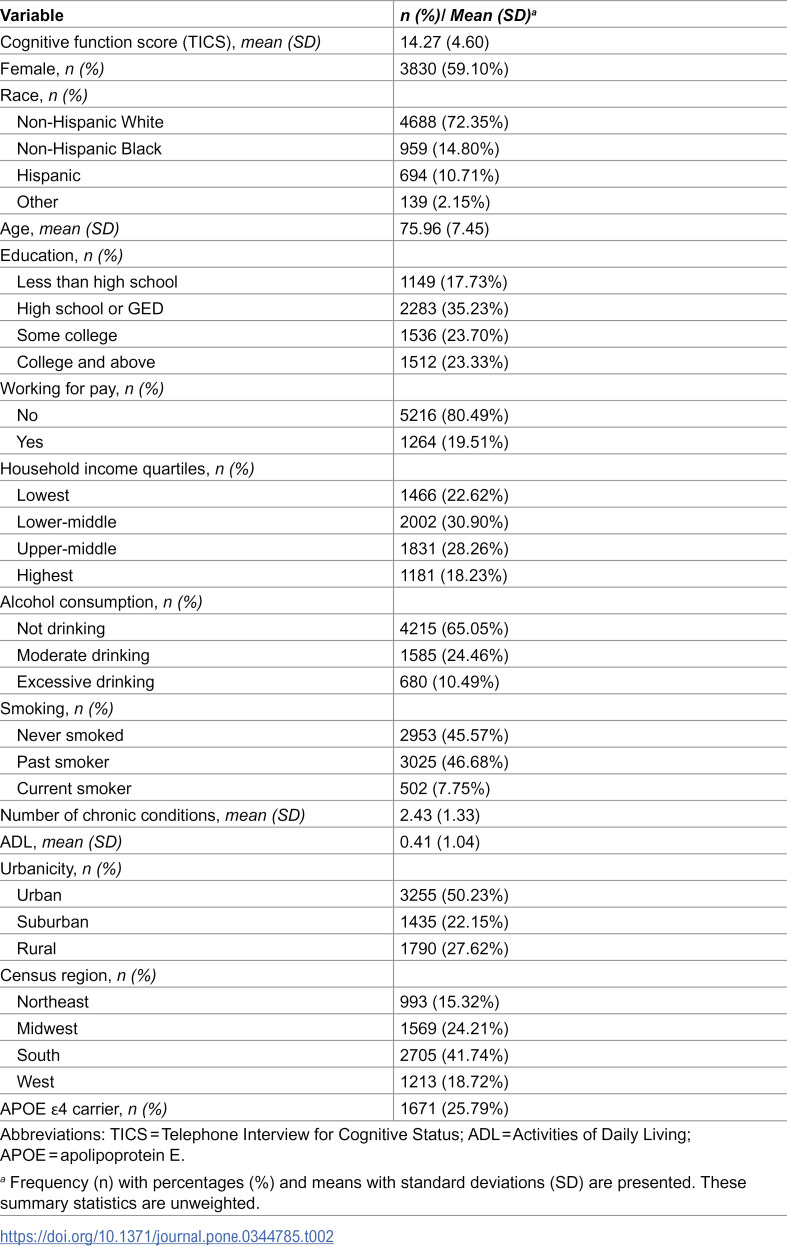 Figure 4
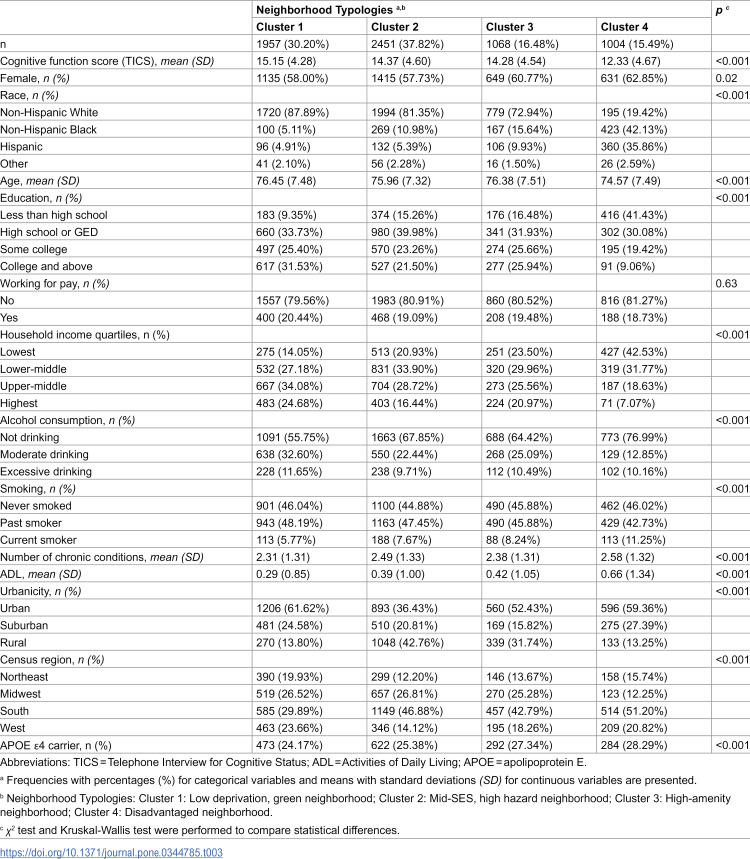 Figure 5
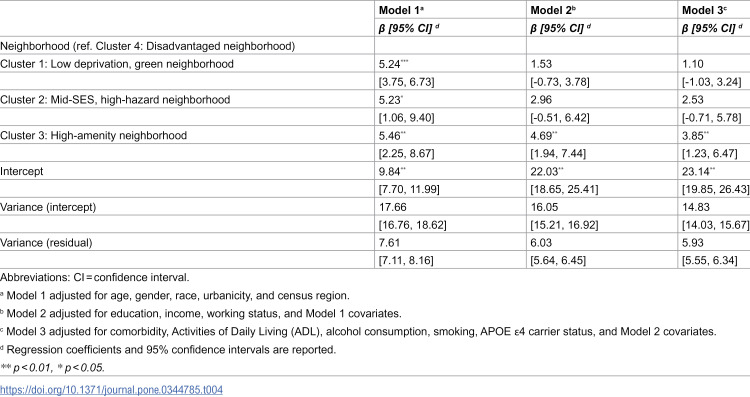 Figure 6
Peer Reviews
No public reviews on file for this paper yet. If you reviewed it on a platform where reviews are public (OpenReview, ICLR, NeurIPS, ICML), you can paste yours below so the community can read it here.
Videos
No videos yet. Explain this paper in a talk, walkthrough, or lecture? Add one.
Taxonomy
TopicsHealth disparities and outcomes · Urban Green Space and Health · Dementia and Cognitive Impairment Research