Exploring cooperation among social pathogens: a computational perspective
Andrea S Ramirez-Mata, Cameron Browne, Ryan S Doster, Marco Salemi, Brittany Rife Magalis

TL;DR
This paper reviews computational methods for studying cooperation among pathogens, highlighting their benefits and limitations in understanding microbial and viral interactions.
Contribution
The paper provides a comprehensive overview of computational approaches for analyzing pathogen cooperation, emphasizing their applicability and constraints.
Findings
In vitro methods are time-consuming and fail to replicate natural microenvironments.
Computational methods offer scalability but often require prior knowledge of bacterial metabolic pathways.
Sequence- and phylogeny-based approaches extend to viruses but face challenges with small sample sizes and incomplete annotations.
Abstract
Once centered on animal social behavior, investigations into cooperation have expanded across the tree of life to include micro-organisms such as bacteria and viruses. Cooperative interactions are now understood to drive evolutionary dynamics within and between numerous microbial species and communities, including pathogen adaptation to and persistence in new hosts and environments. Identification and characterization of the underlying mechanisms of cooperation offer innovative opportunities for therapeutic interventions targeting difficult-to-treat pathogens through disruption of interactive networks. The current gold standards for evaluating micro-organismal cooperation often rely on assessing coordinated changes of phenotypic traits and the genetic and environmental factors that can affect them. Among these approaches, in vitro methods are labor-intensive, time-consuming, and often…
Genes, proteins, chemicals, diseases, species, mutations and cell lines named across the full text — each resolved to its canonical identifier and authoritative record.
Click any figure to enlarge with its caption.
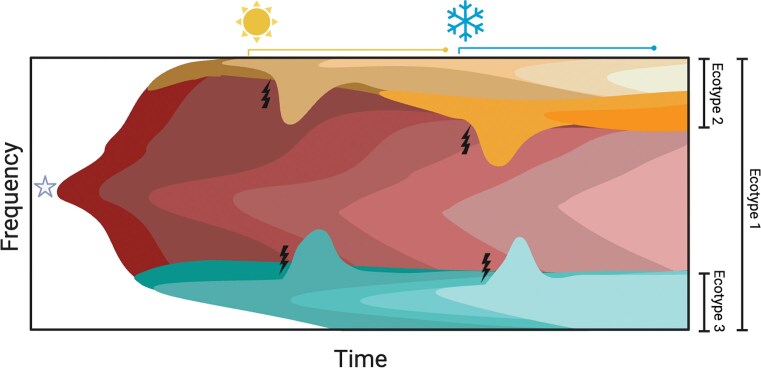 Figure 1
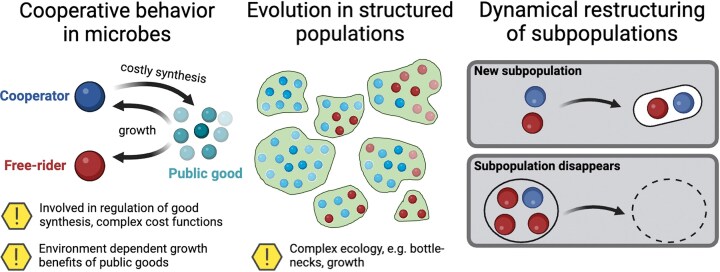 Figure 2
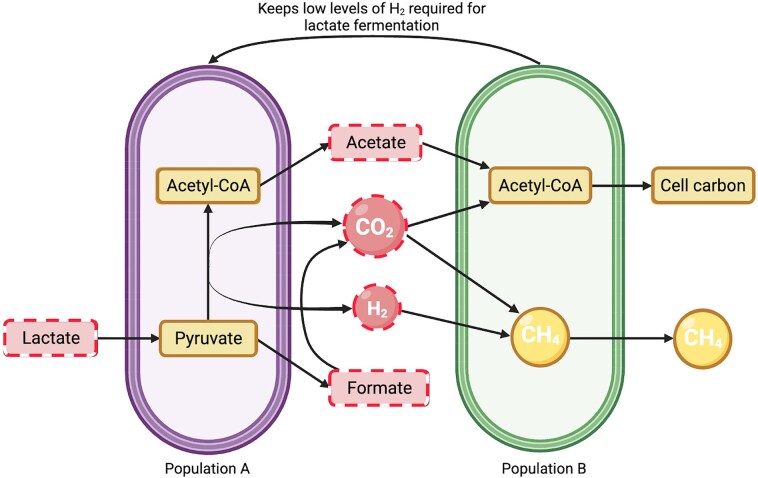 Figure 3
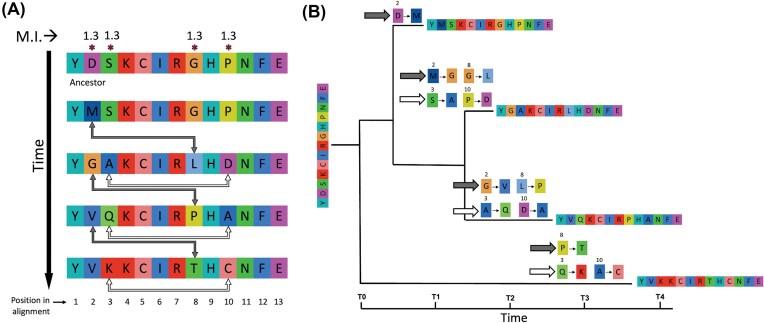 Figure 4
Peer Reviews
No public reviews on file for this paper yet. If you reviewed it on a platform where reviews are public (OpenReview, ICLR, NeurIPS, ICML), you can paste yours below so the community can read it here.
Videos
No videos yet. Explain this paper in a talk, walkthrough, or lecture? Add one.
Taxonomy
TopicsEvolutionary Game Theory and Cooperation · Zoonotic diseases and public health · Bioinformatics and Genomic Networks