Genome-wide association study and functional validation of CsAGD6 conferring drought tolerance in tea plant
Jiaxuan Yue, Shan He, Shicai Liang, Yu Wang, Huan Wang, Xuxu Lang, Kai Fan, Jianhui Hu, Jiazhi Shen, Litao Sun, Shibo Ding, Zhaotang Ding, Wenjun Qian

TL;DR
This study identifies a gene, CsAGD6, that helps tea plants tolerate drought by improving photosynthesis and membrane stability, offering tools for breeding drought-resistant varieties.
Contribution
The study discovers and functionally validates CsAGD6 as a key gene for drought tolerance in tea plants and develops a marker for early breeding selection.
Findings
CsAGD6 is upregulated under drought stress and positively regulates drought tolerance.
Haplotype analysis identified favorable alleles Hap-P1 and Hap-C1 in CsAGD6.
An SNP marker targeting chr10:206216541 (C/T) was developed for early selection of drought-tolerant tea genotypes.
Abstract
Drought stress significantly threatens tea production and quality worldwide. To elucidate the genetic basis of drought tolerance in tea plant, we evaluated 11 physiological traits across 115 diverse tea accessions under drought conditions. A comprehensive drought resistance index (D-value) was constructed through principal component analysis and fuzzy membership function. Genome-wide association studies identified 67 significant SNPs and pinpointed four candidate genes associated with drought-responsive traits. Integrated transcriptome and qRT-PCR analyses revealed that three genes, including CsAGD6, were significantly upregulated under drought stress. Functional assays confirmed that CsAGD6, encoding a nucleus-localized ARF-GAP protein, positively regulates drought tolerance by modulating photosynthetic efficiency and membrane stability. Haplotype analysis identified favorable alleles…
Genes, proteins, chemicals, diseases, species, mutations and cell lines named across the full text — each resolved to its canonical identifier and authoritative record.
Click any figure to enlarge with its caption.
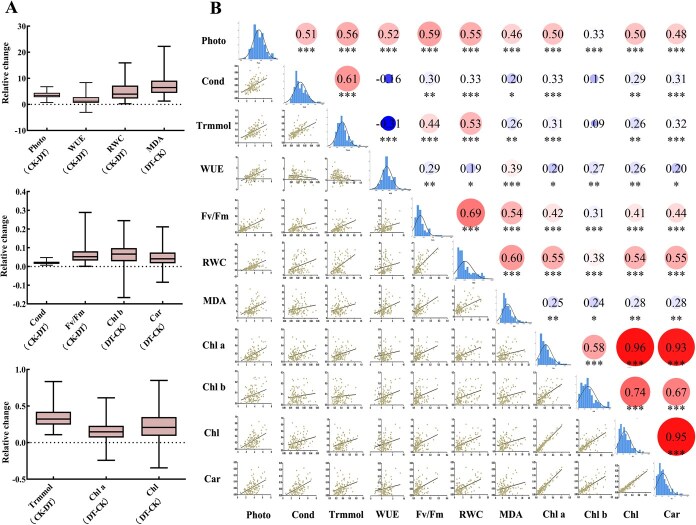 Figure 1
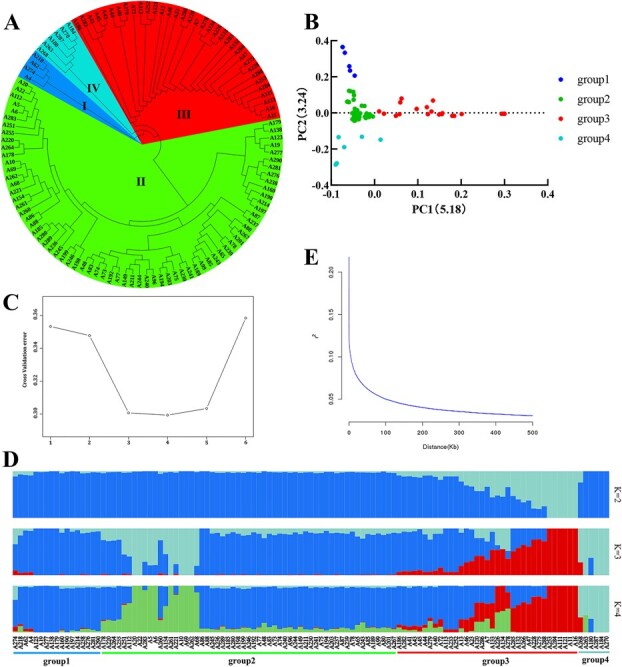 Figure 2
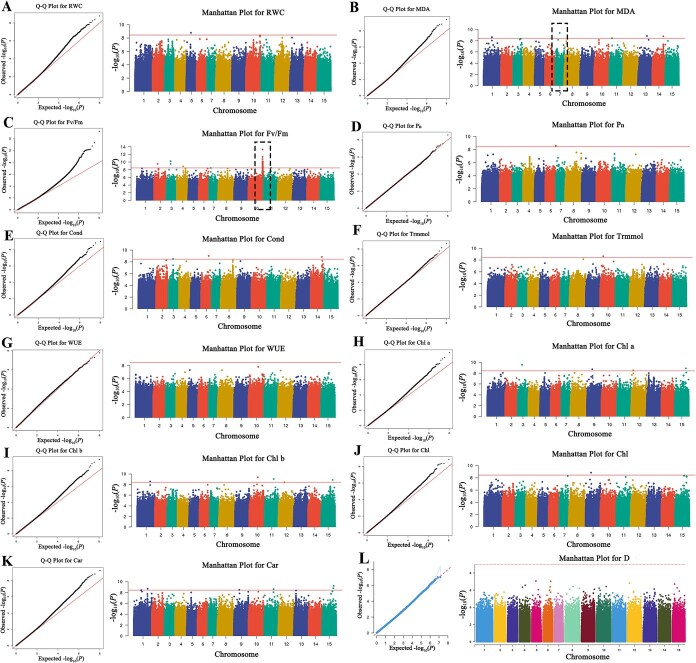 Figure 3
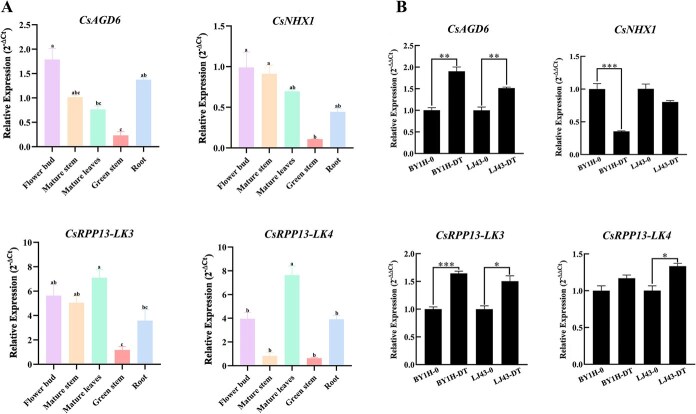 Figure 4
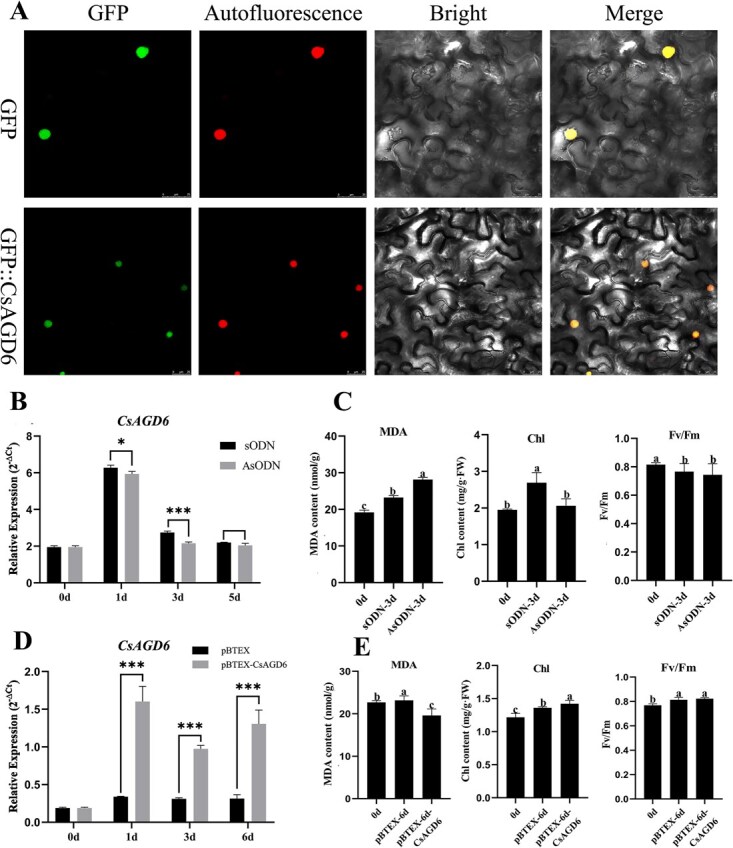 Figure 5
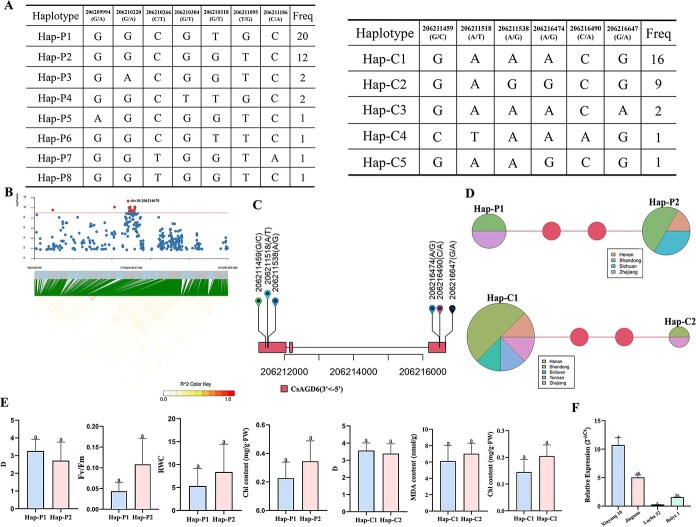 Figure 6
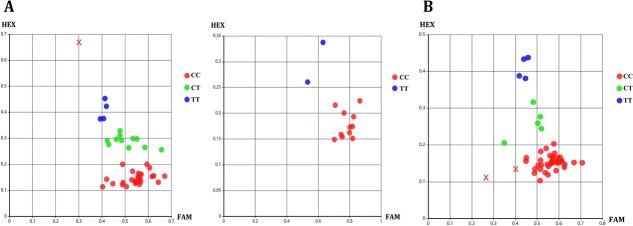 Figure 7
Peer Reviews
No public reviews on file for this paper yet. If you reviewed it on a platform where reviews are public (OpenReview, ICLR, NeurIPS, ICML), you can paste yours below so the community can read it here.
Videos
No videos yet. Explain this paper in a talk, walkthrough, or lecture? Add one.
Taxonomy
TopicsTea Polyphenols and Effects · Insect-Plant Interactions and Control · Plant Molecular Biology Research