Transdermal Delivery of Hyaluronate-Conjugated Formyl Peptide Receptor 2 Agonistic Peptide Ameliorates Bleomycin-Induced Skin Fibrosis
Gyu Tae Park, Hye Eun Choi, Jae-Kyung Lim, Eun-Bae Choi, Jeong-Hyun Park, Su Bin Lee, Moon-Bum Kim, Ki Su Kim, Jae Ho Kim

TL;DR
A new noninvasive treatment for skin fibrosis uses a hyaluronic acid-conjugated peptide to reduce inflammation and tissue hardening in a mouse model of systemic sclerosis.
Contribution
A transdermal delivery system for an FPR2 agonist peptide is developed, enabling noninvasive treatment of skin fibrosis.
Findings
HA-Wm conjugate showed enhanced skin permeation and reduced dermal thickness and collagen accumulation in fibrotic lesions.
HA-Wm decreased myofibroblasts and macrophages in fibrotic skin and inhibited macrophage migration in vitro.
Therapeutic effects of HA-Wm were FPR2-dependent, as they were abolished in Fpr2-deficient mice.
Abstract
Systemic sclerosis is a severe autoimmune disorder defined by progressive tissue hardening and inflammatory infiltration that affects the skin and major internal organs. The formyl peptide receptor 2 (FPR2) agonist, WKYMVm (Wm), shows promise for alleviating dermal fibrosis; however, its clinical translation is impeded by the need for invasive subcutaneous injection to bypass the skin barrier. To overcome this limitation, we developed a noninvasive topical delivery system by conjugating Wm to hyaluronic acid (HA), a biopolymer known for its transdermal delivery properties. In a bleomycin (BLM)-induced murine model of fibrosis, we assessed the therapeutic efficacy of the HA-Wm conjugate and its capacity to penetrate the skin barrier. Topical application of the HA-Wm conjugate exhibited enhanced skin permeation relative to free Wm, resulting in marked reductions in both dermal layer…
Genes, proteins, chemicals, diseases, species, mutations and cell lines named across the full text — each resolved to its canonical identifier and authoritative record.
Click any figure to enlarge with its caption.
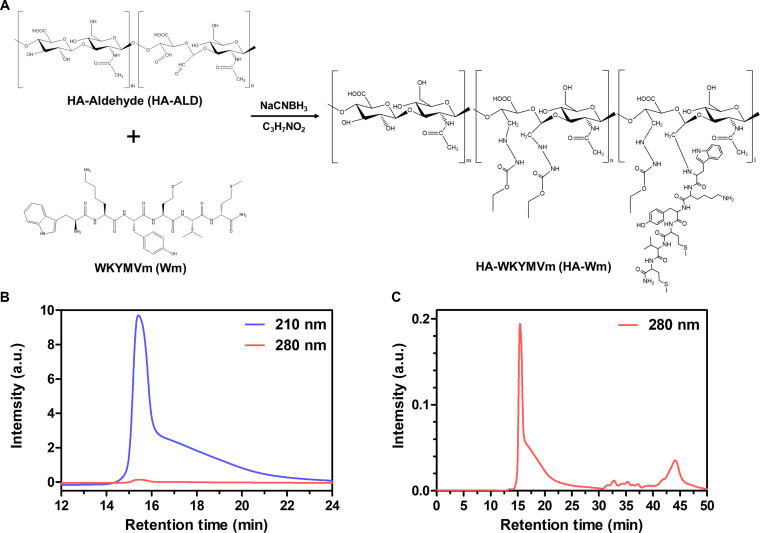 Figure 1
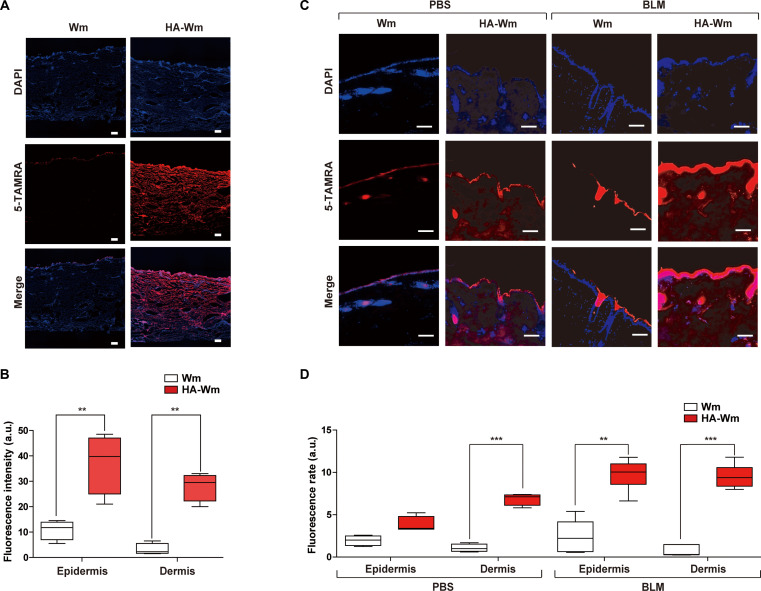 Figure 2
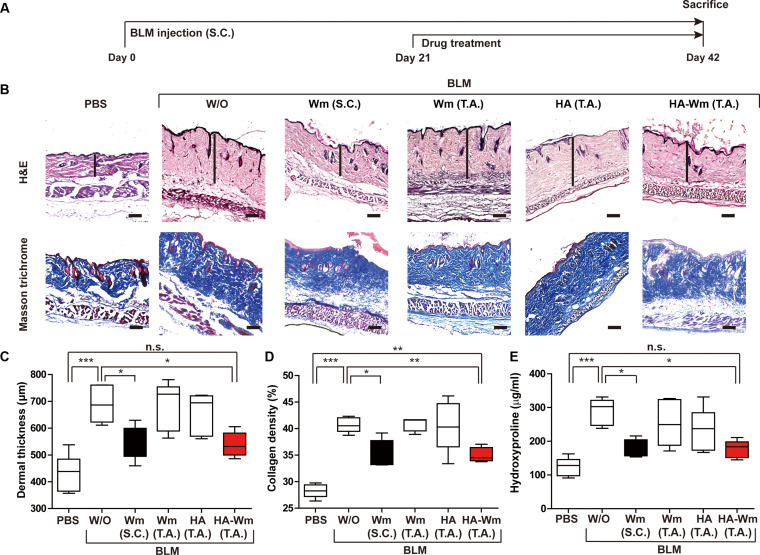 Figure 3
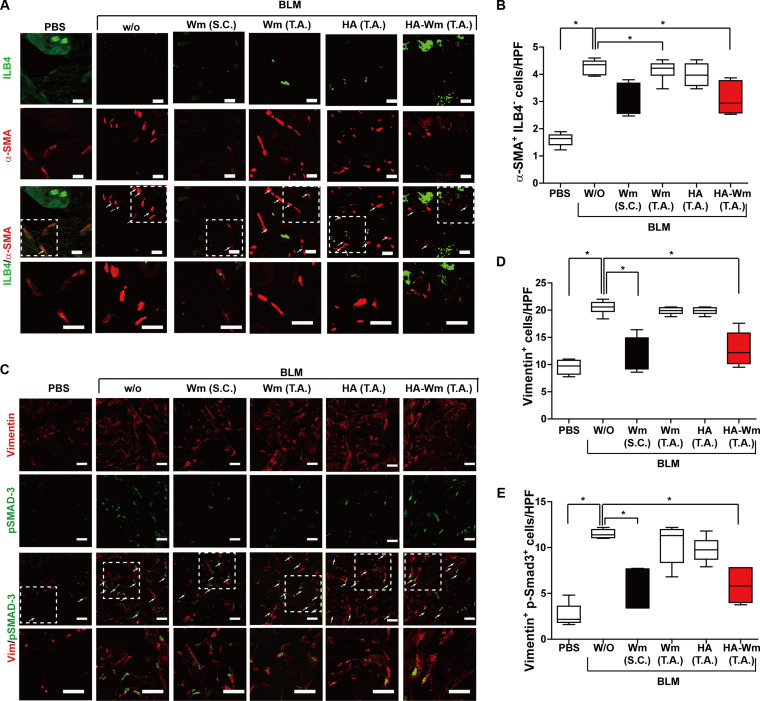 Figure 4
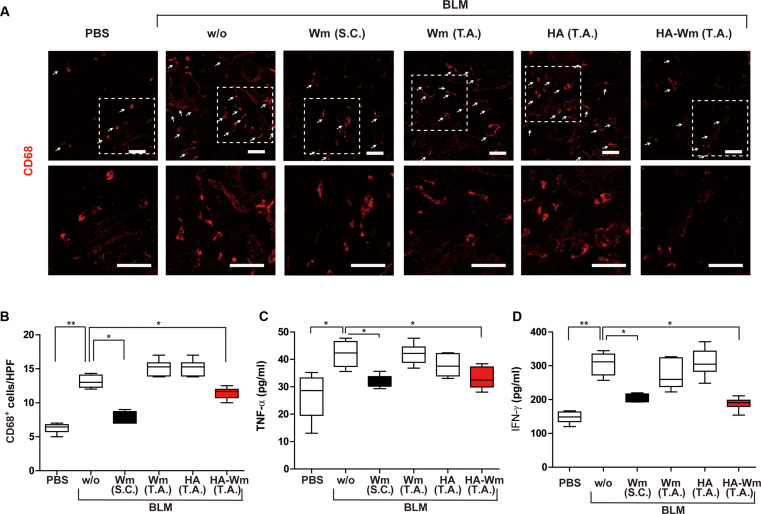 Figure 5
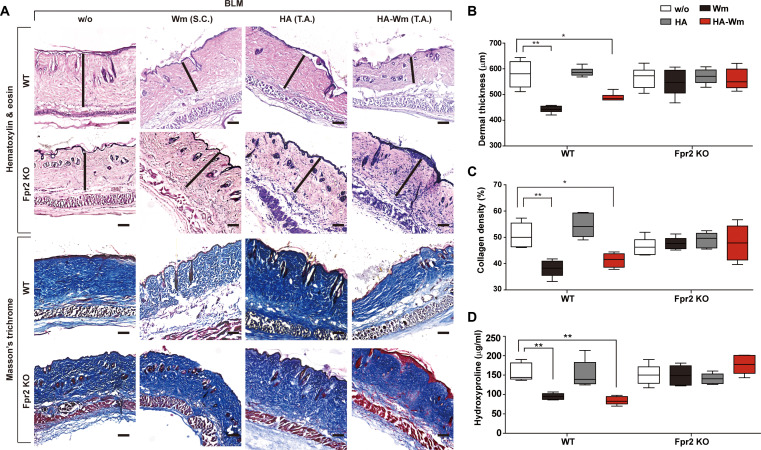 Figure 6
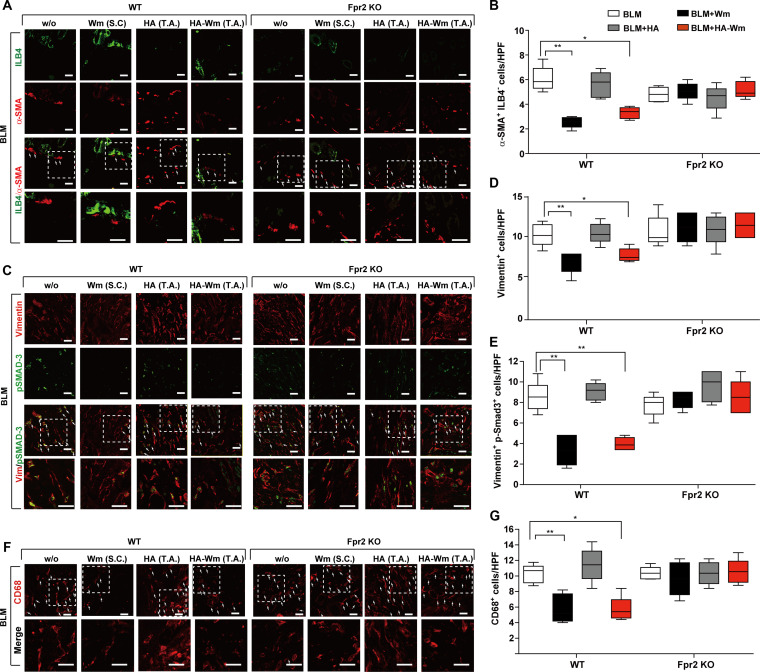 Figure 7
Peer Reviews
No public reviews on file for this paper yet. If you reviewed it on a platform where reviews are public (OpenReview, ICLR, NeurIPS, ICML), you can paste yours below so the community can read it here.
Videos
No videos yet. Explain this paper in a talk, walkthrough, or lecture? Add one.
Taxonomy
TopicsAdvancements in Transdermal Drug Delivery · Proteoglycans and glycosaminoglycans research · Advanced Drug Delivery Systems