Incidental Subependymoma of the Floor of the Fourth Ventricle: A Case Report
Brooklyn K Brekke-Kumley, Pamela R Kinder

TL;DR
A young woman with unusual sensory symptoms was found to have a rare brain tumor, which was safely managed without surgery.
Contribution
This case highlights the importance of early MRI in young adults with atypical symptoms and shows that small subependymomas can be safely observed.
Findings
The patient's sensory symptoms resolved without intervention, and the tumor remained stable on follow-up imaging.
Conservative management of small, non-obstructive fourth-ventricle subependymomas can lead to excellent short-term outcomes.
Incidental subependymomas may present with unusual symptoms like migratory paresthesias, not just fluid obstruction.
Abstract
Subependymomas are rare, slow-growing intraventricular tumors that are typically discovered incidentally and seldom present with transient sensory symptoms in young adults. We report the case of a 22-year-old woman who presented with episodic migratory paresthesias and was found on brain MRI to have a small fourth-ventricular lesion radiographically consistent with subependymoma. The patient’s sensory symptoms resolved spontaneously, and no further episodes occurred. Conservative management with serial imaging was pursued. At the six-month follow-up, the lesion remained stable, and the patient was asymptomatic. Subependymomas most commonly become symptomatic due to cerebrospinal fluid obstruction, whereas episodic migratory paresthesias are unusual. This case highlights the value of early MRI in young adults with atypical sensory symptoms, which may reveal incidental yet clinically…
Genes, proteins, chemicals, diseases, species, mutations and cell lines named across the full text — each resolved to its canonical identifier and authoritative record.
Click any figure to enlarge with its caption.
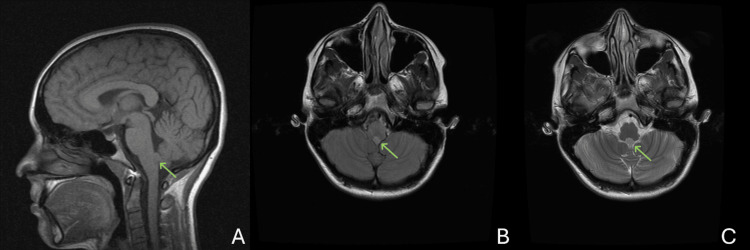 Figure 1
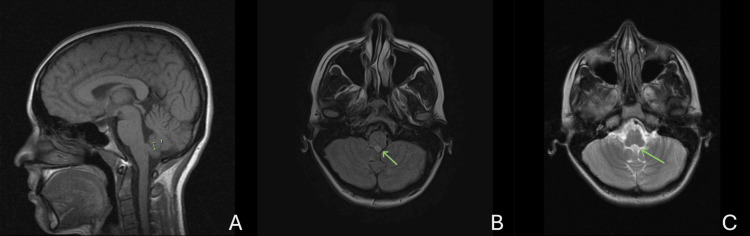 Figure 2
Peer Reviews
No public reviews on file for this paper yet. If you reviewed it on a platform where reviews are public (OpenReview, ICLR, NeurIPS, ICML), you can paste yours below so the community can read it here.
Videos
No videos yet. Explain this paper in a talk, walkthrough, or lecture? Add one.
Taxonomy
TopicsGlioma Diagnosis and Treatment · Cerebrospinal fluid and hydrocephalus · Spinal Dysraphism and Malformations