Characterization and phylogenetic analysis of the complete mitochondrial genome of Glabracollonia laevigata (Gastropoda: Trochida: Colloniidae) from East China Sea
Qiong Wu, Peng Xiang, Chun Guang Wang, Bing Peng Xing

TL;DR
This paper describes the complete mitochondrial genome of a deep-sea snail species and provides insights into its evolutionary relationships and genetic characteristics.
Contribution
The first complete mitochondrial genome of Glabracollonia laevigata is characterized and used to clarify its phylogenetic position.
Findings
The mitochondrial genome is 18,056 bp long with a high sequencing depth and includes 13 protein-coding genes.
Phylogenetic analysis supports a close relationship between Colloniidae and Phasianellidae.
The genome has a high A+T nucleotide bias and specific codon usage patterns.
Abstract
Organic falls play an important role in the evolutionary transition of chemosymbiotic mollusks from shallow to deep seas. Exploring their genetic characteristics is essential to elucidating adaptive mechanisms. Here, we report the first complete mitochondrial genome of Glabracollonia laevigata (Family Colloniidae), collected from sunken wood at 200 m depth in the East China Sea. The circular genome is 18,056 bp in length with an average sequencing depth of 6847×, and contains 13 protein-coding genes (PCGs), two rRNA genes, and 23 tRNA genes, including a duplicated trnY. The nucleotide composition is biased toward A + T (69.0%). Most PCGs use ATG as the start codon, except nad6 (GTG) and nad4L (ATA), and all terminate with TAA or TAG. Codon usage analysis revealed a preference for A and U at the third codon position. Phylogenetic analyses based on concatenated PCGs, using Bayesian…
Genes, proteins, chemicals, diseases, species, mutations and cell lines named across the full text — each resolved to its canonical identifier and authoritative record.
Click any figure to enlarge with its caption.
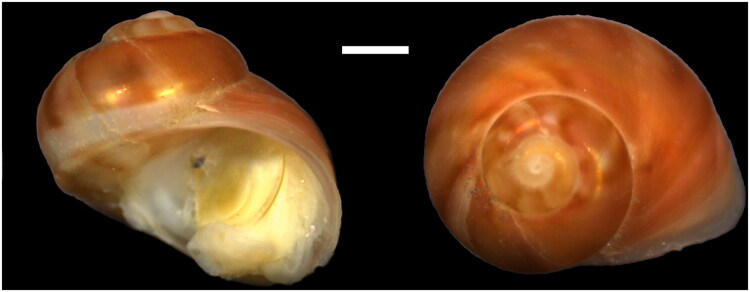 Figure 1
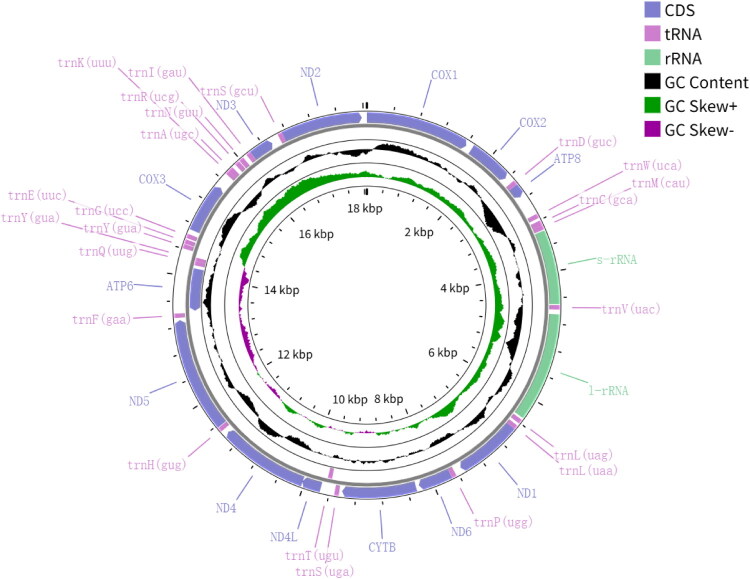 Figure 2
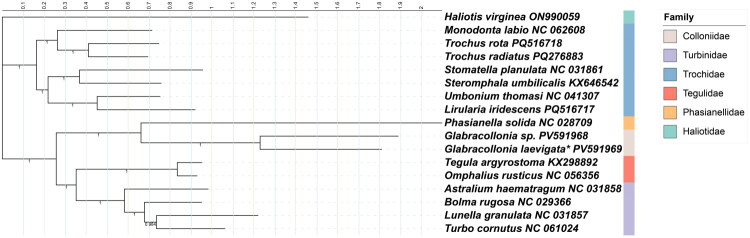 Figure 3
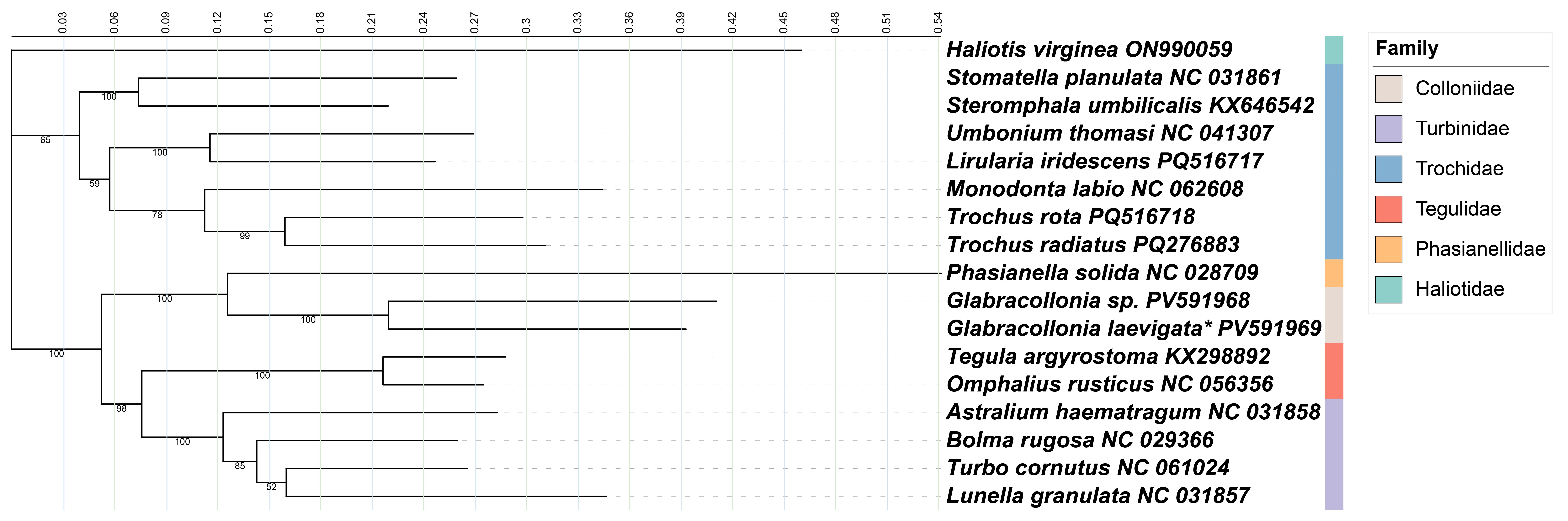 Figure 4
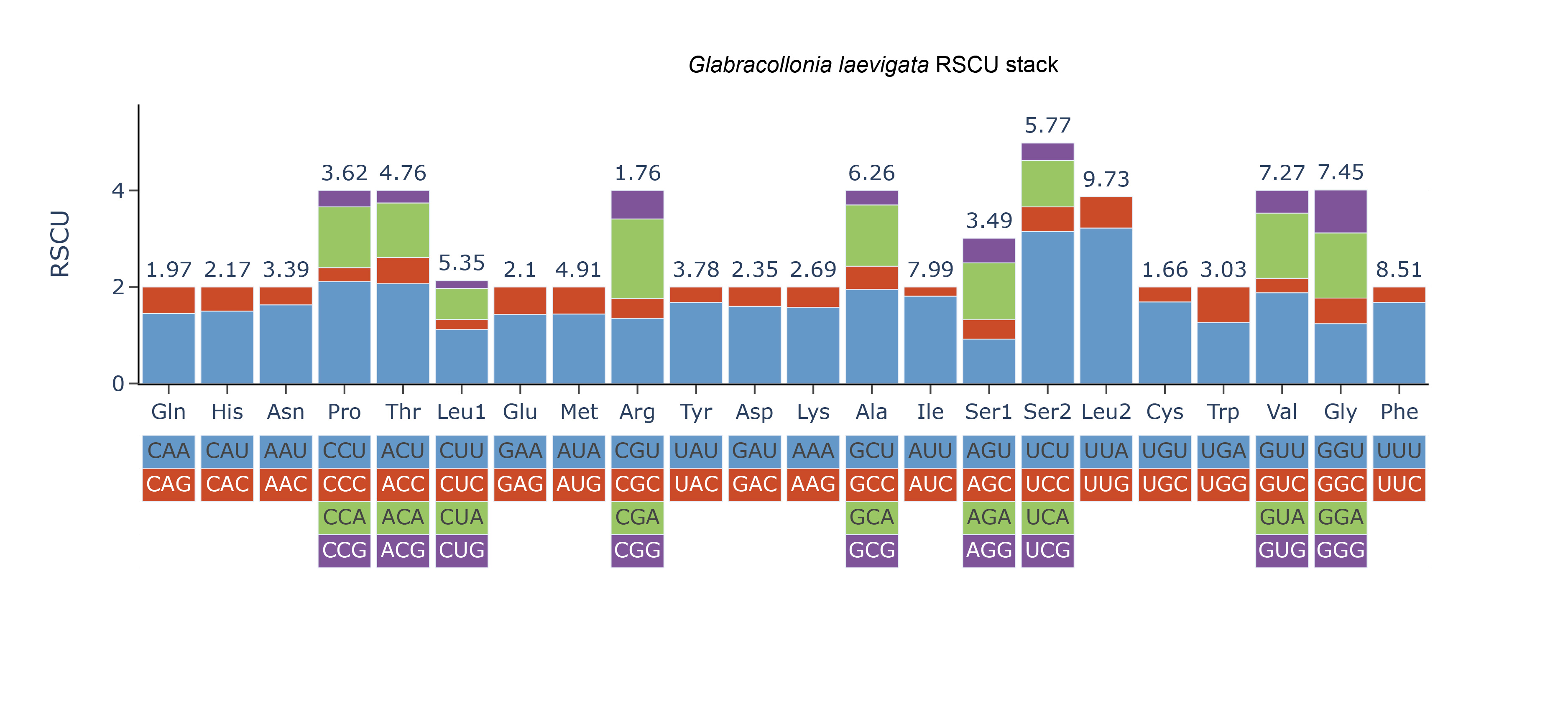 Figure 5
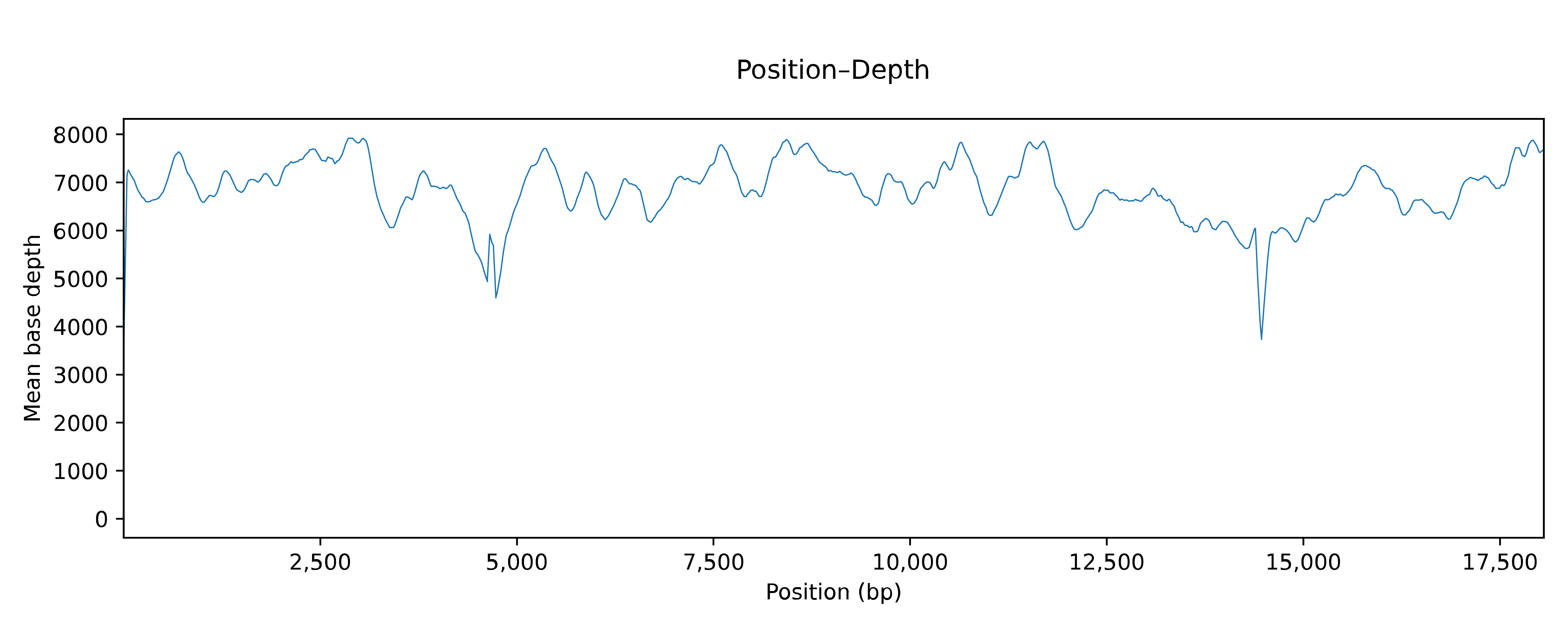 Figure 6
Peer Reviews
No public reviews on file for this paper yet. If you reviewed it on a platform where reviews are public (OpenReview, ICLR, NeurIPS, ICML), you can paste yours below so the community can read it here.
Videos
No videos yet. Explain this paper in a talk, walkthrough, or lecture? Add one.
Taxonomy
TopicsMarine Biology and Ecology Research · Marine Bivalve and Aquaculture Studies · Aquatic Invertebrate Ecology and Behavior