Association between sedentary behavior, physical activity, and neck pain, disability index, and cervical physiological function in university students: a cross-sectional study
Qiang Dong, Haojie Cheng, Hengjia Liu, Yawen Chang, Jiangyuan Li, Dongni Zhang

TL;DR
This study shows that sitting too much and not being active enough are linked to worse neck health in university students.
Contribution
The study identifies specific correlations between sedentary behavior, physical activity, and cervical health indicators in university students.
Findings
High sedentary behavior correlates with increased neck pain and worse joint position sense.
Physical activity is associated with better neck function and muscle strength.
High sedentary behavior combined with low physical activity leads to significantly worse cervical health outcomes.
Abstract
With changes in modern lifestyle, cervical health issues among college students have become increasingly prevalent. This study aimed to explore the associations between sedentary behavior (SB), physical activity (PA), and neck pain, disability index, and cervical physiological function in university students. This cross-sectional study enrolled 126 participants. Self-reported questionnaires were used to assess SB, PA, neck pain (VAS), and the Neck Disability Index (NDI). Objective measurements were taken to evaluate cervical range of motion (ROM), joint position sense (JPS), muscle strength (MS), and muscle endurance (ME). Pearson and Spearman correlations examined the associations between SB, PA, and cervical health indicators. Analysis of variance (ANOVA) and Kruskal-Wallis tests compared differences between groups with varying SB and PA levels. Correlation analysis revealed…
Genes, proteins, chemicals, diseases, species, mutations and cell lines named across the full text — each resolved to its canonical identifier and authoritative record.
Click any figure to enlarge with its caption.
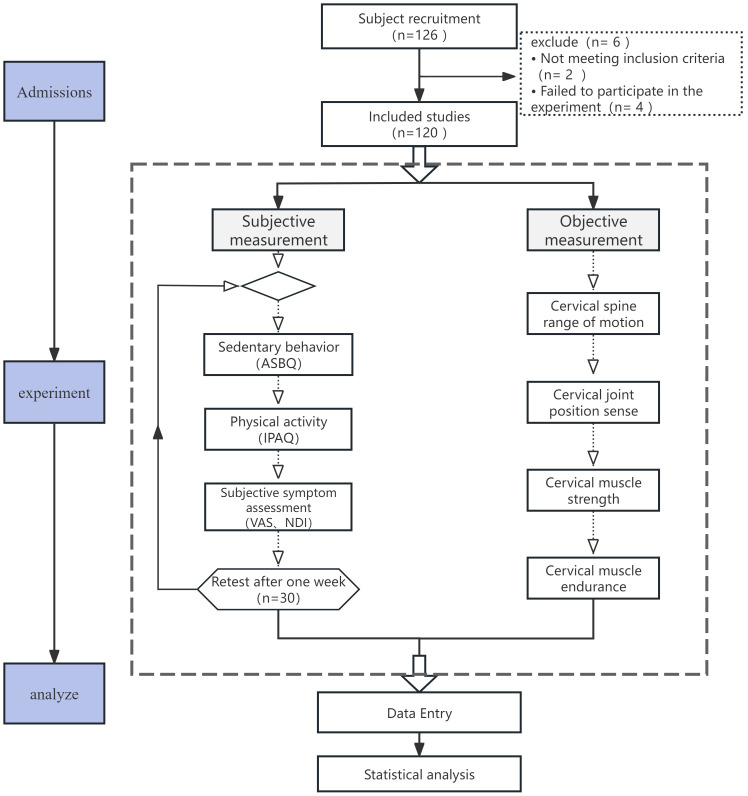 Figure 1
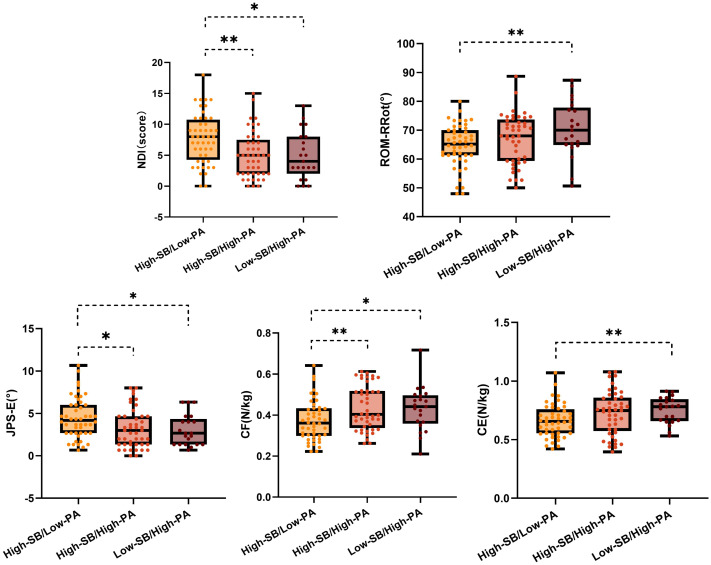 Figure 2
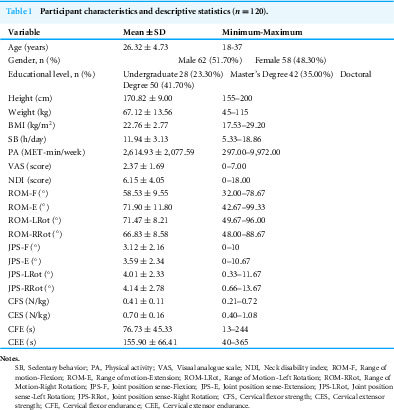 Figure 3
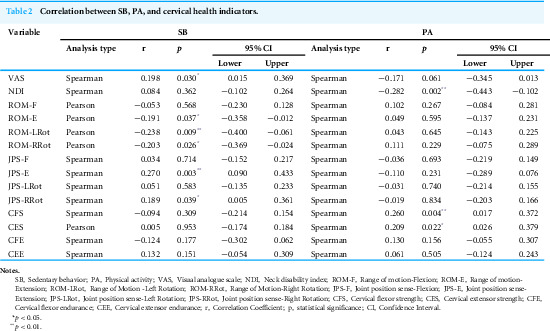 Figure 4
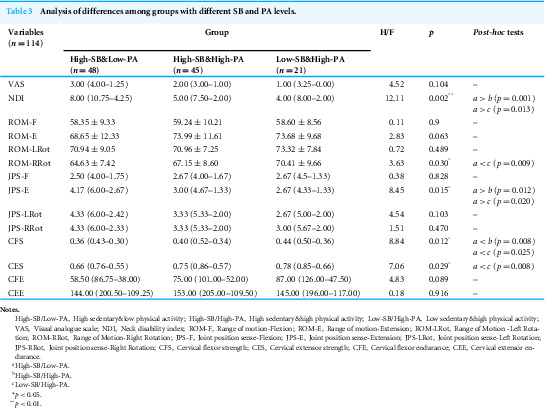 Figure 5
Peer Reviews
No public reviews on file for this paper yet. If you reviewed it on a platform where reviews are public (OpenReview, ICLR, NeurIPS, ICML), you can paste yours below so the community can read it here.
Videos
No videos yet. Explain this paper in a talk, walkthrough, or lecture? Add one.
Taxonomy
TopicsMusculoskeletal pain and rehabilitation · Occupational Health and Performance · Sports injuries and prevention