Rabies virus nucleo- and glycoprotein coding sequences from dogs in Thailand (2022–2024)
Lerdchai Chintapitaksakul, Kultyarat Bhakha, Peerada Siriwatcharawong, Kitipong Angsujinda, Wanchai Assavalapsakul, Nantaporn Wandee

TL;DR
The study sequenced rabies virus genes from dogs in Thailand to track genetic diversity and support ongoing surveillance efforts.
Contribution
New rabies virus N and G gene sequences from recent Thai dog samples are reported, contributing to genomic surveillance.
Findings
Sequencing revealed genetic diversity among rabies virus samples from 2022 to 2024.
Samples clustered within the Asian-SEA3 lineage, supporting regional genomic surveillance.
Abstract
Rabies remains a major public health concern in Thailand. Nucleoprotein (N) and glycoprotein (G) genes from eight rabies-positive specimens collected during 2022 to 2024 were sequenced using Oxford Nanopore. Assemblies and phylogenetic analyses indicate genetic diversity with placement in the Asian-SEA3 lineages, supporting ongoing genomic surveillance.
Genes, proteins, chemicals, diseases, species, mutations and cell lines named across the full text — each resolved to its canonical identifier and authoritative record.
Click any figure to enlarge with its caption.
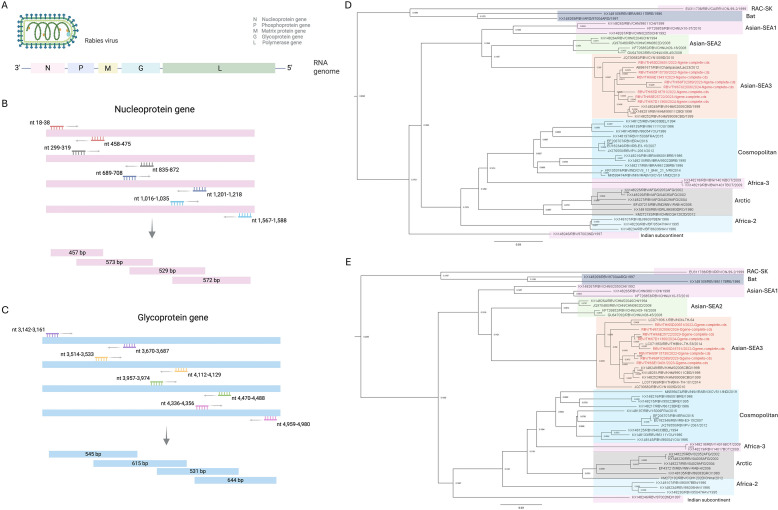 Figure 1
Peer Reviews
No public reviews on file for this paper yet. If you reviewed it on a platform where reviews are public (OpenReview, ICLR, NeurIPS, ICML), you can paste yours below so the community can read it here.
Videos
No videos yet. Explain this paper in a talk, walkthrough, or lecture? Add one.
Taxonomy
TopicsRabies epidemiology and control · Human-Animal Interaction Studies · Bacillus and Francisella bacterial research