Exploring the Theoretical Foundation with Rupture and Delayed Rupture Experiments
Asal Y Siavoshani, Ming-Chi Wang, Cheng Liang, Aanchal Jaisingh, Junpeng Wang, Chen Wang, Shi-Qing Wang

TL;DR
This paper explores how polymer networks rupture under different stretching conditions to support a new theory of bond dissociation in elastomers.
Contribution
The study introduces a new time-temperature equivalence principle derived from rupture experiments in polymer networks.
Findings
Network lifetime depends on temperature in an Arrhenius-like manner and is exponentially sensitive to stretching.
Rupture time during continuous stretching is inversely proportional to the stretch rate.
A new time-temperature equivalence is demonstrated where different rate-temperature pairs produce the same rupture behavior.
Abstract
We carry out uniaxial continuous and step stretching of various cross-linked polymer networks to demonstrate how characteristics of rupture during continuous stretching and delayed rupture after step stretching can be used to probe the structure of the emergent kinetic activation theory of bond dissociation (KATBD) for elastomeric failure. Based on delayed rupture experiments, we show that the network lifetime t ntw, taken as the incubation time t del‑rupt for delayed rupture, depends on temperature in an Arrhenius like manner and is exponentially sensitive to the degree of network stretching (depicted by the step-stretch ratio λss). Rupture at λb during continuous stretching for a wide range of stretch rates takes place on time scales inversely proportional to the stretch rate. The elapsed time t rupt at rupture is found to be comparable to t del‑rupt at various values of λb = λss in a…
Genes, proteins, chemicals, diseases, species, mutations and cell lines named across the full text — each resolved to its canonical identifier and authoritative record.
Click any figure to enlarge with its caption.
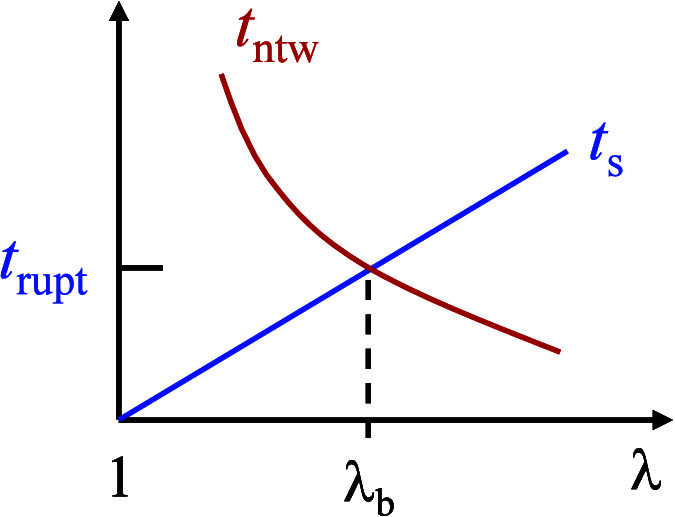 Figure 1
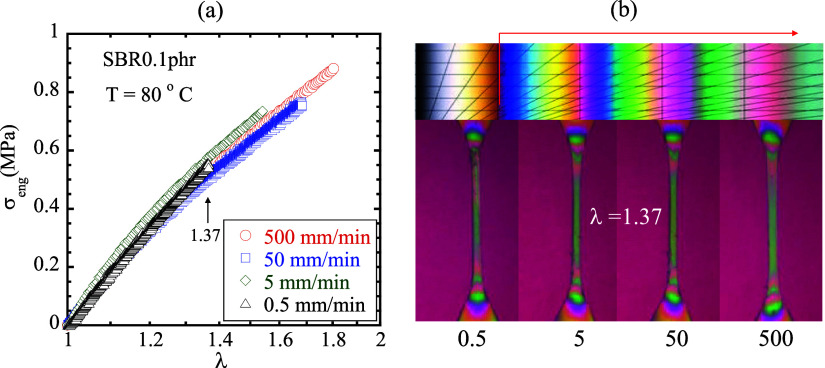 Figure 2
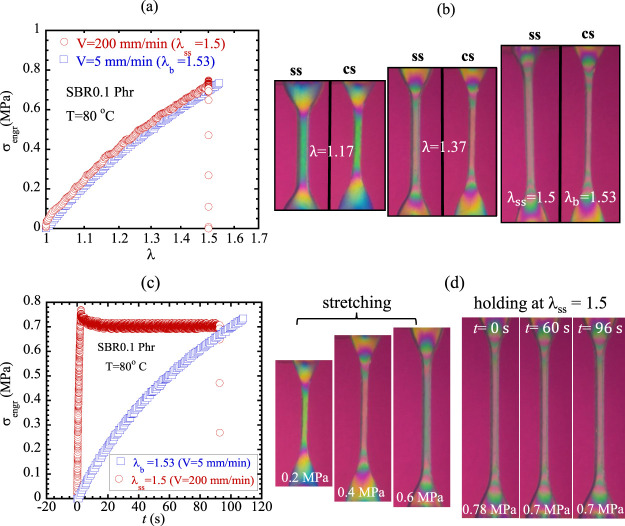 Figure 3
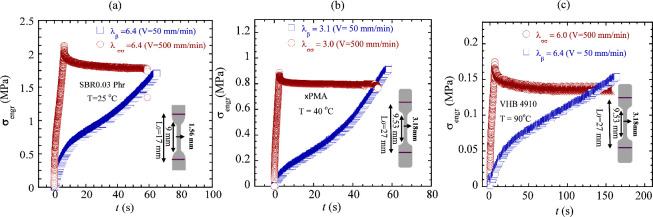 Figure 4
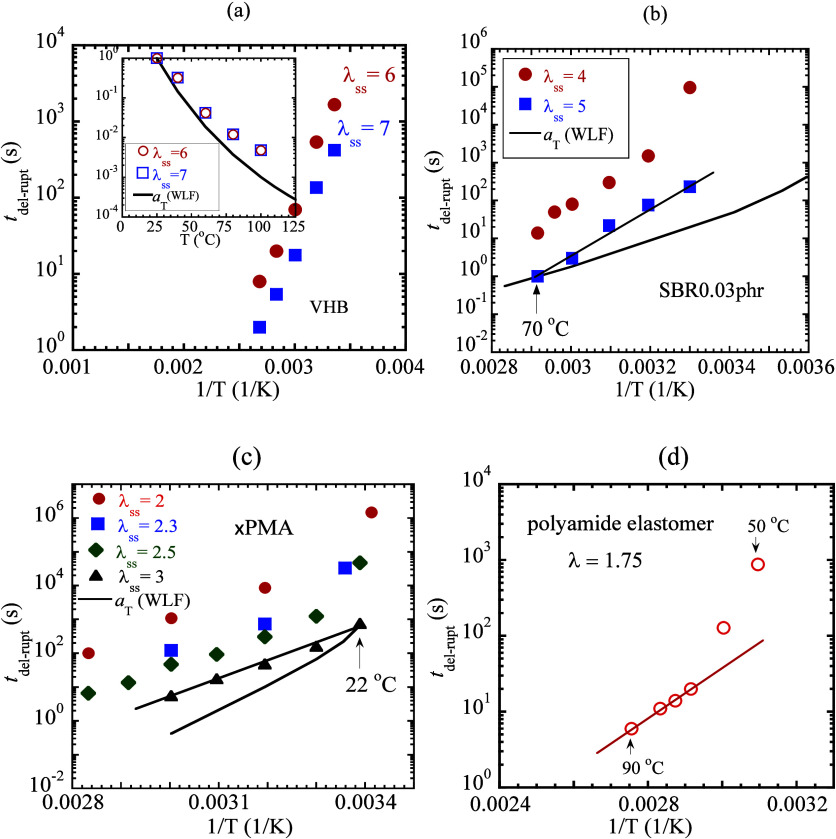 Figure 5
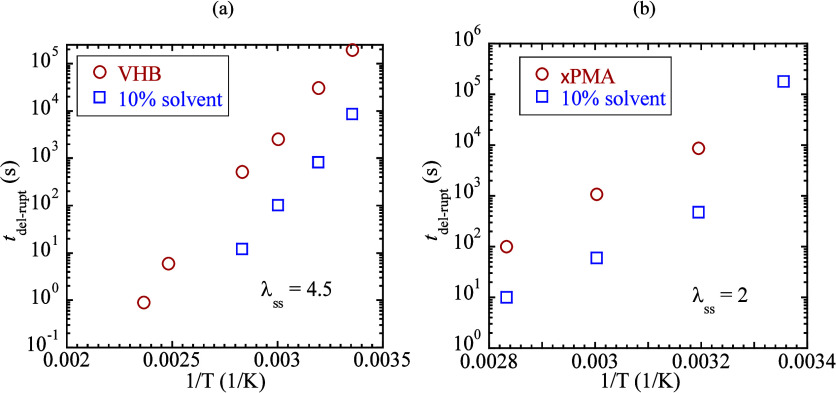 Figure 6
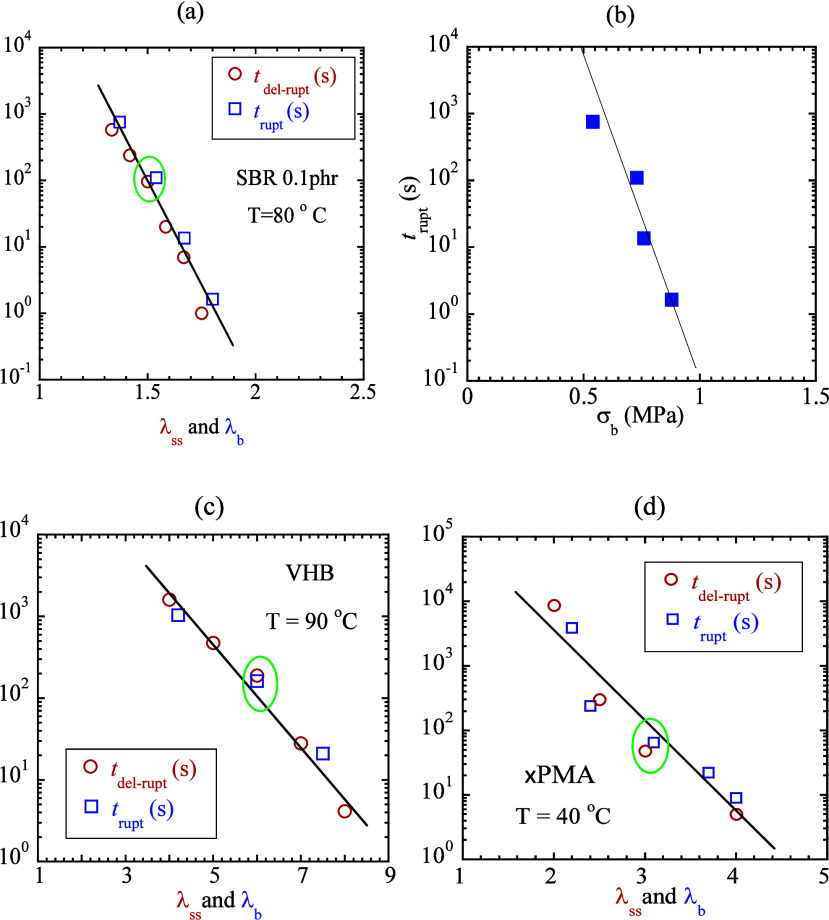 Figure 7
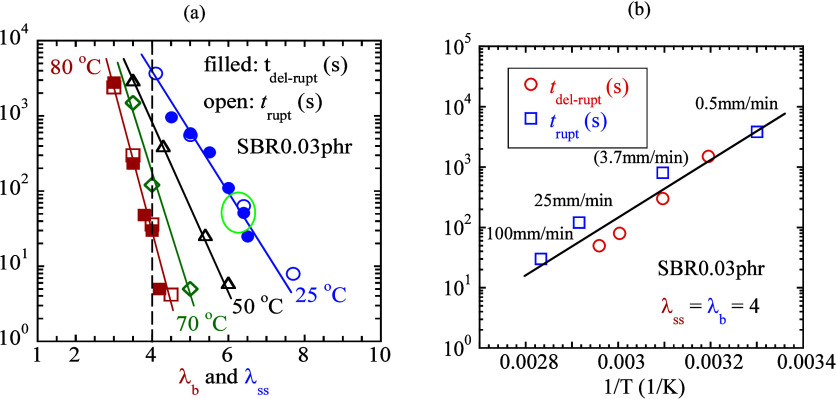 Figure 8
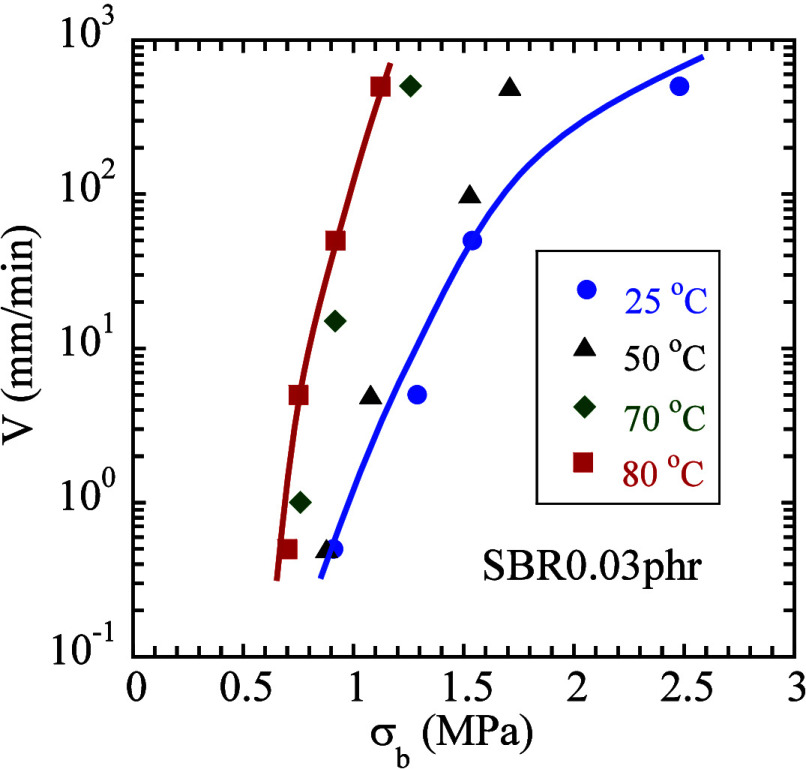 Figure 9
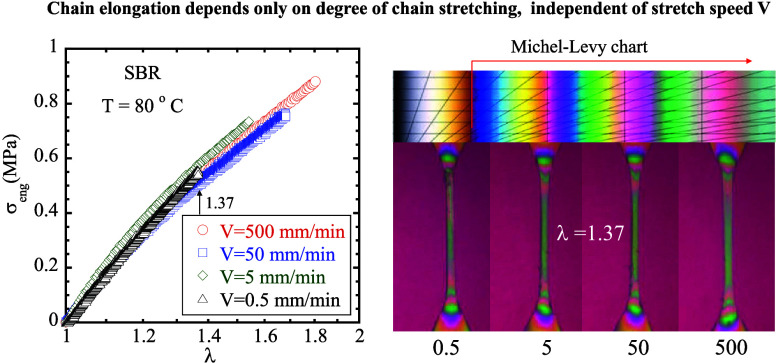 Figure 10
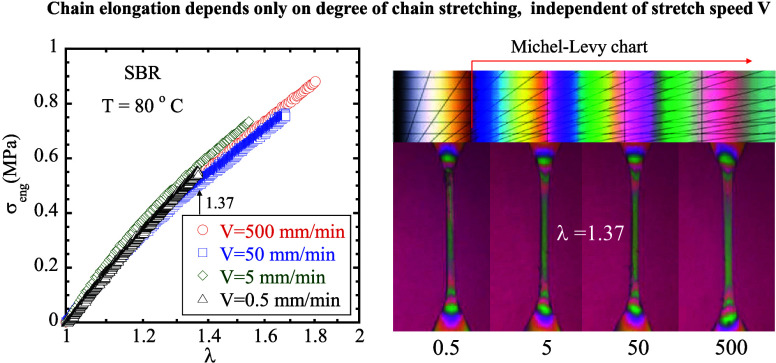 Figure 11
 Figure 12
 Figure 13
Peer Reviews
No public reviews on file for this paper yet. If you reviewed it on a platform where reviews are public (OpenReview, ICLR, NeurIPS, ICML), you can paste yours below so the community can read it here.
Videos
No videos yet. Explain this paper in a talk, walkthrough, or lecture? Add one.
Taxonomy
TopicsForce Microscopy Techniques and Applications · Polymer crystallization and properties · Adhesion, Friction, and Surface Interactions