Discerning clinical target volume of endometrial cancer via a lightweight multi-phase delineation framework
Ang Qu, Lei Zhu, Weiqi Xiong, Ping Jiang, Hang Yang, Weijuan Jiang, Xiuwen Deng, Mengying Yang, Yanye Lu, Junjie Wang

TL;DR
This paper introduces a lightweight deep learning framework for accurately delineating clinical target volumes in endometrial cancer radiotherapy using multi-phase CT scans.
Contribution
A novel lightweight framework, NCLNet, is proposed for multi-phase CTV delineation with a new contour-based evaluation metric and lower computational complexity.
Findings
NCLNet achieves a DSC of 0.871 and an ASSD of 0.878 mm with lower computation complexity than nnUNet.
The average modification time by physicians was only 2.9 minutes, with a low modification volume percentage of 3.61%.
The proposed CDSC metric showed higher correlation with clinical modification time than DSC and ASSD.
Abstract
The accurate delineation of the clinical target volume (CTV) is a critical step in precision radiotherapy for endometrial cancer (EC). Multi-phase CT provides more information for delineating the CTV. Our study aims to establish an innovative method for the specific delineation of CTV using multi-phase CT. Our multi-phase delineation datasets comprise 175 patients who received postoperative pelvic radiotherapy. These datasets include images of contrast-enhanced computed tomography (CECT) and non-contrast-enhanced computed tomography (NECT). Additionally, we introduce a novel framework for automatically segmenting the CTV using a deep learning model. The key component of our framework is the NCLNet, which fuses features from NECT and CECT within a Lightweight Network structure. This structure is optimized using a boundary-aware multi-phase learning strategy that we propose. In addition…
Genes, proteins, chemicals, diseases, species, mutations and cell lines named across the full text — each resolved to its canonical identifier and authoritative record.
Click any figure to enlarge with its caption.
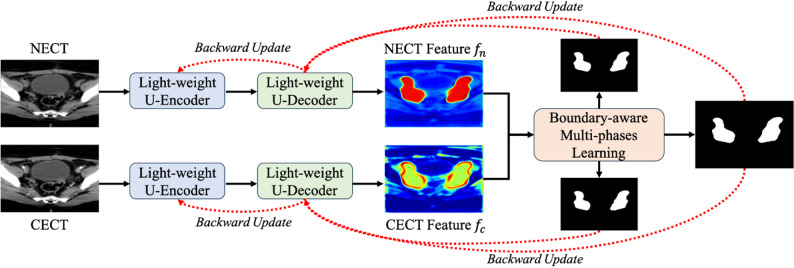 Figure 1
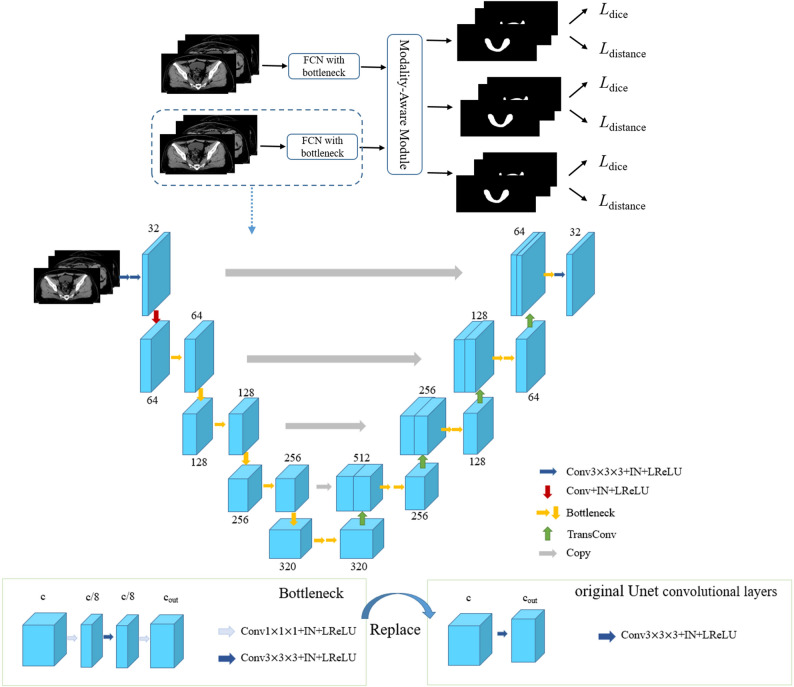 Figure 2
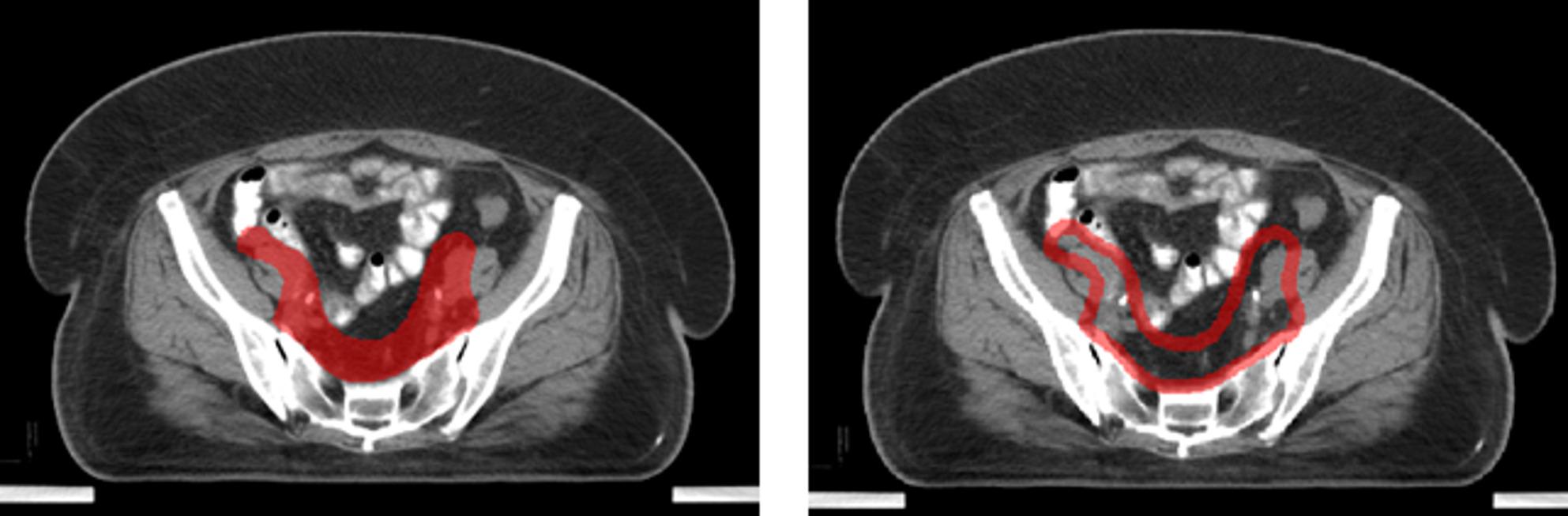 Figure 3
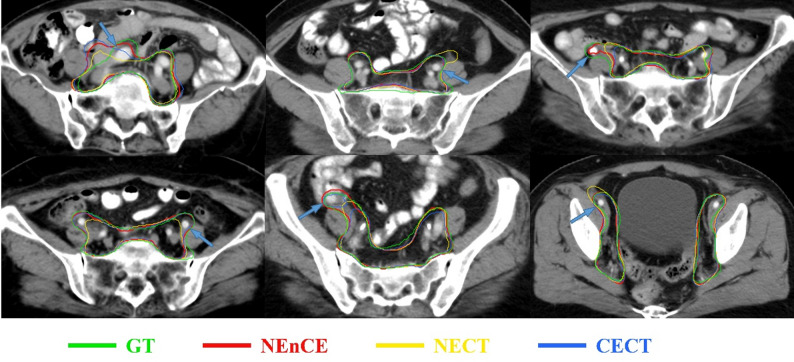 Figure 4
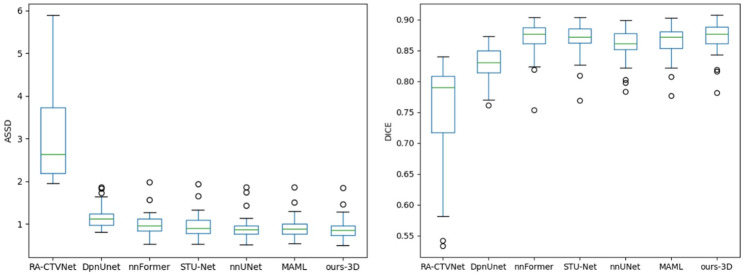 Figure 5
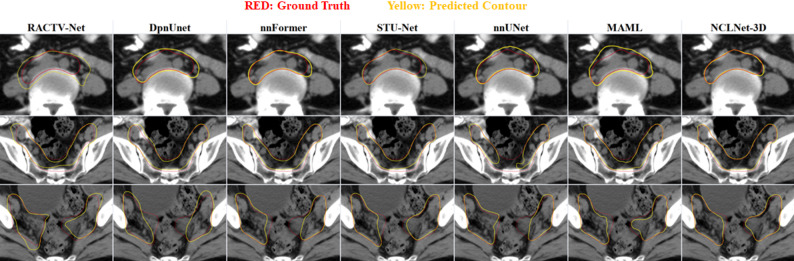 Figure 6
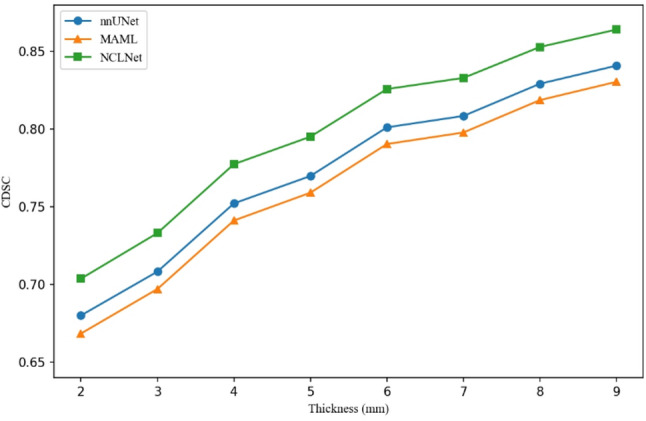 Figure 7
Peer Reviews
No public reviews on file for this paper yet. If you reviewed it on a platform where reviews are public (OpenReview, ICLR, NeurIPS, ICML), you can paste yours below so the community can read it here.
Videos
No videos yet. Explain this paper in a talk, walkthrough, or lecture? Add one.
Taxonomy
TopicsAdvanced Radiotherapy Techniques · Endometrial and Cervical Cancer Treatments · AI in cancer detection