Circulating tumor DNA and Response Evaluation Criteria In Solid Tumors: ctDNA-RECIST proof-of-concept in HER2-positive metastatic breast cancer
Alessandra Fabi, Elena Giordani, Elena Ricciardi, Grazia Arpino, Matteo Allegretti, Gianluigi Ferretti, Claudia Omarini, Alberto Zambelli, Chiara Mandoj, Andrea Botticelli, Emilio Bria, Stefania Gori, Luisa Carbognin, Ida Paris, Giovanni Scambia, Francesco Cognetti

TL;DR
This study explores how combining tumor DNA measurements with traditional imaging methods can better track cancer treatment responses in breast cancer patients.
Contribution
The study introduces a new algorithm (cEoT) that improves treatment response prediction using ctDNA data in HER2-positive metastatic breast cancer.
Findings
ctDNA-RECIST (cRECIST) showed deeper responses than traditional RECIST in 27 patients with progressive disease.
A personalized cEoT algorithm significantly improved prediction of progression-free survival compared to ctDNA alone.
ctDNA waving patterns suggest complex tumor dynamics that require advanced analytical approaches.
Abstract
Response Evaluation Criteria In Solid Tumors (RECIST 1.1) and circulating tumor DNA (ctDNA) recapitulate and anticipate response to treatment, respectively. However, ctDNA-RECIST (cRECIST) and ctDNA-guided End of Treatment (cEoT) are not applied routinely. To provide proof-of-concept for RECIST1.1/cRECIST integration, HER2-positive metastatic breast cancer patients (n = 50) were enrolled in the multi-center prospective GIM21 study to receive Trastuzumab-emtansine (T-DM1). CT scans (113 tumor lesions) were longitudinally assessed for classical Objective Responses (ORs: progressive disease/stable disease/partial response/complete response; PD/SD/PR/CR) applying default RECIST 1.1 cut-offs (SD/PD ≥ 20%; SD/PR ≤ 30%). Likewise, bespoke NGS/dPCR (78 genomic alterations; 466 time points) were converted into ctDNA-Objective Responses (cORs: cPD/cSD/cPR/cCR) exploring wide cPD/cSD/cCR cut-off…
Genes, proteins, chemicals, diseases, species, mutations and cell lines named across the full text — each resolved to its canonical identifier and authoritative record.
Click any figure to enlarge with its caption.
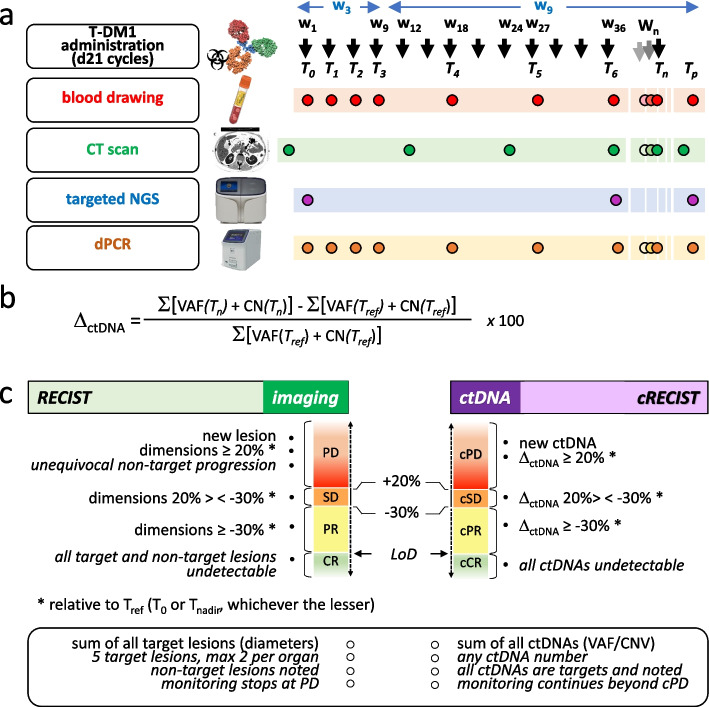 Figure 1
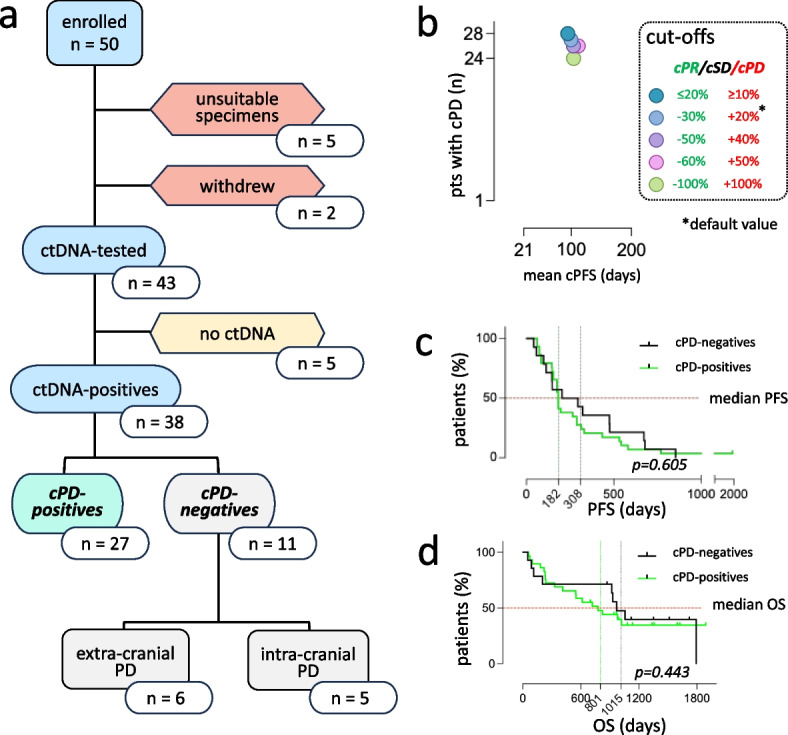 Figure 2
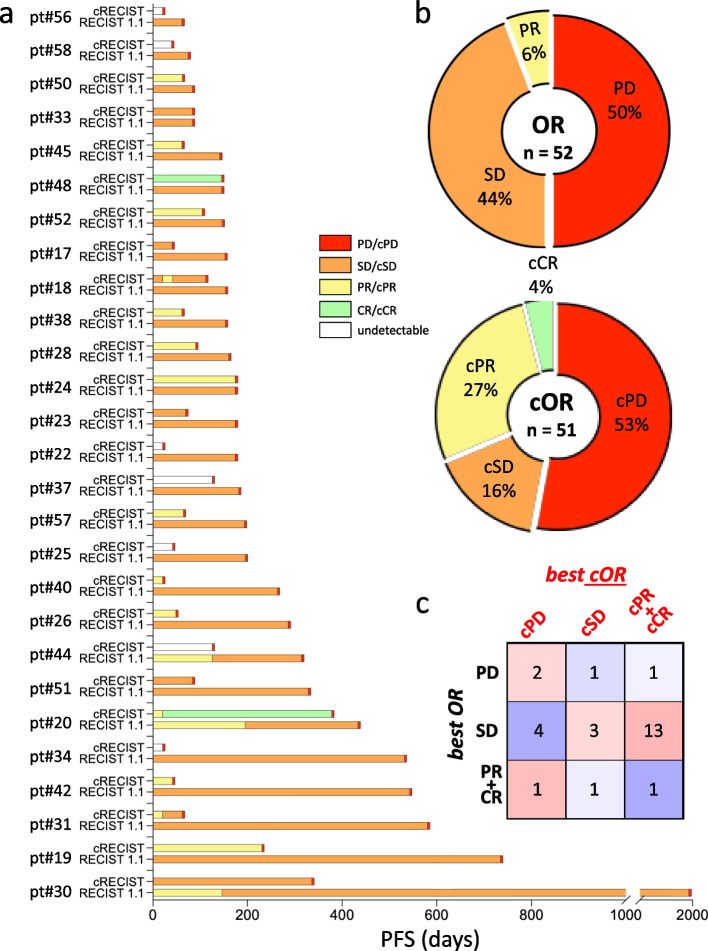 Figure 3
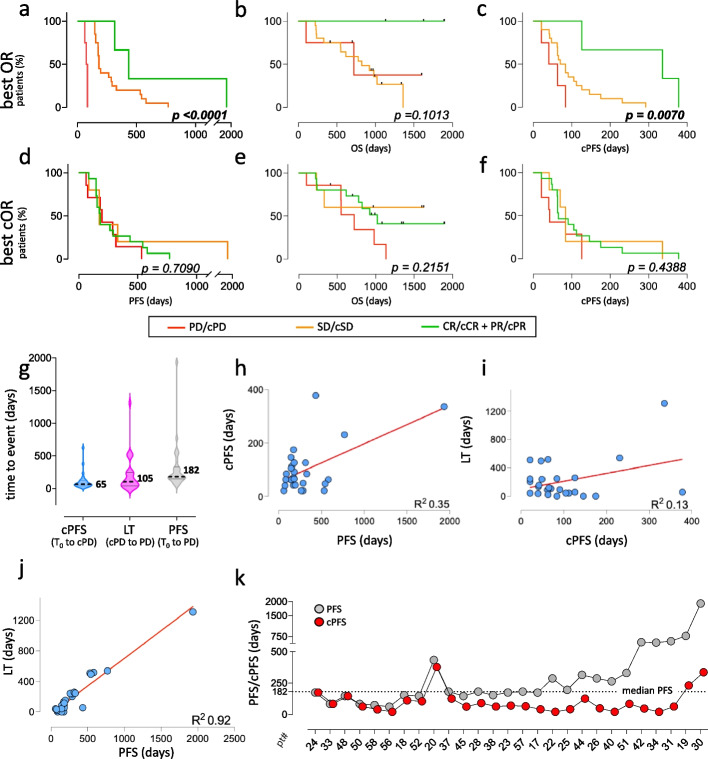 Figure 4
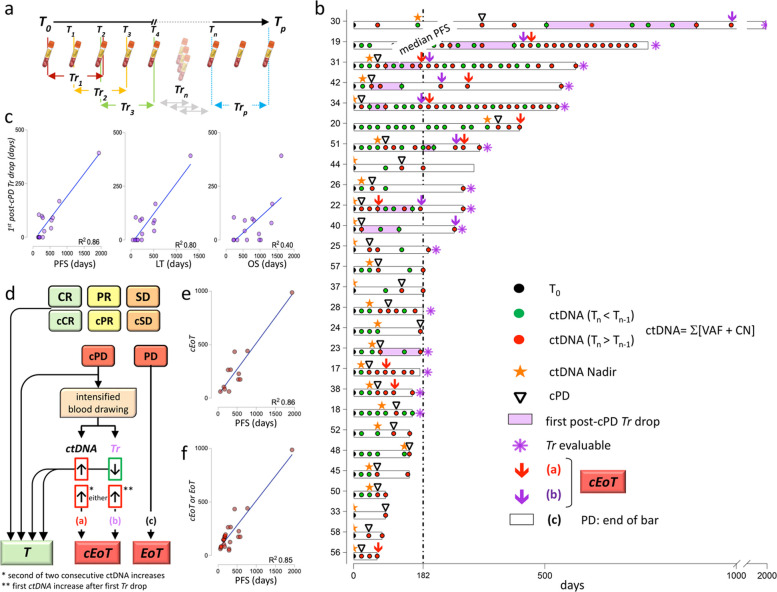 Figure 5
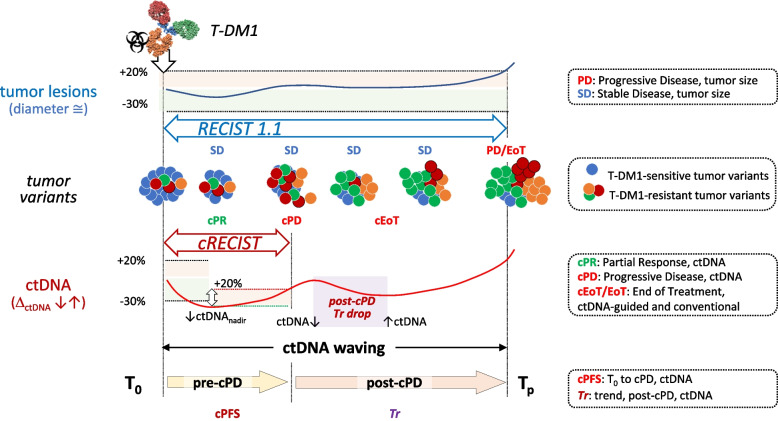 Figure 6
Peer Reviews
No public reviews on file for this paper yet. If you reviewed it on a platform where reviews are public (OpenReview, ICLR, NeurIPS, ICML), you can paste yours below so the community can read it here.
Videos
No videos yet. Explain this paper in a talk, walkthrough, or lecture? Add one.
Taxonomy
TopicsCancer Genomics and Diagnostics · Cancer Cells and Metastasis · Advanced Breast Cancer Therapies