Rosemary-derived triterpene acids improve growth and lipid metabolism in juvenile grass carp (Ctenopharyngodon idella) through the gut–liver axis by tissue-specifically regulating the farnesoid X receptor
Zixuan Wu, Xiaoqiu Zhou, Lin Feng, Pei Wu, Hongyun Zhang, Yaobin Ma, Yang Liu, Caimei Wu, Jiayong Tang, Ruinan Zhang, Weidan Jiang

TL;DR
Rosemary-derived triterpene acids improve growth and lipid metabolism in juvenile grass carp by regulating the gut–liver axis and specific metabolic pathways.
Contribution
This study reveals the tissue-specific regulation of the farnesoid X receptor by triterpene acids in improving lipid metabolism in grass carp.
Findings
TAs increased growth rate and protein retention while reducing body fat in juvenile grass carp.
TAs enhanced intestinal enzyme activity and improved digestive and absorptive functions.
TAs inhibited hepatic lipid synthesis and activated the FXR pathway, promoting lipid utilization.
Abstract
Rosemary-derived triterpene acids (TAs), primarily composed of ursolic acid, oleanolic acid, and betulinic acid, exhibit multiple bioactive properties. However, their effects on lipid metabolism and the underlying regulatory pathways remain unclear. This study investigated the effects of dietary supplementation with TAs on the growth performance, digestive and absorptive function, and hepatic lipid metabolism in juvenile grass carp (Ctenopharyngodon idella). In this trial, 2,160 juvenile grass carp (average weight 13.04 ± 0.02 g) were randomly allocated to six dietary treatments, each comprising six replicates with 60 fish per replicate. Fish were fed diets supplemented with increasing concentrations of TAs (0, 58.80, 179.30, 261.90, 312.00, and 390.00 mg/kg) for 70 d. At the end of the trial, relevant samples were collected for subsequent analyses. The results demonstrated that…
Genes, proteins, chemicals, diseases, species, mutations and cell lines named across the full text — each resolved to its canonical identifier and authoritative record.
Click any figure to enlarge with its caption.
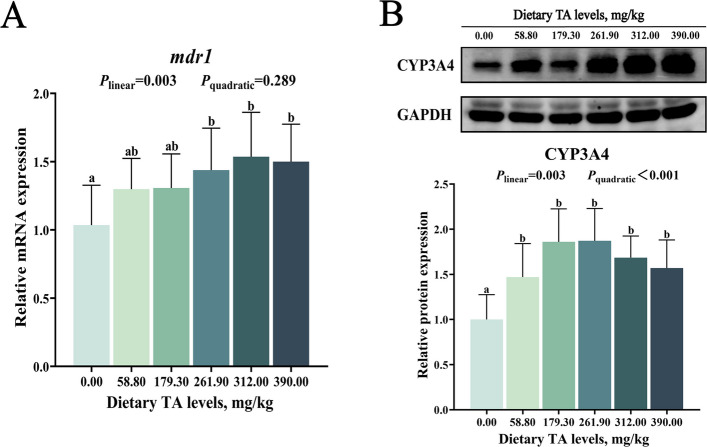 Figure 1
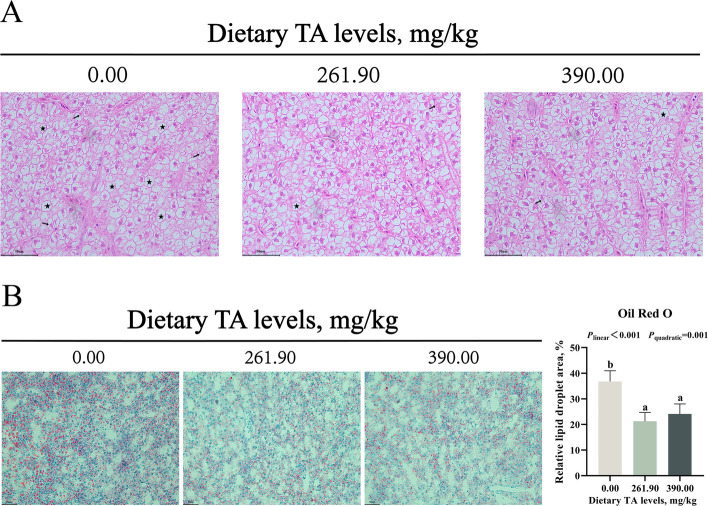 Figure 2
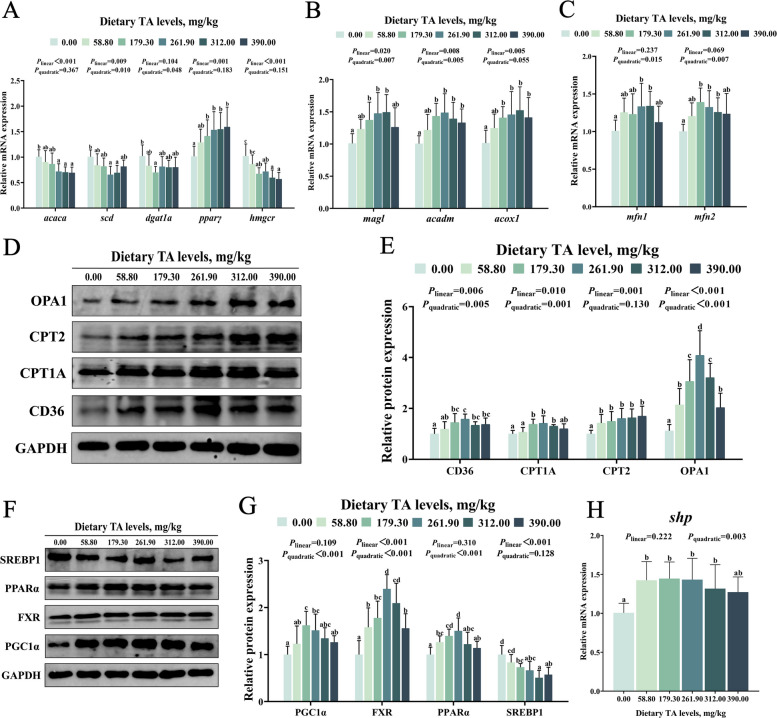 Figure 3
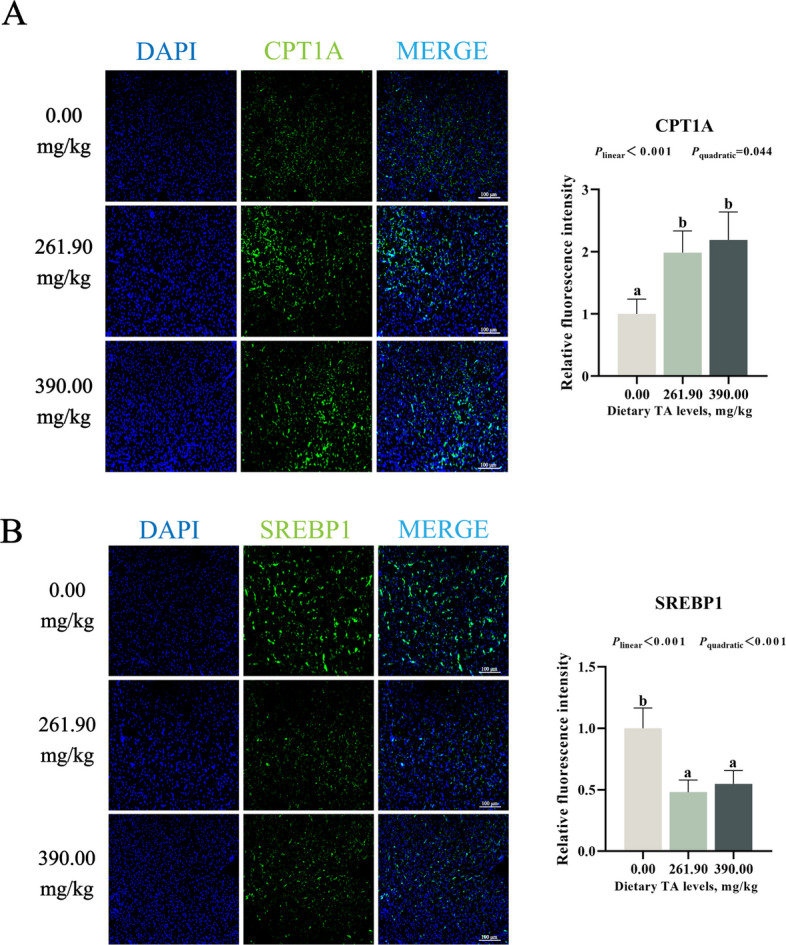 Figure 4
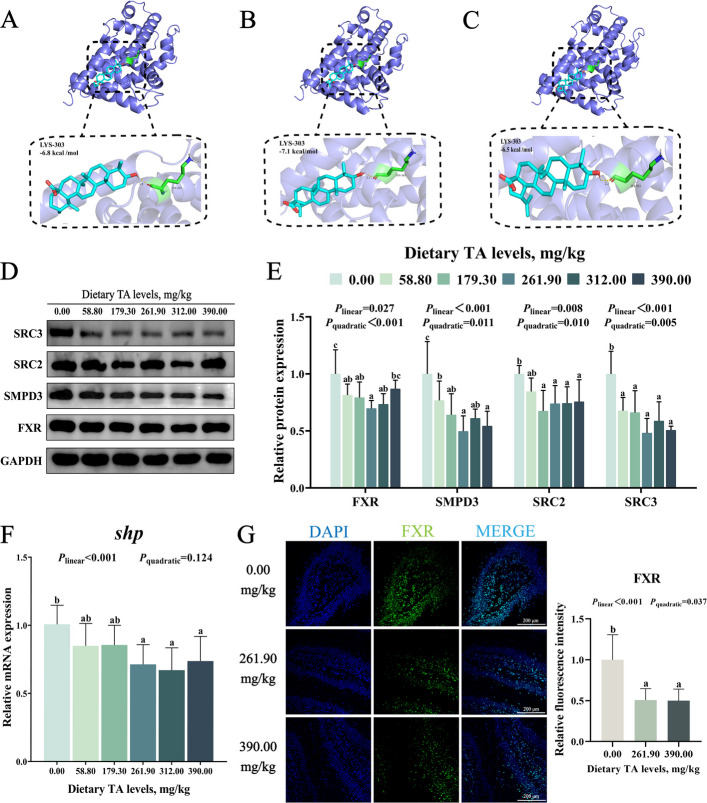 Figure 5
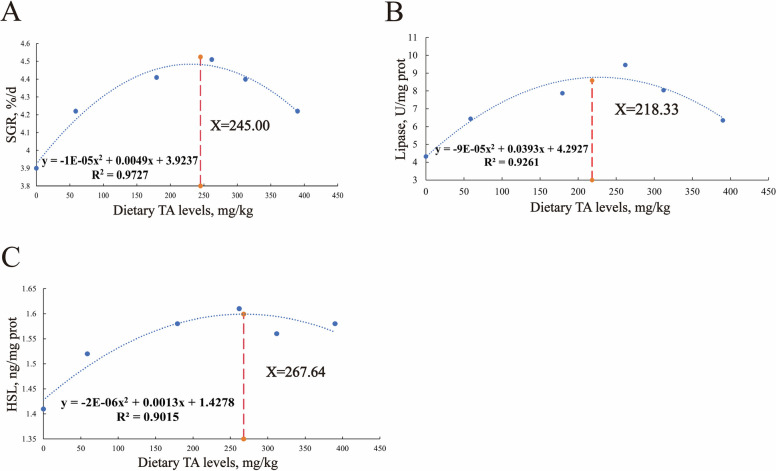 Figure 6
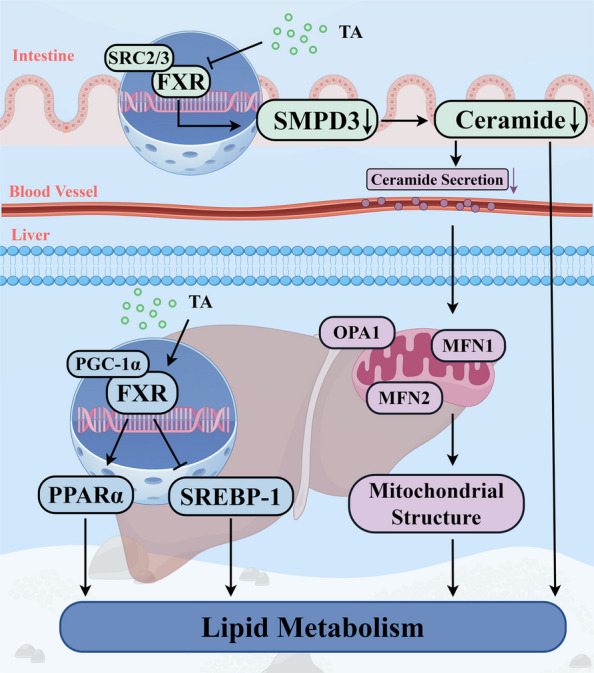 Figure 7
Peer Reviews
No public reviews on file for this paper yet. If you reviewed it on a platform where reviews are public (OpenReview, ICLR, NeurIPS, ICML), you can paste yours below so the community can read it here.
Videos
No videos yet. Explain this paper in a talk, walkthrough, or lecture? Add one.
Taxonomy
TopicsAquaculture Nutrition and Growth · Aquaculture disease management and microbiota · Sphingolipid Metabolism and Signaling