Cancer evolution and multi-omic profile of relapsed colorectal liver metastases after treatment
Laura Tomás, Nathanael Raschzok, Eric Blanc, María Gallardo-Gómez, Andrea Menne, Kathy Astrahantseff, Loretta De Chiara, Dominik Geisel, Johann Pratschke, Dominik P. Modest, Angelika Eggert, Dieter Beule, David Posada, Christine Sers, Soulafa Mamlouk

TL;DR
This study explores how colorectal cancer liver metastases evolve after treatment, revealing different patterns of recurrence and the role of chemotherapy in driving relapse.
Contribution
The study provides new insights into the clonal evolution and immune microenvironment changes in relapsed colorectal cancer liver metastases.
Findings
Relapses can either retain ancestral clones or arise from new clonal lineages.
Chemotherapy is associated with a distinct mutational signature in relapsed tumors.
Tumor microenvironments show heterogeneous immune cell infiltration after relapse.
Abstract
Recurrence following resection of colorectal cancer liver metastases remains a major obstacle to prolonged patient survival, often resulting in treatment-refractory disease with limited understanding of the underlying evolutionary drivers. To investigate these mechanisms, we performed an in-depth, patient-specific study of genomic and microenvironmental alterations in relapsed colorectal cancer liver metastases from nine individuals. Clonal deconvolution and phylogenetic analysis was conducted on DNA sequencing data from multiregion liver metastasis and relapse samples from the same patient. Archived primary tumor specimens were included to trace the clonal lineages responsible for relapse. In parallel, transcriptomic data from the liver metastasis and relapse samples were analyzed to characterize tumor-infiltrating immune cell populations. Phylogenetic analyses of relapsed metastases…
Genes, proteins, chemicals, diseases, species, mutations and cell lines named across the full text — each resolved to its canonical identifier and authoritative record.
Click any figure to enlarge with its caption.
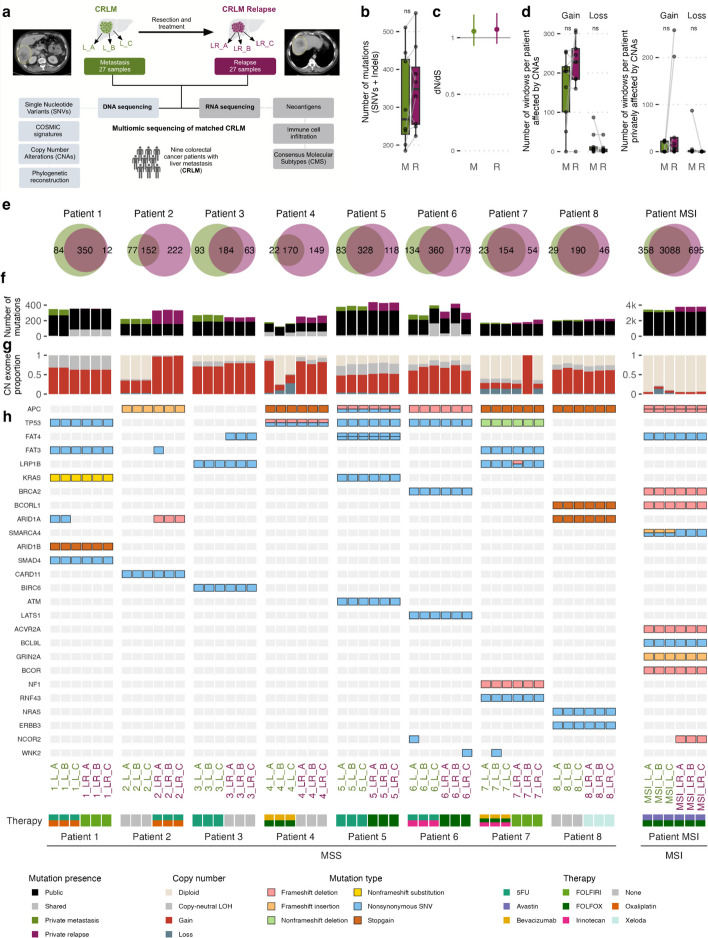 Figure 1
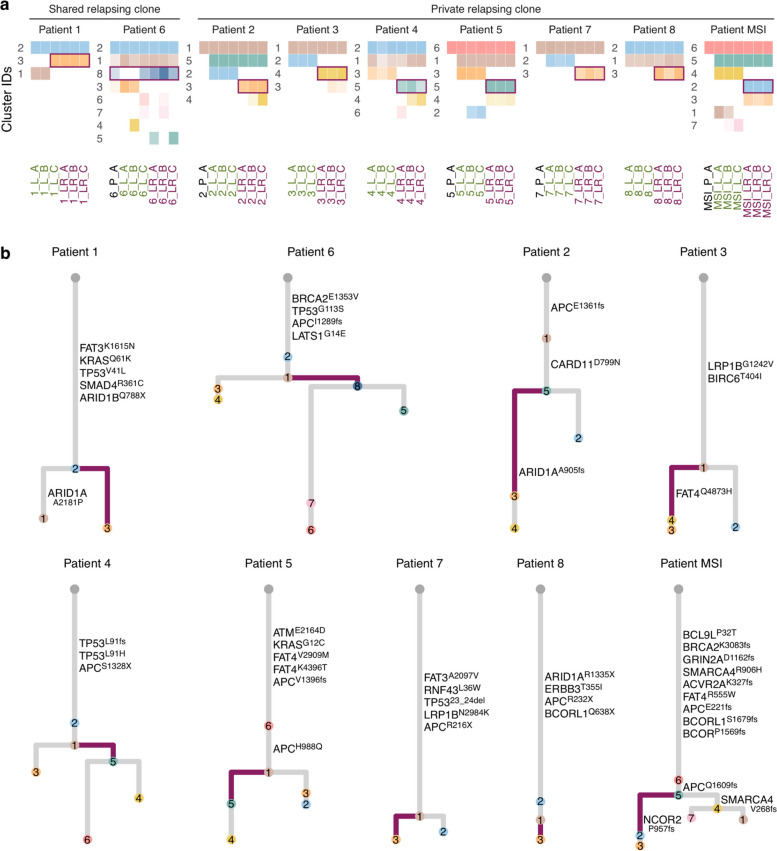 Figure 2
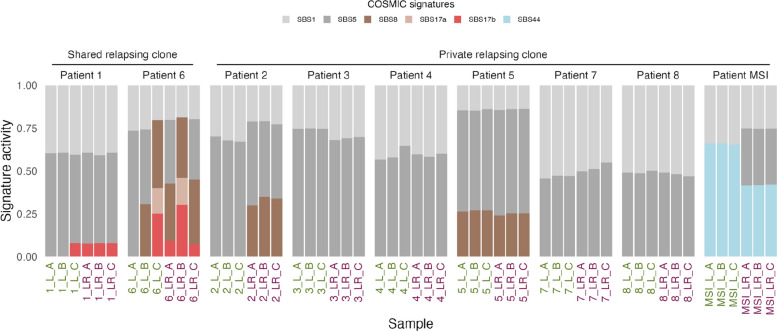 Figure 3
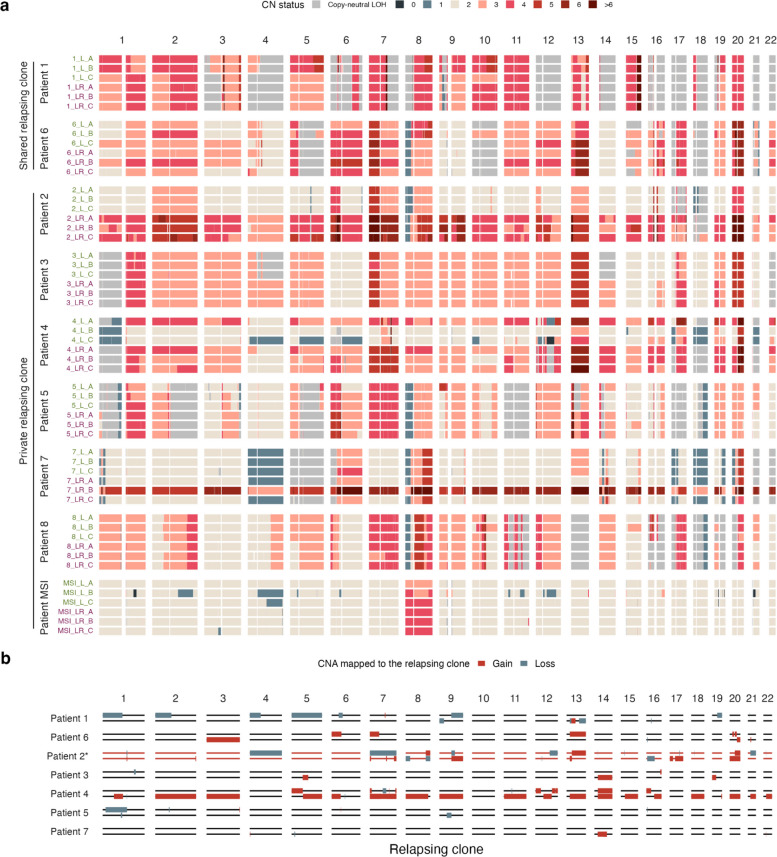 Figure 4
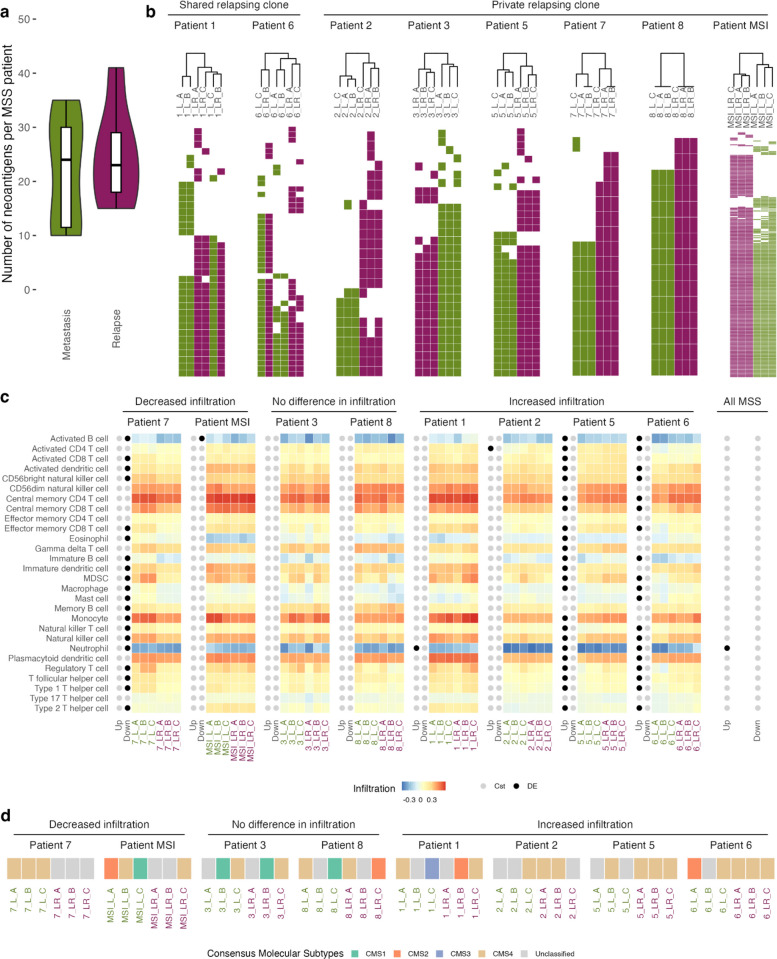 Figure 5
Peer Reviews
No public reviews on file for this paper yet. If you reviewed it on a platform where reviews are public (OpenReview, ICLR, NeurIPS, ICML), you can paste yours below so the community can read it here.
Videos
No videos yet. Explain this paper in a talk, walkthrough, or lecture? Add one.
Taxonomy
TopicsCancer Genomics and Diagnostics · Mathematical Biology Tumor Growth · Cancer Immunotherapy and Biomarkers