Myoclonus in geriatric dogs and its association with canine cognitive dysfunction: an online survey
Samira Moana Brühl, Holger Andreas Volk, Karl Rohn, Nina Meyerhoff

TL;DR
This study explores myoclonus in older dogs and its possible link to canine cognitive dysfunction, using an online survey of dog owners.
Contribution
The study is the first to investigate the co-occurrence of myoclonus and canine cognitive dysfunction in geriatric dogs using a large online survey.
Findings
Most dogs with CCD also exhibited myoclonus, but no statistically significant association was found.
Spontaneous myoclonus was the most common type observed in dogs with CCD.
Myoclonus in these dogs was often linked to stress or light triggers.
Abstract
An increasing number of dogs are presented with suspected canine cognitive dysfunction (CCD), and a subset also exhibits myoclonus. Because CCD shares multiple pathological and pathophysiological features with Alzheimer's disease in humans, and myoclonus has been linked to neurodegenerative disorders in people, the aim of the study was to describe myoclonus in dogs with clinical signs of CCD. An anonymous online survey for owners of geriatric dogs (over 7 years of age), consisting of 46 questions, was conducted. The survey included items on signalment, the Canine Dementia Scale (CADES), and myoclonus. CCD was defined based on a CADES score of >8. It was available online in both German and English from April to June 2024. Of the 401 participants, 148 dogs were excluded due their young age, under 7 years and incomplete CADES-Score. Among the remaining respondents, 89% of owners…
Genes, proteins, chemicals, diseases, species, mutations and cell lines named across the full text — each resolved to its canonical identifier and authoritative record.
Click any figure to enlarge with its caption.
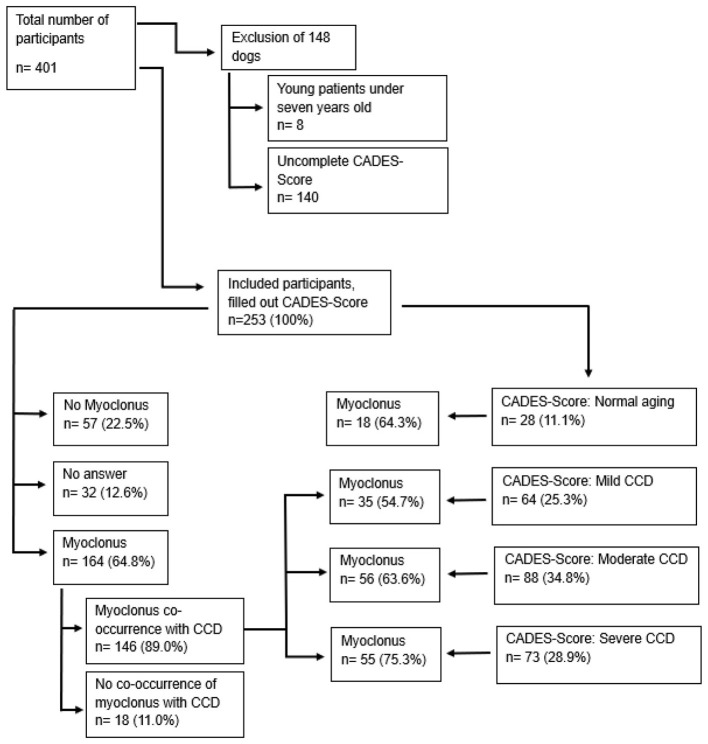 Figure 1
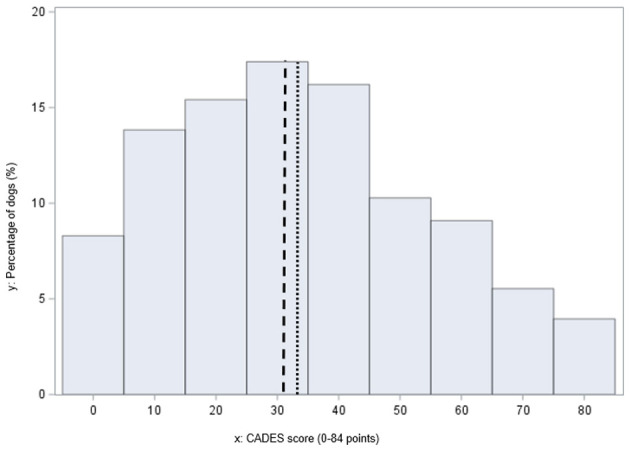 Figure 2
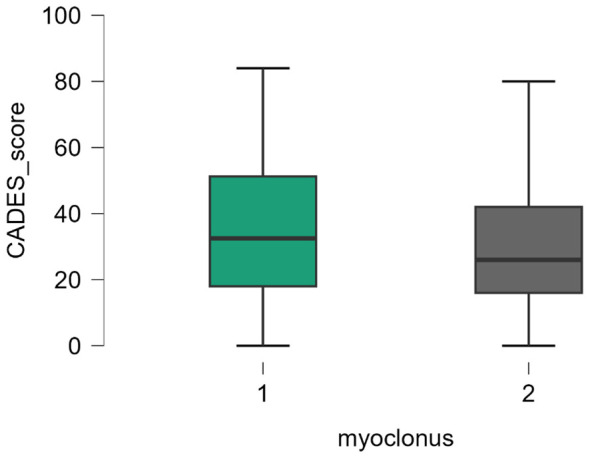 Figure 3
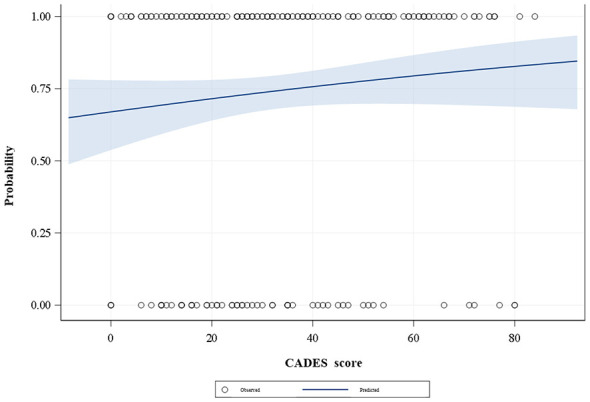 Figure 4
Peer Reviews
No public reviews on file for this paper yet. If you reviewed it on a platform where reviews are public (OpenReview, ICLR, NeurIPS, ICML), you can paste yours below so the community can read it here.
Videos
No videos yet. Explain this paper in a talk, walkthrough, or lecture? Add one.
Taxonomy
TopicsHuman-Animal Interaction Studies · Veterinary Oncology Research · Veterinary Medicine and Surgery