Blood proteomics: insights from public data
Asier Larrea-Sebal, Chengxin Dai, Alejandro J. Brenes, Kathrin Korff, Benjamin A. Neely, Philipp E. Geyer, Laura F. Dagley, Richard D. Unwin, Alexandra Naba, Michael J. MacCoss, Tiannan Guo, Eric W. Deutsch, Cesar Martin, Jochen M. Schwenk, Yasset Perez-Riverol

TL;DR
This paper reviews public blood proteomics data and its potential for personalized medicine.
Contribution
It provides a comprehensive assessment of public blood proteomics datasets and recent methodological advances.
Findings
Blood proteomics data reflects physiological and pathological states across tissues.
Recent advances in proteomics technologies have improved sensitivity and throughput.
Complementarity of diverse data sources remains a key area for further exploration.
Abstract
The circulating blood proteome comprises soluble and cellular components that reflect physiological and pathological states across tissues. Advances in mass spectrometry and affinity-based proteomics have improved sensitivity and throughput, enabling the generation of public blood proteomics resources. However, comprehensive assessments of these datasets remain limited. This work reviews the cellular and molecular complexity of publicly available blood proteomics data, recent methodological developments, and the complementarity of diverse data sources across the abundance range, while outlining remaining challenges for translating blood proteomics into personalized medicine. The online version contains supplementary material available at 10.1186/s13059-026-04027-9.
Click any figure to enlarge with its caption.
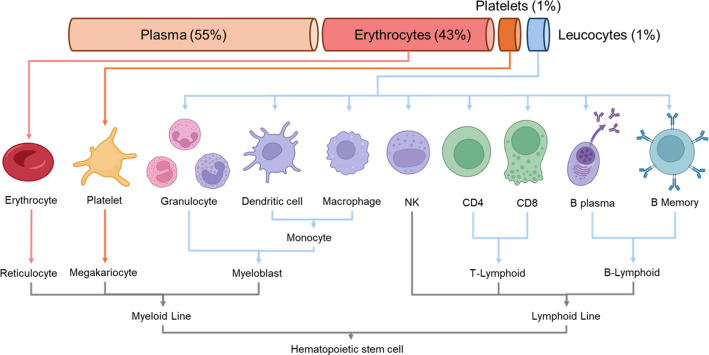 Figure 1
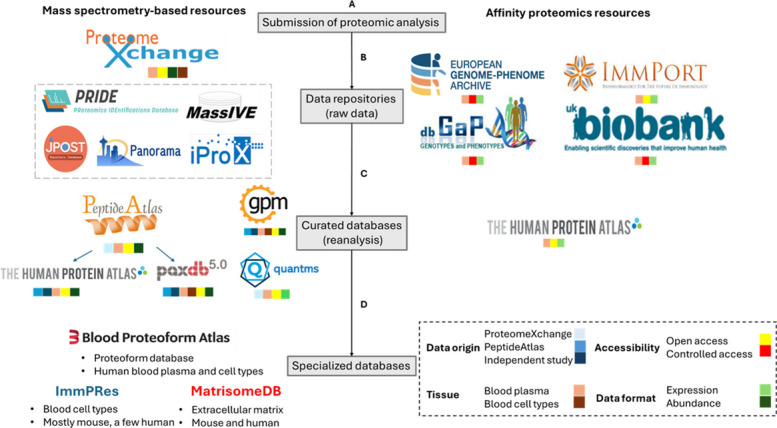 Figure 2
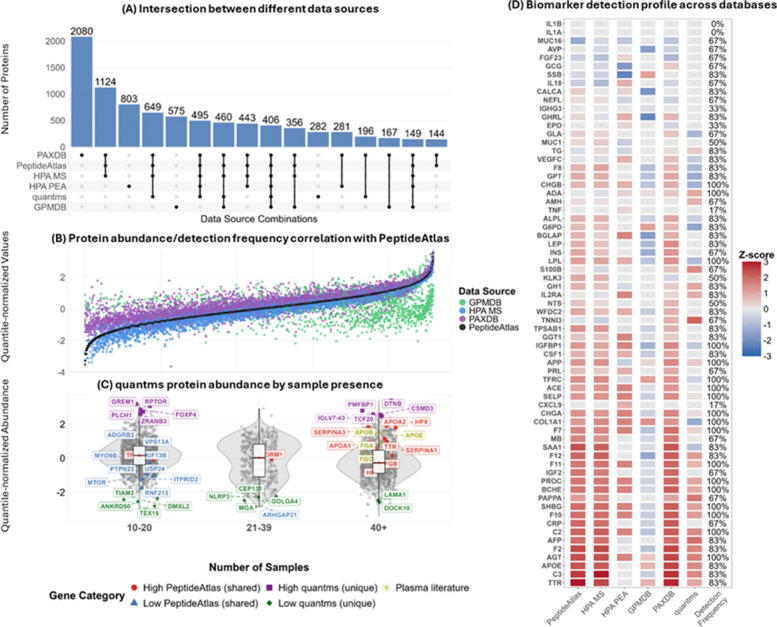 Figure 3
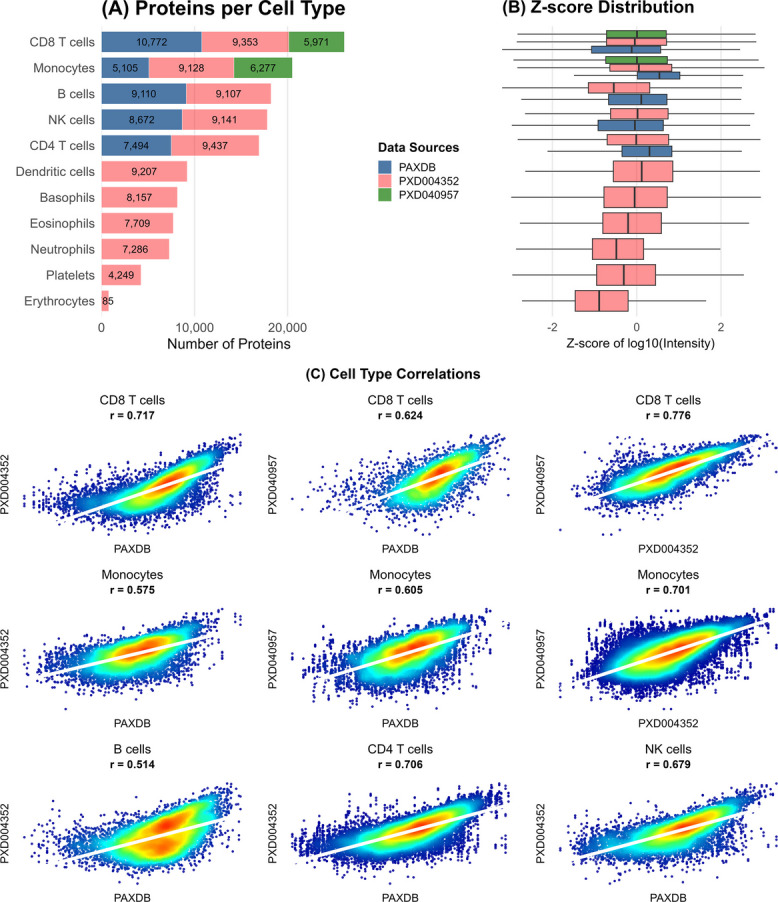 Figure 4
Peer Reviews
No public reviews on file for this paper yet. If you reviewed it on a platform where reviews are public (OpenReview, ICLR, NeurIPS, ICML), you can paste yours below so the community can read it here.
Videos
No videos yet. Explain this paper in a talk, walkthrough, or lecture? Add one.
Taxonomy
TopicsAdvanced Proteomics Techniques and Applications · Advanced Biosensing Techniques and Applications · Single-cell and spatial transcriptomics