Integrated New Approach Methodologies Reveal the Potential Role of 2,7-Dibromocarbazole in Parkinson’s Disease via Monoamine Oxidase B Inhibition and Dopaminergic Dysfunction
Xinhe Lu, Yuhang Luo, Pei Peng, Xingyue Xing, Wei Xia, Hongyan Yin, Hanzeng Li, Shunqing Xu

TL;DR
This study shows that 2,7-dibromocarbazole, an environmental contaminant, may contribute to Parkinson’s disease by inhibiting a key brain enzyme and causing gene changes linked to the disease.
Contribution
The study introduces a novel, animal-free method using computational and experimental approaches to link environmental pollutants to Parkinson’s disease mechanisms.
Findings
2,7-dibromocarbazole showed the highest binding affinity to monoamine oxidase B, a key Parkinson’s-related enzyme.
Exposure to 2,7-dibromocarbazole correlated with α-synuclein aggregation, a hallmark of Parkinson’s disease.
Shared gene expression changes in exposed cells and Parkinson’s data suggest roles in dopaminergic synapse and neurodevelopmental pathways.
Abstract
The neurotoxicity of emerging contaminants, polyhalogenated carbazoles (PHCZs), is elusive. In this study, we investigated the potential toxicity of 13 prevalent PHCZs utilizing a network toxicology approach, which revealed shared molecular targets associated with Parkinson’s disease (PD). Molecular docking simulations assessed the binding affinities of these PHCZs for eight key PD-related targets, identifying monoamine oxidase B (MAOB) as a critical target. Among the dihalogenated PHCZs, 2,7-dibromocarbazole (2,7-BCZ) exhibited the highest binding affinity to MAOB. Comparative molecular docking and dynamics simulations suggest that the inhibition of MAOB activity by 2,7-BCZ is a potential initiating event in PHCZ-induced neurological disorders. In vivo experiments confirmed that 2,7-BCZ exposure highly correlates with α-synuclein aggregation, a hallmark of PD pathology. Transcriptomic…
Genes, proteins, chemicals, diseases, species, mutations and cell lines named across the full text — each resolved to its canonical identifier and authoritative record.
Click any figure to enlarge with its caption.
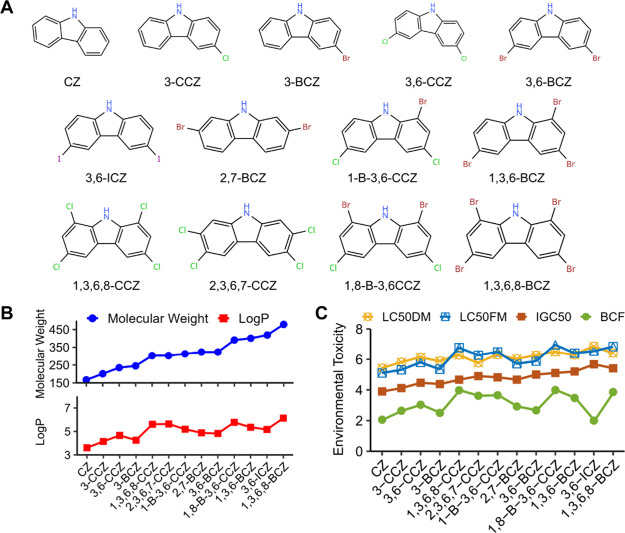 Figure 1
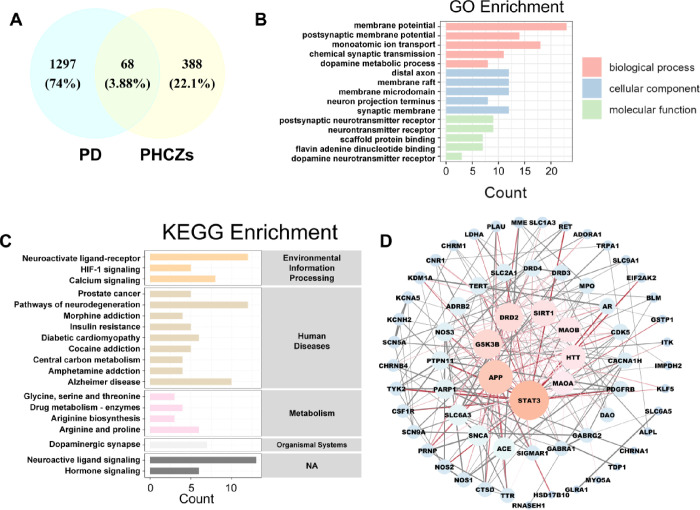 Figure 2
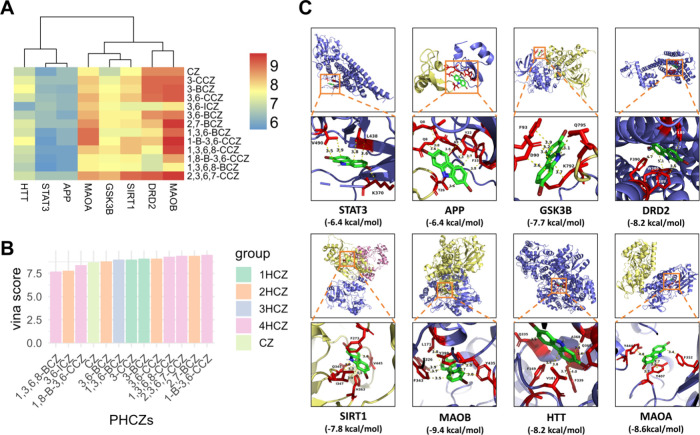 Figure 3
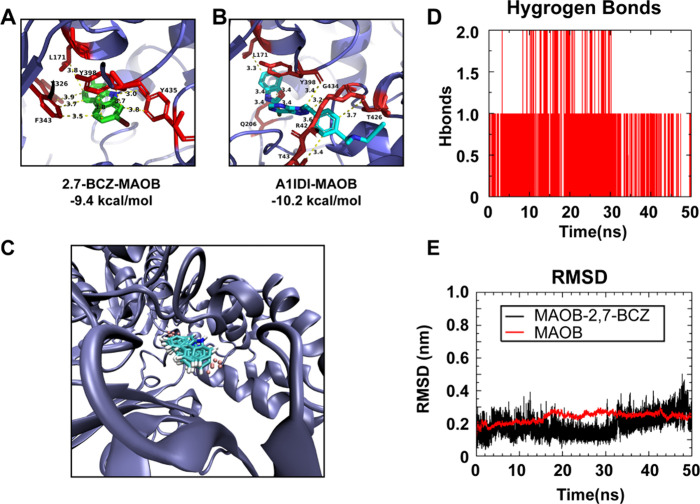 Figure 4
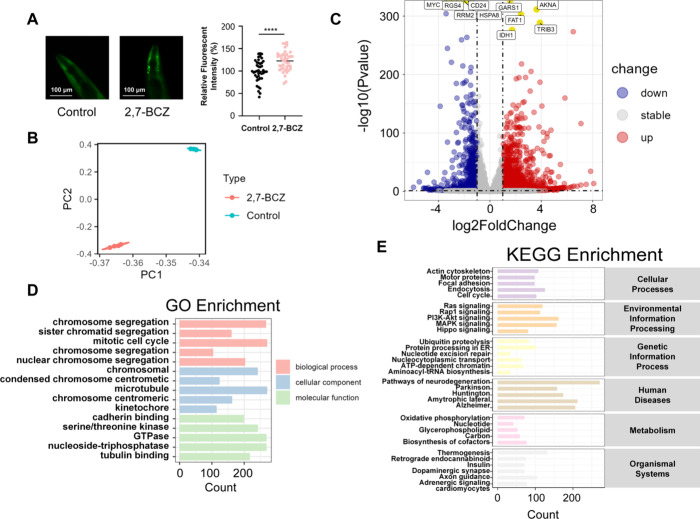 Figure 5
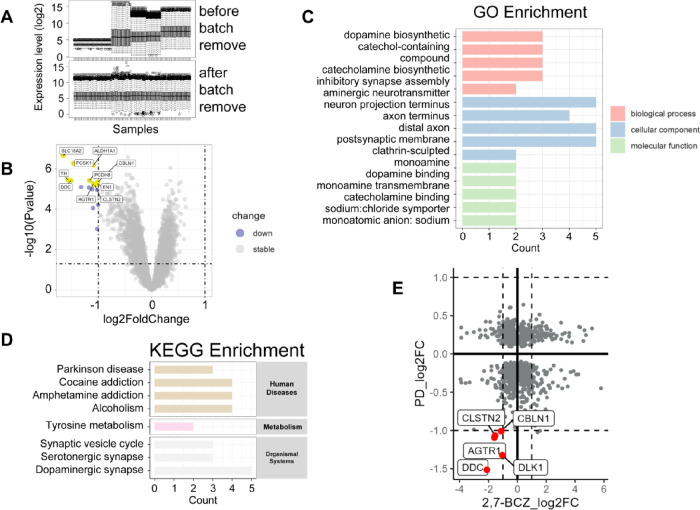 Figure 6
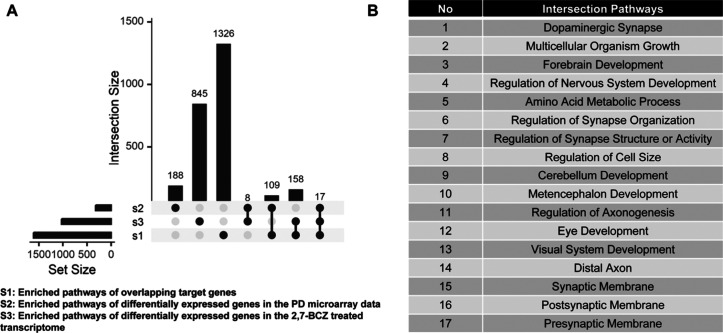 Figure 7
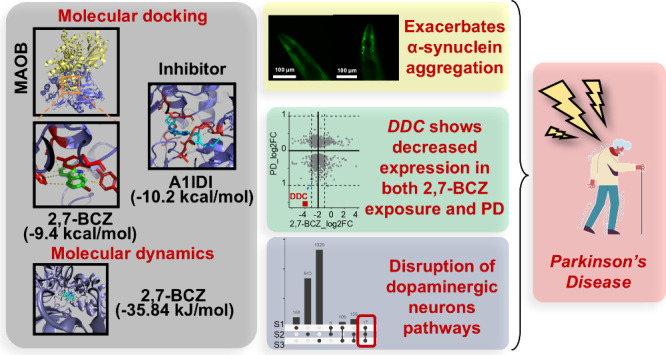 Figure 8
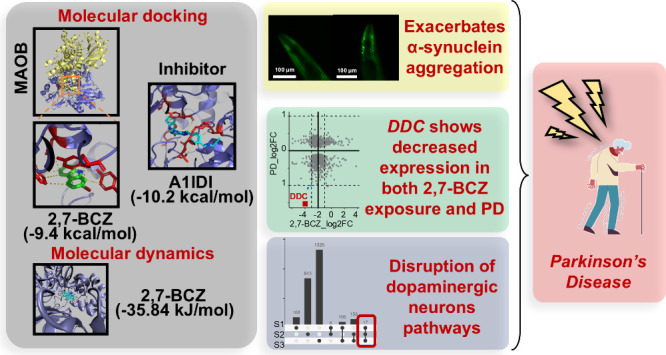 Figure 9
Peer Reviews
No public reviews on file for this paper yet. If you reviewed it on a platform where reviews are public (OpenReview, ICLR, NeurIPS, ICML), you can paste yours below so the community can read it here.
Videos
No videos yet. Explain this paper in a talk, walkthrough, or lecture? Add one.
Taxonomy
TopicsParkinson's Disease Mechanisms and Treatments · Alzheimer's disease research and treatments · Neurotransmitter Receptor Influence on Behavior