Scope of Microbial Transglutaminase for Site-Specific and Oriented Immobilization of Native Antibodies from Various Host Species
Emily Beitello, Kwame Osei, Faith E. Breausche, Jon A. Friesen, Jeremy D. Driskell

TL;DR
This paper explores how microbial transglutaminase can be used to precisely attach molecules to antibodies from different species, improving biosensor performance.
Contribution
The study demonstrates the broad applicability of microbial transglutaminase for site-specific antibody conjugation across multiple host species and subclasses.
Findings
Microbial transglutaminase enabled site-specific conjugation of a fluorescent peptide to various IgG subclasses.
Biotin was successfully site-specifically attached to the Fc region of multiple IgG types using a chemo-enzymatic method.
Oriented immobilization of biotinylated antibodies improved antigen binding compared to conventional random conjugation.
Abstract
Modification of antibodies to chemically couple labels or immobilization reagents is essential for developing biosensors. Typically, conjugation occurs through chemical methods that leverage reactive amines and thiols on native antibodies; however, this nonspecific approach can interfere with antibody function. Microbial transglutaminase (mTG) is an enzyme that has been used for site-specific conjugation of chemical modifiers to the Fc region of native antibodies, but thus far mTG-mediated conjugation has been limited to production of antibody-drug conjugates with human IgGs. Here, we assessed the scope and versatility of mTG to target IgGs, with the goal of site-specific conjugation to facilitate oriented immobilization. A fluorescently labeled peptide was conjugated to several IgG host species and subclasses commonly used to produce monoclonal (e.g., mouse IgG1 and rat IgG1) and…
Genes, proteins, chemicals, diseases, species, mutations and cell lines named across the full text — each resolved to its canonical identifier and authoritative record.
Click any figure to enlarge with its caption.
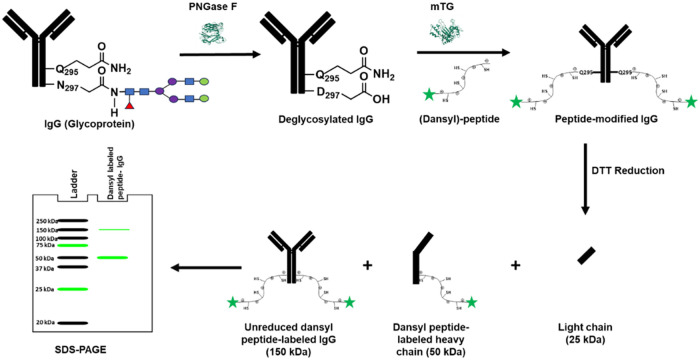 Figure 1
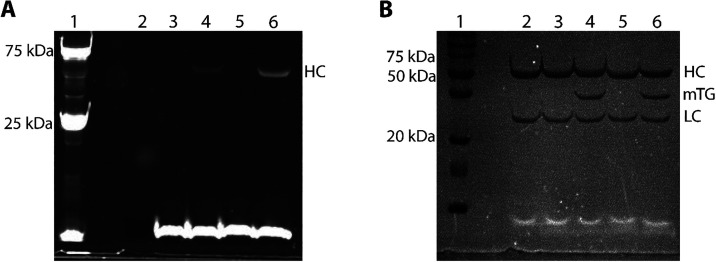 Figure 2
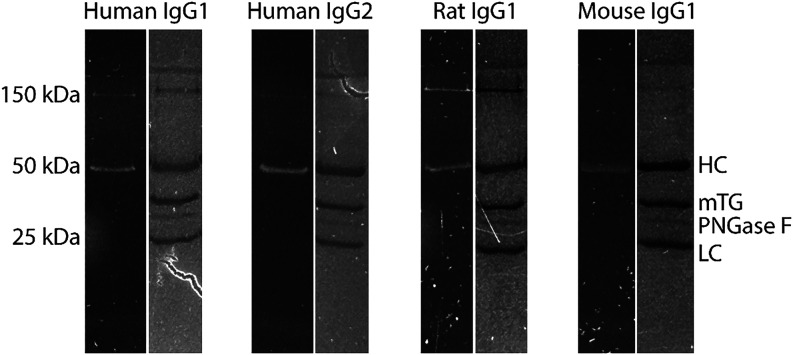 Figure 3
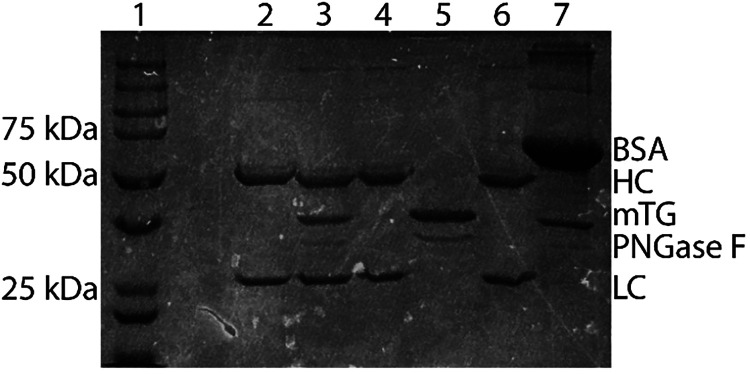 Figure 4
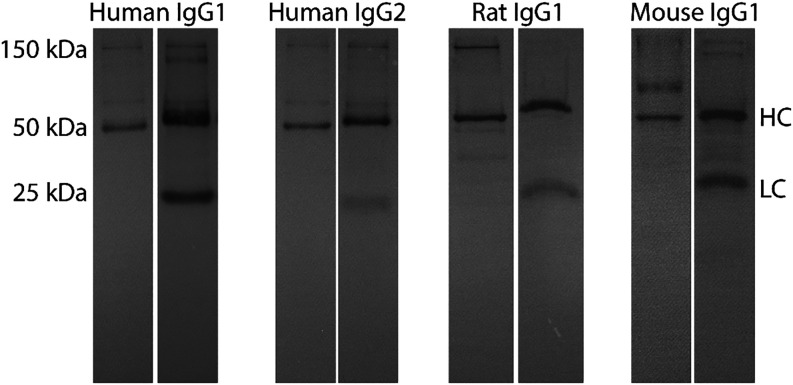 Figure 5
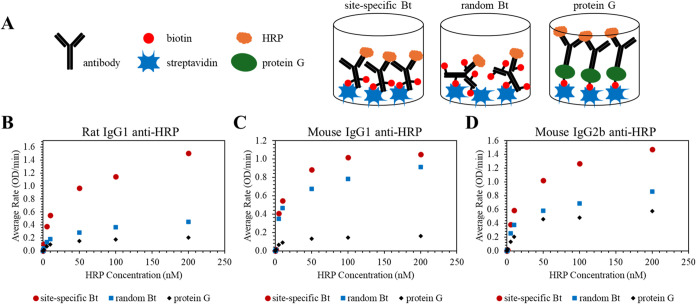 Figure 6
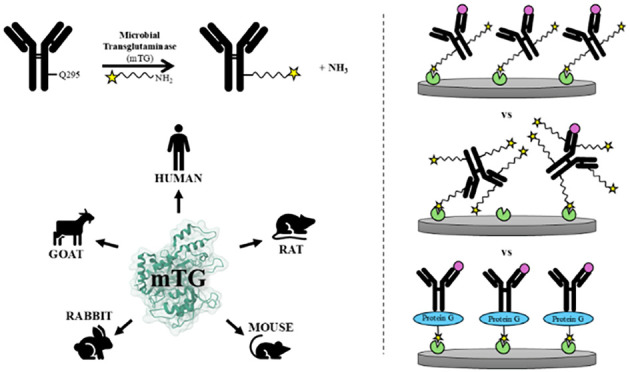 Figure 7
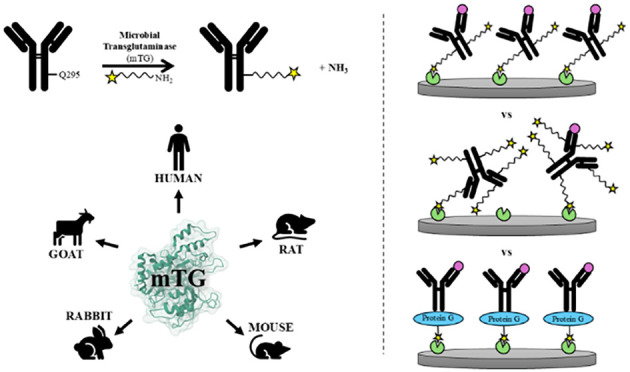 Figure 8
Peer Reviews
No public reviews on file for this paper yet. If you reviewed it on a platform where reviews are public (OpenReview, ICLR, NeurIPS, ICML), you can paste yours below so the community can read it here.
Videos
No videos yet. Explain this paper in a talk, walkthrough, or lecture? Add one.
Taxonomy
TopicsBlood properties and coagulation · Protein purification and stability · Celiac Disease Research and Management